Capital Gains Tax in Switzerland 2026: What Expats Need to Know

Switzerland charges CHF 0 on your stock market profits. If you’re a private investor, every franc of capital gains you realize is completely tax-free, at both the federal and cantonal level. But get reclassified as a “professional securities dealer” by the tax authorities, and you’re suddenly looking at income tax plus roughly 10% in AHV/IV/EO contributions. That combined hit can exceed 50% of your gains. The line between “private” and “professional” isn’t always obvious. And the tax office, not you, decides which side you fall on.
The Federal Tax Administration’s Kreisschreiben Nr. 36 (KS 36, dated 27 July 2012) lays out five safe harbour criteria. Meet all five and you’re definitively a private investor. Fail them and the tax authority conducts a full assessment of your situation. This guide breaks down every criterion, covers crypto and ETFs, explains what recent Federal Supreme Court rulings mean for you, and tells you exactly how to protect your tax-free status.
Key Takeaways
- Private investors in Switzerland pay zero tax on capital gains from stocks, ETFs, bonds, and crypto.
- Five criteria from KS 36 determine your status. Criteria 1 to 3 (holding period, transaction volume, gains-to-income ratio) carry the most weight.
- Reclassification as a professional dealer triggers income tax plus ~10% AHV contributions, potentially exceeding 50% combined.
- Real estate gains are always taxed separately (Grundstückgewinnsteuer), regardless of your investor status.
What Does “Capital Gains” Actually Mean in Swiss Tax Law?
Under Art. 16 Abs. 3 DBG (Federal Direct Tax Act), capital gains on movable private assets are explicitly exempt from income tax. This exemption has been Swiss law since the DBG took effect in 1995, and it covers stocks, bonds, ETFs, crypto, and other securities. But the term “capital gains” in Switzerland actually encompasses several very different tax situations, and the rules vary dramatically depending on what you’re selling.
Movable Assets (Stocks, Bonds, Crypto, ETFs)
This is the category most people think of. If you’re a private investor, your gains from selling stocks, bonds, ETFs, crypto, and similar securities are completely tax-free. If you’re classified as a professional securities dealer (gewerbsmässiger Wertschriftenhändler), those same gains become taxable as self-employment income under Art. 18 Abs. 2 DBG. This article focuses primarily on this category and on how you keep that private investor status.
Real Estate (Grundstückgewinnsteuer)
Gains from selling real estate in Switzerland are always taxed. There’s no private investor exemption here. Instead, cantons levy a separate Grundstückgewinnsteuer (real estate gains tax) with its own rates, holding period discounts, and deduction rules. The rules vary significantly by canton. A dedicated guide on real estate gains tax is coming. In the meantime, if you own property in Switzerland, check out our guide to imputed rental value for the ongoing tax implications of property ownership. If you’re a foreigner considering a purchase, see our 2026 Lex Koller guide first. Throughout your ownership, the wertvermehrend (value-enhancing) renovation costs you capitalise rather than deduct as maintenance increase the property’s tax cost basis and directly reduce the eventual Grundstückgewinnsteuer when you sell, see our property maintenance tax deductions guide for the maintenance-vs-renovation classifier.
Companies (Legal Entities)
If your GmbH or AG sells securities at a profit, there’s no capital gains exemption. All gains are ordinary corporate profit, subject to corporate profit tax at the applicable federal and cantonal rates. The “private capital gains” exemption exists only for natural persons managing their own private wealth.
Employee Equity (Stock Options, RSUs)
Employee shares get complicated fast. Genuine participations (echte Mitarbeiterbeteiligungen), meaning actual shares you receive, can produce tax-free capital gains after vesting. Non-genuine participations like RSUs, phantom stock, and SARs are always taxed as employment income. The classification depends entirely on the structure. We cover this in detail in our employee shareholdings guide.
The legal foundation for the cantonal level is Art. 7 Abs. 4 lit. b StHG (Tax Harmonization Act), which mirrors the federal exemption for private capital gains and ensures consistent treatment across all 26 cantons.
One narrow exception applies for foreign nationals on lump-sum taxation (Pauschalbesteuerung): the regime taxes a deemed expenditure base rather than actual income or gains, so the private-investor test described below does not apply on most assets while the regime is in force. See our Swiss lump-sum taxation guide for eligibility and how the regime interacts with treaty-relief income.
What Are the Five Criteria That Keep Your Gains Tax-Free?
The Federal Tax Administration published Kreisschreiben Nr. 36 on 27 July 2012, and it hasn’t been revised since. KS 36 defines five “safe harbour” criteria for private investors. If you meet all five, you’re definitively classified as private. No debate, no grey zone. The tax authority won’t even look deeper. Here’s what each criterion requires and how it works in practice.
Criterion 1: Holding Period (At Least 6 Months)
You must hold securities for a minimum of six months before selling them. This is the most intuitive criterion. It separates long-term investing from short-term trading.
Practical example: You buy 500 shares of Nestle in January 2026. If you sell them in August 2026, that’s more than six months. You pass this criterion. But if you sell in April 2026 (only three months), you’ve failed it. One or two early sales in an otherwise long-term portfolio won’t automatically doom you, but a pattern of short holding periods signals professional activity.
Criterion 2: Transaction Volume (Under 5x Portfolio Value)
Your total transaction volume during a calendar year must stay below five times the value of your securities portfolio at the beginning of that year. Transaction volume means the combined total of all buys and sells.
Practical example: Your portfolio is worth CHF 200,000 on 1 January. Your total buy and sell volume for the year must remain below CHF 1,000,000 (5 x CHF 200,000). If you trade CHF 1,200,000 in total, you’ve exceeded the threshold. This criterion is easy to monitor if you track it quarterly. Most brokers provide annual transaction summaries you can use.
Criterion 3: Capital Gains Under 50% of Net Income
Your realized capital gains must represent less than 50% of your net income for the year. This is the most dangerous criterion for retirees, early FIRE community members, and anyone with a lower regular income relative to their portfolio.
Example 1 (safe): You earn CHF 80,000 salary and realize CHF 30,000 in capital gains. Your gains represent 37.5% of your combined net income. You pass comfortably.
Example 2 (problem): You’re retired with CHF 40,000 in annual pension income and you realize CHF 50,000 in capital gains. Your gains represent 55.6% of combined income. You’ve failed this criterion. And there’s nothing you can do about your pension being low. The only solution is to manage the timing of your sales carefully.
This criterion creates an ironic situation: the less employment or pension income you have, the more exposed you are to professional reclassification. Swiss residents who’ve achieved financial independence and live off their portfolio are most at risk, precisely because their earned income is low relative to their investment returns.
Criterion 4: No Leverage for Investments
Lombard loans are the main issue here. If you borrow against your portfolio to invest more, and the interest expenses on that borrowed capital exceed the dividend or interest income from the financed securities, this criterion fails. The logic is straightforward: private investors typically invest their own money. Borrowing to amplify returns looks like professional behaviour.
Practical example: You take a Lombard loan of CHF 100,000 at 2% interest (CHF 2,000 per year) to buy additional shares. Those shares generate CHF 3,000 in dividends. Interest costs (CHF 2,000) are below dividend income (CHF 3,000), so you pass. If interest costs exceeded the income, you’d fail.
Criterion 5: No Speculative Derivatives
Derivatives used for hedging are perfectly acceptable. Buying a put option to protect a large stock position against a downturn is standard risk management. What triggers this criterion is speculative trading in options, warrants, and other derivatives, especially when the volume is high or the positions are short-term.
If you’re writing covered calls on your stock positions or buying protective puts, that’s generally fine. If you’re actively trading weekly options for directional bets, that’s professional territory.
How Are the Five Criteria Weighted?
Not all criteria carry equal weight. Criteria 1 to 3 (holding period, transaction volume, and gains-to-income ratio) are the primary indicators. The Federal Tax Administration and cantonal authorities treat these as the decisive factors. Criteria 4 and 5 (leverage and derivatives) serve as supplementary evidence.
Here’s the key point many people miss: failing one criterion alone doesn’t automatically make you a professional investor. The tax authority looks at the overall picture. But failing two of the first three criteria is usually enough to trigger reclassification. Conversely, not meeting the safe harbour doesn’t mean you’re automatically professional either. It simply means the authority will conduct a full assessment of your trading activity instead of giving you an automatic pass.
In practice, cantonal tax offices don’t scrutinise every investor’s trading behaviour with a fine-tooth comb. They focus on cases where the overall picture clearly points toward professional activity. There’s a good reason for this restraint: reclassifying someone as a professional dealer is a double-edged sword for the tax authority. Yes, it makes gains taxable. But it also means the taxpayer can deduct trading losses against other income and carry those losses forward over multiple years. In a bad market year, that can cost the canton more revenue than the reclassification gained them. It’s a bet the tax office only makes when the case is clear-cut.
What Happens If You’re Reclassified as a Professional Investor?
Reclassification from private to professional investor has severe financial consequences. Under Art. 18 Abs. 2 DBG, all capital gains from securities become taxable as self-employment income. Combined with social security contributions, the effective tax rate on gains you previously kept entirely can exceed 50%. Here’s the full breakdown of what changes.
The Tax Hit
- Federal income tax: All capital gains are added to your taxable income and taxed at the applicable federal rate (max 11.5% federal).
- Cantonal and municipal income tax: Added on top, with marginal rates varying by canton. Combined federal, cantonal, and municipal income tax can reach approximately 40% or more in high-tax cantons.
- AHV/IV/EO social security contributions: Self-employed persons pay roughly 10% of their net self-employment income (on a declining scale). This applies on top of income tax.
- Combined effective rate: When you add income tax and social security contributions together, the total bite on your capital gains can exceed 50% of the gain.
The Silver Lining
Professional classification isn’t all bad news. There are two meaningful advantages. First, capital losses become deductible against other income. As a private investor, if your stock drops and you sell at a loss, that loss is gone. You can’t offset it against anything. As a professional dealer, losses reduce your taxable income.
Second, trading costs become deductible business expenses. Brokerage commissions, platform fees, financial data subscriptions, and even a home office allocation can be written off against your trading income. For high-volume traders, these deductions can be substantial.
So is professional status always worse? For most people, yes. Dramatically worse. But if you’re someone who trades actively, incurs significant losses in some years, and has substantial trading costs, the maths can occasionally work in your favour. That said, the tax authority decides your status, not you. You can’t simply elect to be “professional” in a loss year and “private” in a gain year.
What Have the Courts Said Recently?
Swiss Federal Supreme Court (Bundesgericht) rulings shape how the KS 36 criteria are interpreted in practice. Several recent decisions from 2024 and 2025 have clarified important edge cases. These rulings don’t change the law, but they directly influence how cantonal tax authorities apply the criteria to your situation.
BGer 9C_454/2023 (December 2024): Your Job Title Doesn’t Determine Your Asset Classification
A lawyer who also held board seats sold shares at a significant profit. The cantonal tax authority argued that because of his professional background and board involvement, the shares were business assets and the gains were taxable self-employment income.
The Federal Supreme Court overturned that assessment. The court ruled that a person’s profession alone doesn’t make their personal holdings business assets. What matters is the function of the asset: was it held as a private investment, or was it functionally integrated into a business activity? The lawyer held the shares as personal investments, separate from his professional work. The gains were tax-free private capital gains.
What this means for you: Even if you work in finance, law, or another profession that involves capital markets, your private portfolio remains private as long as it’s separate from your professional activity.
BGer 9C_403/2023 (June 2024): Years of Hands-On Project Development Make Share Sale Taxable
A taxpayer who was employed full-time spent years personally developing a mining project in Guinea-Bissau. He signed key agreements as Chairman, held leadership roles in related entities, made substantial financial commitments through shareholder loans totalling roughly CHF 690,000, and ultimately orchestrated a structured sale of his shares in the project company. He declared the resulting gain as a tax-free private capital gain.
The Federal Supreme Court upheld the classification as taxable self-employment income, specifically as nebenberuflicher Beteiligungshandel (part-time professional participation trading). The court pointed to the taxpayer’s systematic, hands-on involvement, the entrepreneurial risk assumed (described as near-existential), his industry knowledge, and the planned nature of the eventual sale. The court confirmed that full-time employment elsewhere does not preclude this finding.
What this means for you: If you are actively involved in building and developing a business venture, not just holding shares passively, the profit on a sale may be taxed as self-employment income. This applies even if it’s your only transaction and you hold a full-time job. The court looks at the totality of your involvement, financial risk, and planning, not just the number of deals.
BGer 9C_666/2024 (February 2025): Pre-Arranged Share Buyback Classified as Disguised Compensation
An employee bought a 10% stake in a sister company within her employer’s corporate group from a departing board member for CHF 220,000, financed entirely with a margin loan. Six months later, she sold the shares to her employer for CHF 440,000. She claimed the CHF 220,000 premium as a tax-free private capital gain.
The Federal Supreme Court upheld the lower court’s finding that the buyback had been pre-arranged at the time of purchase and that the premium was disguised compensation for the employee’s work. The decisive legal test was whether there was an economic connection (wirtschaftlicher Zusammenhang) between the payment and the employment relationship under Art. 17 Abs. 1 DBG. The court found the transaction structure was designed to create the appearance of a tax-free capital gain while in substance delivering employment income.
What this means for you: If your employer or a related party offers you a share arrangement where the buyback and profit are effectively pre-agreed, the premium is likely to be classified as taxable employment income. The tax authorities and courts look at the substance and purpose of the transaction, not its contractual label. For more on how employee shares are taxed, see our guide to employee shareholdings.
These cases show that Swiss courts scrutinise the actual economic function and circumstances of a transaction rather than accepting its formal label at face value, whether the question is about self-employment classification, asset allocation, or the true nature of a payment.
How Are Crypto Capital Gains Taxed in Switzerland?
Cryptocurrency in Switzerland is classified as movable assets (bewegliche Vermögenswerte), not as legal tender. The same KS 36 safe harbour criteria that apply to stocks and ETFs also apply to crypto. If you’re a private investor and you meet the five criteria, your crypto gains are tax-free. The ESTV’s working paper on the tax treatment of crypto assets was last updated in August 2022, with no subsequent revision.
What’s Tax-Free vs. Taxable in Crypto
| Activity | Tax Treatment |
|---|---|
| Buying and selling crypto (private) | Capital gains are tax-free (if KS 36 criteria met) |
| Mining income | Taxable as self-employment income when received, valued in CHF at market price |
| Staking rewards | Taxable as asset income (Vermögensertrag) |
| DeFi lending income | Taxable as income upon receipt |
| Airdrops | Taxable as income upon receipt, valued in CHF at market price |
| Hard fork tokens | Taxable as income upon receipt |
| Holding crypto at year-end | Subject to wealth tax based on market value (ESTV publishes official Kursliste) |
Here’s the distinction that catches people off guard: trading crypto itself can be tax-free, but virtually every other crypto activity generates taxable income. Mining, staking, lending, and receiving airdropped tokens all create a taxable event. The income is valued in CHF at the market price on the date of receipt.
What About Wealth Tax on Crypto?
Wealth tax applies to all your crypto holdings as of 31 December each year. The ESTV publishes an official price list (Kursliste) for major cryptocurrencies. You must declare your holdings and their market value on your tax return. For tokens not on the ESTV list, you use the market price from a reputable exchange. This is separate from income tax. You owe it regardless of whether you sold anything. For more on how wealth tax works in Switzerland, see our dedicated guide.
International Reporting: OECD CARF Framework
Starting from 2027, crypto service providers will be required to report account and transaction information to tax authorities under the OECD’s Crypto-Asset Reporting Framework (CARF). Automatic international exchange of this data is expected from 2028. This means offshore crypto holdings will become much harder to keep unreported. Switzerland has committed to implementing CARF. If you hold crypto on foreign exchanges, declare it now. Don’t wait for enforcement to catch up.
The gap between Switzerland’s extremely favourable private crypto tax treatment and the incoming CARF reporting framework creates an interesting dynamic. The tax rules are generous, but compliance requirements are tightening fast. Declaring crypto correctly now positions you well. Failing to declare creates escalating risk as automatic exchange kicks in.
How Are ETFs, Funds, and Stamp Duty Handled?
ETFs and investment funds follow the same capital gains exemption as individual stocks for private investors. Price appreciation on your ETF holdings is tax-free when you sell, provided you meet the KS 36 criteria. But the income component of ETFs (dividends, interest) is always taxable, and the rules differ slightly between distributing and accumulating fund structures.
Distributing vs. Accumulating ETFs
A common misconception is that accumulating ETFs avoid tax on dividends because no cash is paid out. That’s wrong. Both distributing and accumulating ETFs are taxed identically on their income component.
Distributing ETFs pay out dividends and interest to you directly. You report this income on your tax return and pay income tax on it. Straightforward.
Accumulating ETFs reinvest dividends and interest internally. But the Swiss tax system still taxes you on this reinvested income. It’s called phantom income (thesaurierte Erträge). Each year, the ESTV publishes a tax breakdown for funds showing the income component, and you must declare it even though you never received any cash. This catches many expats by surprise.
Swiss Withholding Tax on ETF Distributions
If your ETF is domiciled in Switzerland, distributions are subject to 35% Swiss anticipatory tax (Verrechnungssteuer). You reclaim this in full when you file your tax return, as long as you’ve declared the income correctly. The reclaim is automatic for Swiss tax residents who declare everything. For ETFs domiciled abroad (Ireland, Luxembourg), Swiss anticipatory tax doesn’t apply, but foreign withholding taxes may.
Stamp Duty (Stempelsteuer)
Every time you buy or sell securities through a Swiss broker, you pay federal stamp duty (Stempelsteuer, also called Umsatzabgabe). The rate is 0.075% on Swiss securities and 0.15% on foreign securities, per transaction. It’s a small amount per trade, but it adds up if you’re active.
Can you avoid it? Yes. If you use a foreign broker (such as Interactive Brokers in the UK or Luxembourg), Swiss stamp duty doesn’t apply. Many Swiss investors use foreign brokers precisely for this reason, combined with lower commission rates. Just make sure you still declare all holdings and income on your Swiss tax return.
How Are Employee Shares and Stock Options Taxed?
Employee equity is governed by Kreisschreiben Nr. 37 (amended 2020, effective from 2021). The tax treatment depends entirely on whether the participation is classified as “genuine” or “non-genuine.” This distinction determines whether post-vesting appreciation is a tax-free capital gain or fully taxable employment income. We cover this area in detail in our complete guide to employee shareholdings in Switzerland. Here’s the summary.
Genuine vs. Non-Genuine Participations
Genuine participations (echte Mitarbeiterbeteiligungen) are actual shares or actual stock options that give you real ownership. Once these vest and you can freely dispose of them, any further price appreciation is a tax-free private capital gain (unless you’re a professional dealer, of course).
Non-genuine participations (unechte Mitarbeiterbeteiligungen) include RSUs (Restricted Stock Units), phantom stock, and SARs (Stock Appreciation Rights). These don’t give you actual ownership of shares. Instead, they give you a cash benefit linked to share performance. The entire benefit is taxed as employment income when it vests or is exercised. There’s no capital gains treatment whatsoever.
The 6% Blocking Discount (Sperrfristrabatt)
When you receive genuine shares that are subject to a vesting (blocking) period, a 6% annual discount is applied to the fair market value for each year of the blocking period. This is called the Sperrfristrabatt. It reduces the amount taxed as employment income at the time of grant or vesting.
Example: You receive shares worth CHF 100,000 with a 5-year vesting period. The discount is 6% per year x 5 years = 30%. Your taxable benefit at grant is CHF 70,000 instead of CHF 100,000. The maximum discount caps out at approximately 44% for very long blocking periods.
The Key Point for Capital Gains
Once genuine shares have vested and become unrestricted, they’re treated as your normal private assets. From that point forward, any further appreciation is a tax-free capital gain, subject to the same KS 36 criteria as any other stock you own. The employment income taxation was handled at grant or vesting. What happens after that is between you and the market.
Where Does Active Trading Cross the Line Into Day Trading?
There’s no statutory threshold for the number of trades that makes you a professional dealer. Swiss tax law doesn’t say “100 trades per year makes you professional.” The assessment is always holistic, based on the overall character of your trading activity. But certain patterns reliably trigger closer scrutiny from the tax authorities.
Red Flags That Signal Professional Activity
- Multiple daily trades: Executing several buy/sell orders every day suggests active management, not passive investing.
- Very short holding periods: Positions held for hours or days, not weeks or months.
- Reliance on trading income: If trading gains are your primary income source, the 50% criterion fails and the overall picture looks professional.
- Margin use: Trading on margin is borrowing to invest. It directly implicates Criterion 4.
- Speculative derivatives: High-frequency options or warrants trading goes straight to Criterion 5.
- Dedicated trading infrastructure: Professional software, data feeds, and multi-monitor setups can be seen as indicators of professional intent.
What to Do If You’re Borderline
If you suspect you’re in a grey zone, the most effective step is to obtain a Steuervorbescheid (binding tax ruling) from your cantonal tax authority. This is a written, binding assessment of how the authority will classify your investment activity. It requires a well-prepared submission with supporting documentation (trading statements, income details, a clear description of your investment approach), and the authority gives you a definitive answer. A ruling in hand is worth more than a vague hope that everything will be fine.
Preparing a ruling request is something a tax advisor handles for you. It’s not a form you fill out yourself. The submission needs to present your situation in the right framework and anticipate how the tax office evaluates the criteria. If you’re unsure about your status, this is exactly the kind of situation where professional advice pays for itself.
Not sure if you’re at risk of reclassification?
We can review your trading activity, assess your position against the KS 36 criteria, and prepare a binding tax ruling if needed.
Book a consultation →In our experience, the expat investors who most commonly raise this question aren’t day traders. They’re professionals with an active interest in the markets who trade more frequently than average, or expats who are realising a one-time larger capital gain from shares they acquired years ago (often through a previous employer or an early investment). For most of these clients, the risk turns out to be smaller than they feared: they typically have solid employment income that keeps the 50% gains-to-income ratio comfortably in check, and if the shares were held for years, the holding period criterion is easily met. Retirees with low pension income relative to large portfolio gains can face more exposure to Criterion 3, but that’s a less common scenario among our typical client base.
How Can You Protect Your Private Investor Status?
Maintaining your private investor classification requires awareness, not complex planning. The five KS 36 criteria are transparent and measurable. By tracking a few key metrics throughout the year, you can avoid surprises when the tax authority reviews your return. Here are the concrete steps.
Track Your Transaction Volume Quarterly
Note your portfolio value on 1 January and multiply by five. That’s your annual transaction volume ceiling. Check your cumulative buy and sell volume every quarter. If you’re approaching the limit by September, slow down for the rest of the year.
Keep a Record of Holding Periods
A simple spreadsheet tracking purchase and sale dates is enough. Flag any positions sold within six months. One or two is unlikely to cause problems. A pattern is a different story.
Avoid Lombard Loans for Investment Purposes
If you use a Lombard loan, make sure the interest costs don’t exceed the income generated by the financed securities. Better yet, don’t borrow against your portfolio to invest at all. The tax savings from maintaining private status are worth more than the marginal return from leveraged investing in most scenarios.
Limit Derivative Use to Hedging
Protective puts and covered calls on existing positions are generally acceptable. Speculative positions with no underlying holding to protect are not. Keep the documentation clear so you can demonstrate the hedging purpose if asked.
Manage the 50% Income Ratio Carefully
If you’re retired or have a low base income, this criterion requires active management. Consider spreading large sales across multiple tax years to keep your gains below 50% of total income in any single year. If you expect a particularly large gain, see whether timing the sale for a year with higher other income makes sense.
Get a Tax Ruling Before a Major Sale
If you’re planning a large portfolio liquidation or you’ve had an unusually active trading year, a Steuervorbescheid gives you certainty before you file. Your tax advisor prepares the submission and presents your case to the cantonal authority. The result is a binding written confirmation of your classification. It’s especially valuable before selling a concentrated stock position or exercising a large batch of options.
Frequently Asked Questions
Are stock market gains taxed in Switzerland? No, not for private investors. Under Art. 16 Abs. 3 DBG, capital gains from selling stocks, bonds, ETFs, and other movable assets are completely tax-free at both the federal and cantonal level. This applies as long as you’re classified as a private investor under the five criteria in Kreisschreiben Nr. 36. If you’re reclassified as a professional securities dealer, gains become taxable as self-employment income.
How many trades can I make before being considered a professional investor? There’s no fixed number. Swiss tax law doesn’t define a specific trade count that triggers professional classification. Instead, the tax authority evaluates the five KS 36 criteria holistically: holding period, transaction volume relative to portfolio size, gains-to-income ratio, use of borrowed funds, and derivative trading. The total picture matters more than any single metric. You could make 200 trades and be private, or 20 trades and be professional, depending on the circumstances.
Are crypto gains tax-free in Switzerland? Yes, for private investors. Crypto is classified as movable assets and the same KS 36 criteria apply. If you meet all five criteria, your gains from buying and selling crypto are tax-free. However, mining income, staking rewards, DeFi lending proceeds, and airdrops are all taxable as income. And your total crypto holdings are subject to wealth tax based on their year-end market value.
Do I need to report capital gains on my Swiss tax return? You must declare all securities and their values on your tax return, even though the gains themselves aren’t taxed for private investors. Your securities portfolio is subject to wealth tax based on the market value as of 31 December. Any income from your securities (dividends, interest, distributions) is also taxable. The capital gain portion is simply not included in your taxable income if you’re a private investor.
Can I offset capital losses against other income? Only if you’re classified as a professional securities dealer. Private capital losses are non-deductible. If you sell a stock at a loss as a private investor, that loss simply disappears from a tax perspective. You can’t offset it against income, and you can’t carry it forward. This is the flip side of tax-free gains. Professional dealers, by contrast, can deduct losses from their taxable self-employment income.
What about gains from selling my apartment or house? Real estate gains are a completely different tax. They’re subject to the Grundstückgewinnsteuer, a separate cantonal tax that always applies regardless of whether you’re a private or professional investor. The rates and rules vary by canton. Most cantons apply a degressive rate structure, meaning the longer you’ve held the property, the lower the tax rate. This is entirely separate from the income tax exemption for movable capital gains discussed in this article.
Does the private investor exemption apply to quellensteuer taxpayers? Yes. The capital gains exemption under Art. 16 Abs. 3 DBG applies to all Swiss tax residents, including those taxed at source (Quellensteuer). If you’re subject to withholding tax and you sell securities at a profit as a private investor, those gains are not taxable. However, you still need to declare your securities and their income. If your gross income exceeds CHF 120,000 or you have significant assets, you’ll be required to file an ordinary tax return anyway.
The bottom line on capital gains tax in Switzerland: The rules are favourable for private investors but unforgiving if you’re reclassified. The five KS 36 criteria are your roadmap. Meet them all and you keep 100% of your gains. Fail them and you risk losing more than half to taxes and social security contributions. Track your metrics, manage your timing, and get a ruling if you’re in any doubt. The tax-free treatment of private capital gains is one of Switzerland’s most valuable features for investors. Don’t lose it by accident.
Need help with your Swiss tax return?
Every Taxolution tax return includes a personal strategy call where we review your investment portfolio, check your private investor status, and make sure your securities are declared correctly. Get an instant quote with no obligation.
See pricing →Table of Contents
Latest blog posts
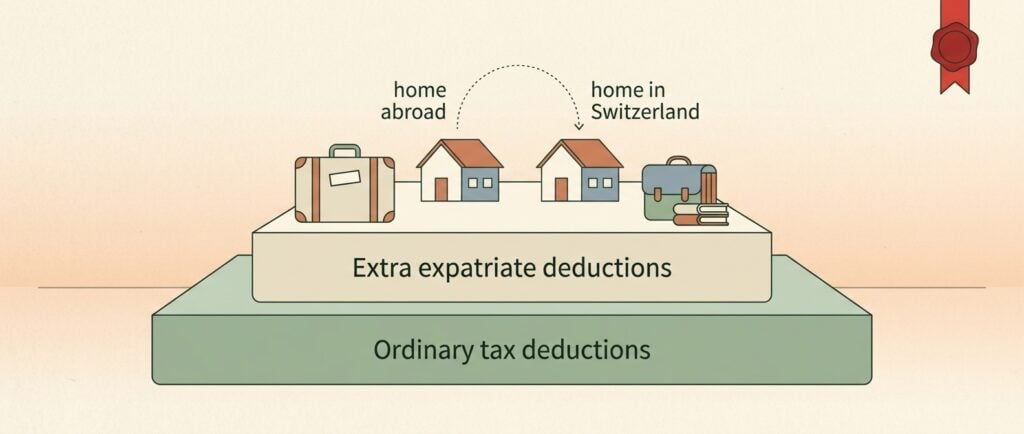
Swiss Expat Tax Benefits 2026: Special Tax Deductions for Posted Employees
In this article, we explain what the special “expat” status is all about, how an expat differs from other employees in Switzerland, and what benefits you can derive from it if you also belong to this group.

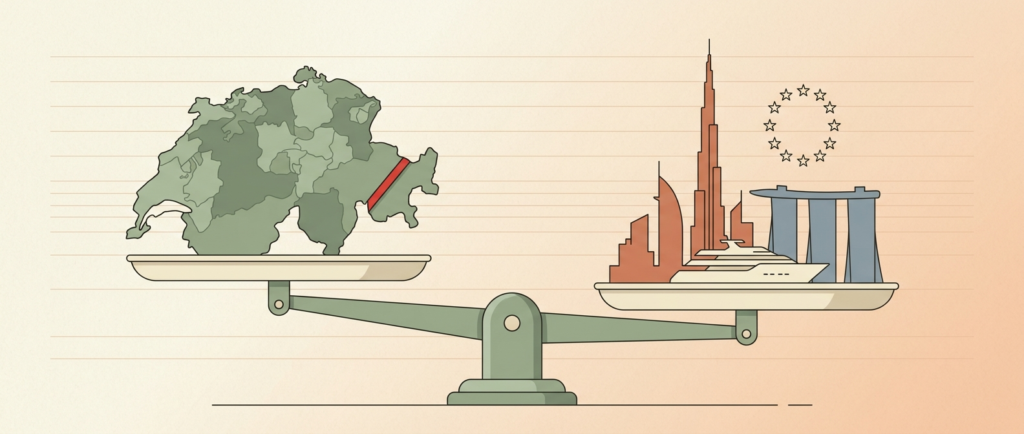
Is Switzerland Still a Tax Haven in 2026? How Much You Actually Pay vs the EU, UK, UAE & Monaco
Switzerland isn’t classically a tax haven, but for high earners the structural mix beats every EU comparator. Take-home and wealth tax compared to UAE, Monaco, UK, Germany, Italy, more.
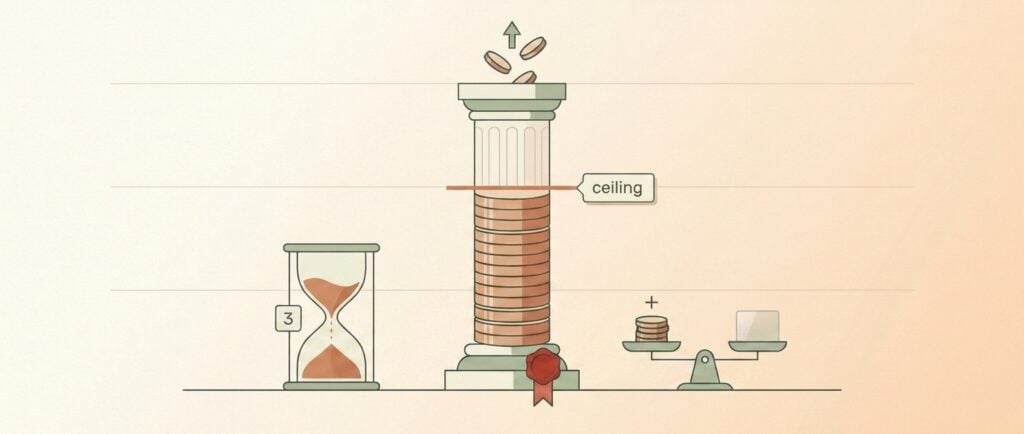
Swiss Pillar 2 Buy-In 2026: Tax Savings, the 3-Year Withdrawal Block, and When It’s Worth It
Many pension funds advertise voluntary purchases and present attractive calculation models to interested parties. What is often not mentioned is that the voluntary purchase into the pension fund is not worthwhile for everyone and does not always help with tax savings.