Swiss Inheritance Tax 2026: Rates, Exemptions & Canton Guide

Swiss voters rejected a 50% federal inheritance tax by 78.3% in November 2025, and all 26 cantons voted no. But that doesn’t make Switzerland inheritance-tax-free. Twenty-four cantons still levy their own inheritance tax, and the rates vary so dramatically that a sibling inheriting CHF 500,000 in Geneva pays more than three times what the same heir pays in Zug. Where the deceased lived matters far more than most people realise. This guide explains how cantonal inheritance tax actually works, who is exempt, what happens when the deceased lived abroad, and which legal strategies are worth exploring with an advisor.
TL;DR: Switzerland has no federal inheritance tax. Each of the 26 cantons sets its own rules. Spouses and children are exempt almost everywhere, but siblings and other more distant heirs face rates from 4% to over 43% depending on the canton. If the deceased lived abroad, Switzerland generally doesn’t tax movable assets, but any Swiss real estate is always taxed by the canton where the property sits.
Key takeaways
- No federal inheritance tax exists in Switzerland. All 26 cantons apply their own rules.
- Spouses and direct descendants (children, grandchildren) are exempt in virtually every canton.
- A sibling inheriting CHF 500,000 pays CHF 70,900 in Zug but CHF 215,838 in Geneva (Taxolution 2026 tax model).
- If the deceased lived outside Switzerland, only Swiss real estate is taxed here. Movable assets are not.
- Schwyz and Obwalden are the only two cantons with zero inheritance tax for every heir, including non-relatives.
How Swiss Inheritance Tax Works: The Cantonal System
Switzerland has no federal inheritance tax. Each of the 26 cantons designs its own regime, including who is taxed, at what rates, and what exemptions apply. Only two cantons, Schwyz (SZ) and Obwalden (OW), levy zero inheritance tax for every heir, including complete strangers. The other 24 tax at least some heirs, with rates that depend almost entirely on kinship degree and canton of domicile. According to the Taxolution 2026 tax model, a sibling’s CHF 500,000 inheritance costs CHF 70,900 in Zug compared to CHF 215,838 in Geneva, a threefold difference for the identical transfer.
The jurisdictional rule is straightforward. The canton where the deceased was last domiciled governs the entire movable estate (bank accounts, securities, personal property) regardless of where heirs live. A Zürich resident who dies leaves a Zürich inheritance tax problem for their heirs, even if those heirs live in Bern, London, or New York.
Inheritance tax is paid by the heirs, not the estate. Each heir files for their own share and owes tax on the net amount they receive after debts and funeral costs are deducted. This matters practically: two siblings each inheriting CHF 250,000 each file separately on CHF 250,000, not jointly on CHF 500,000. In a progressive system, this can already reduce the effective rate compared to a single heir receiving the full amount.
The taxable base is the net estate. Outstanding mortgages, debts, and allowable deductions reduce the gross value before rates are applied. Cantonal authorities assess the estate and issue a tax assessment to each heir. Deadlines for filing the inheritance tax return vary by canton, typically between 30 days and six months from the date of death.
Who Pays What: Tax Rates by Relationship Degree
Kinship degree is the single biggest driver of Swiss inheritance tax, far more important than the size of the estate. The closer the heir is to the deceased, the lower the tax. Spouses and children pay nothing in virtually every canton. Siblings and more distant relatives face rates ranging from under 3% to over 43%, depending on the canton. (Source: Taxolution 2026 tax model, cantonal capitals, no church tax.)
Spouses and Registered Partners
Exempt in all 26 cantons, no exceptions. The surviving spouse or registered partner inherits free of cantonal inheritance tax regardless of estate size or canton.
Direct Descendants: Children and Grandchildren
Effectively tax-free in all cantons. The Taxolution 2026 tax model shows CHF 0 tax for children and grandchildren at all tested amounts from CHF 50,000 to CHF 1,000,000 across all 12 modelled cantons. A handful of cantons, notably Appenzell Innerrhoden (AI, 1%), Vaud (VD, 0.01–3.5%), and Neuchâtel (NE, 3%), publish nominal statutory rates for direct descendants. In practice, allowances bring the actual tax to negligible or zero in virtually every real-world case. For planning purposes, treat direct descendants as exempt everywhere.
Parents
Parents face highly variable treatment. Aargau (AG) exempts parents entirely. Zug applies low rates, roughly 2.16% at CHF 100,000. But Lucerne charges CHF 190,000 on a CHF 500,000 inheritance (38%), and Neuchâtel reaches CHF 225,000 on the same amount (45%). These are among the highest effective burden examples for any kinship degree in Switzerland. If parents are realistic heirs in your estate plan, the deceased’s canton of domicile matters enormously. (Source: Taxolution 2026 tax model)
Siblings
Siblings sit in the most consequential tax zone for most international families. Effective rates at CHF 500,000 range from 14.2% in Zug to 43.2% in Geneva, with Bern (23.2%), Lausanne (25.0%), and Zürich (28.1%) in between. The chart below shows this range across five representative cantons.
Sibling Inherits CHF 500,000: Tax by Canton
Source: Taxolution 2026 tax model, cantonal capital, no church tax
Nieces and Nephews
The spread for nieces and nephews at CHF 500,000 is just as striking: Zug charges 2.8% (CHF 14,180) while Geneva charges 8.6% (CHF 43,100). Zürich is an outlier. It treats siblings and nieces/nephews identically, both at 28.1% (CHF 140,400). If a Zürich resident wants to leave assets to a niece, they should understand that Zürich applies the same rate as for a sibling, which is unusual among Swiss cantons. (Source: Taxolution 2026 tax model)
Non-Relatives
Unrelated heirs (friends, domestic partners not in a registered partnership, carers) aren’t covered by the Taxolution 2026 calculator, but they face the highest rates in every taxing canton. Effective rates can reach 49% or more. If you want to leave assets to an unrelated person, a trust structure or life insurance policy may be worth exploring with a specialist.
Use the calculator below to model inheritance tax across 12 representative Swiss cantons with your own figures. It covers Sarnen (OW), Schwyz (SZ), Zug (ZG), Luzern (LU), Zürich (ZH), Aarau (AG), St. Gallen (SG), Bern (BE), Basel (BS), Neuchâtel (NE), Lausanne (VD), and Genève (GE).
Swiss Inheritance Tax by Canton (2026)
Enter your inheritance share and relationship to the deceased — see the estimated tax across 12 cantons.
Figures for the cantonal capital, no church tax, tax year 2026. OW and SZ levy no inheritance tax on any heir. AG exempts parents and nieces/nephews. Non-relatives are not covered. Source: Taxolution 2026 tax model.
Cross-border estate or complex family situation? We map the full cantonal picture.
Schedule a free consultationWhich Cantons Have No Inheritance Tax?
Two Swiss cantons, Schwyz (SZ) and Obwalden (OW), levy zero inheritance tax for every heir, including completely unrelated persons. There is no threshold to meet, no kinship requirement to satisfy. Any heir receiving any amount from a Schwyz or Obwalden-domiciled deceased pays nothing to the canton. Among the remaining 24 taxing cantons, Zug consistently shows the lowest effective rates for most kinship degrees. (Source: Taxolution 2026 tax model)
This makes Schwyz, Obwalden, and Zug popular cantonal choices for estate planning. But the planning only works if the deceased genuinely lived there. A genuine domicile means real ties: primary residence, social and professional life, registration with the commune. A mailbox address, a second home, or a nominal registration while actually living elsewhere does not qualify. Cantonal authorities cross-check registrations, and the estate’s domicile can be challenged by other cantons if the registration appears artificial.
There’s a compounding benefit worth noting. Schwyz, Obwalden, and Zug also levy among the lowest wealth taxes in Switzerland. An estate plan centred in one of these cantons eliminates inheritance tax at death and reduces annual wealth tax during the testator’s lifetime. That’s a meaningful long-run advantage for high-net-worth estates. Learn more about how rates differ in our guide to Switzerland’s wealth tax by canton.
What Happens When the Deceased Lived Abroad?
Cross-border estates are where Swiss inheritance law gets genuinely complex, and where most competitors’ guides stop short. If the deceased was domiciled outside Switzerland, Swiss cantonal inheritance tax doesn’t apply to their movable assets. A German parent dying in Munich leaves no Swiss inheritance tax on their bank accounts, portfolio, or personal belongings, regardless of where their Swiss-resident children live. The one firm exception: any Swiss real estate in the estate is always taxed by the canton where the property sits. (Source: Taxolution 2026 tax model)
The Domicile-of-Deceased Rule
Swiss cantonal inheritance tax is triggered by the deceased’s last domicile, not by where heirs live, not by where assets are held (except real estate), and not by the deceased’s nationality. If a French national dies in Zürich, their worldwide movable estate is subject to Zürich cantonal inheritance tax. If the same person dies in Paris, Zürich has no claim on the Paris bank account or French portfolio.
Swiss Real Estate: The Standing Exception
Real property follows the lex rei sitae principle: it’s taxed where it physically sits. A chalet in Graubünden is subject to Graubünden cantonal inheritance tax regardless of whether the deceased lived in Munich, London, or Zürich, and regardless of where the heirs live. This applies even when the deceased wasn’t a Swiss national or Swiss resident. If you’ve inherited Swiss property from a parent who lived abroad, a Swiss inheritance tax return for that property is still required.
The Wealth Tax Catch for Swiss-Resident Heirs
Inheriting assets from abroad doesn’t trigger Swiss income tax or Swiss inheritance tax if the deceased wasn’t Swiss-domiciled. But the assets themselves enter the Swiss-resident heir’s wealth base from the year of receipt. They must appear in full in the annual wealth declaration (Vermögenssteuererklärung). Cantonal tax offices cross-check estate notifications and bank reports. Omitting inherited foreign assets from your wealth return is a common, and costly, mistake. Read more about handling foreign assets in your Swiss wealth tax return.
The 2025 PILA Revision: New Choice-of-Law Flexibility
A significant change took effect on January 1, 2025. The revised Federal Act on Private International Law (IPRG/LDIP) introduced new flexibility for cross-border estates. Foreign nationals domiciled in Switzerland can now elect that courts of their home country have jurisdiction over their Swiss estate. A German national living in Zürich can specify in their will that German courts handle the estate, even if Swiss law otherwise applies.
The reform also allows a new split: a foreign testator can designate foreign jurisdiction while Swiss substantive law still governs. And Swiss dual nationals living abroad can elect foreign law for their Swiss estate, which may reduce cantonal inheritance tax exposure depending on the foreign jurisdiction’s rules. These options require explicit election in a will or inheritance contract. They don’t apply automatically. Getting the drafting right matters.
Double Taxation Treaties: 10 Countries
Switzerland has bilateral inheritance and gift tax treaties with 10 countries designed to prevent double taxation: Austria, Denmark, Finland, France, Germany, Netherlands, Norway, Sweden, the United Kingdom, and the United States. These treaties allocate taxing rights between Switzerland and the treaty partner, typically by determining which country’s rules take priority for different asset types and kinship degrees. They generally prevent the same inheritance from being taxed in full by both countries simultaneously.
In practice, the treaties are most relevant when the deceased was Swiss-domiciled and heirs live in a treaty country, or when the deceased lived in a treaty country but held Swiss real estate. The exact allocation rules differ treaty by treaty. The Germany-Switzerland treaty, for example, has specific provisions for real estate, business interests, and permanent establishments that go beyond a simple residency rule.
When No Treaty Applies
Without a treaty, double taxation is theoretically possible: the deceased’s country of residence taxes the worldwide estate, and Switzerland taxes any Swiss real estate. In practice, the overlap is limited because Switzerland only taxes movable assets when the deceased was Swiss-domiciled. If they weren’t, Switzerland’s only claim is the Swiss real estate. The foreign country’s estate tax may then allow a credit for Swiss tax paid on that property, depending on its domestic rules.
Swiss Real Estate in an International Estate
Swiss real estate sits in a special category in every cross-border estate. The lex rei sitae principle (property is taxed where it’s located) applies firmly under Swiss private international law. Cantonal authorities have jurisdiction over Swiss real property regardless of where the deceased lived, where the heirs live, or what nationality anyone holds. Valuation at death uses Verkehrswert (market value), assessed by the cantonal authority. (Source: Swiss Civil Code, Art. 86 IPRG)
Consider a concrete example. A German family owns a holiday chalet in Graubünden. The parent dies in Munich. The Munich bank account, German investment portfolio, and personal property are all taxed in Germany. No Swiss inheritance tax applies to any of it. But the Graubünden chalet is taxed by canton GR at the applicable kinship rates for the heirs. A Swiss inheritance tax return must be filed with the Graubünden cantonal authority, and each heir pays tax on their proportional share of the chalet’s assessed market value.
If the heirs later sell the inherited Swiss property, a separate levy may apply: cantonal real estate gains tax (Grundstückgewinnsteuer or Liegenschaftsgewinnsteuer, depending on the canton). This is not the same as inheritance tax. It’s calculated on the gain from acquisition value to sale price, and it applies even if the property was inherited rather than purchased. Some cantons offer a reduced rate for property held long-term. Read more about how this works in our guide to capital gains on Swiss real estate.
Foreign heirs who don’t live in Switzerland often don’t realise they have a Swiss filing obligation just from inheriting a Swiss property. In our experience, the cantonal authority will typically contact heirs directly, but delays in responding or filing can result in penalties. If you’re a foreign heir dealing with a Swiss property estate, the practical first step is to identify which canton the property sits in and contact that canton’s tax authority for the inheritance tax return deadline.
For foreign nationals who want to understand what buying or holding Swiss real estate actually involves from a tax perspective, our guide to Swiss real estate inheritance covers the full picture, including Lex Koller restrictions and cantonal valuation methodology.
Gift Tax vs. Inheritance Tax: Can You Save by Giving Early?
In most Swiss cantons, gift and inheritance tax rates are identical. Giving assets away during your lifetime doesn’t reduce the transfer tax rate itself. What early gifting can do is reduce the effective rate through progressive bracket arbitrage: splitting a large transfer across multiple years keeps each individual gift in a lower rate bracket. According to the Taxolution 2026 tax model, a sibling gift of CHF 200,000 in Zürich attracts 21.0% (CHF 42,000), while the same amount as part of a CHF 500,000 inheritance attracts 28.1%. That’s a meaningful difference purely from bracket positioning.
The Zürich progressivity table illustrates the bracket effect clearly, using verified figures from the Taxolution 2026 tax model.
| Zürich sibling gift/inheritance | Tax (CHF) | Effective rate |
|---|---|---|
| CHF 200,000 | 42,000 | 21.0% |
| CHF 500,000 | 140,400 | 28.1% |
| CHF 1,000,000 | 330,000 | 33.0% |
Practical implication: if you want to transfer CHF 500,000 to a sibling and you have time to plan, gifting CHF 250,000 in one tax year and another CHF 250,000 two years later keeps each transfer at roughly 21% in Zürich instead of 28.1%. The timing flexibility depends on your situation and the canton. But the principle holds wherever inheritance and gift tax schedules are progressive.
Advance Inheritance: Erbvorbezug
Swiss law distinguishes a regular gift from an advance inheritance (Erbvorbezug). An Erbvorbezug is a gift made to a future heir that’s intended to count against that heir’s eventual share of the estate. It’s one of the most common planning tools for Swiss families, particularly for business succession. The amount advanced is typically brought into account (ausgeglichen) when the estate is later divided, which affects how the remaining estate is distributed among heirs.
Clawback Risk: Gifts Before Death
Gifts made shortly before death can be pulled back into the taxable estate. The clawback period varies by canton, typically around five years, though some cantons apply longer windows and some apply different rules depending on the recipient. If gifts are challenged by other heirs or the tax authority, they may be treated as part of the estate for tax purposes. Early gifting strategies should account for this risk, particularly for large transfers made in the last years of life.
Do Any Cantons Offer Lower Gift Rates?
A few cantons do apply lower gift tax rates than inheritance tax rates for certain kinship degrees or transfer amounts. This varies significantly and changes with cantonal tax reforms. Before structuring a multi-year gifting plan, it’s worth verifying the current gift vs. inheritance rate schedule for the specific canton. They aren’t always identical, even though the majority are. An advisor familiar with the relevant canton can confirm this in an hour’s review of the current tax scales.
The November 2025 Vote: Status Quo Confirmed
On November 30, 2025, Swiss voters rejected the so-called “Future Initiative” by 78.3%, the largest defeat of a major tax initiative in recent Swiss history. The proposal would have introduced a 50% federal inheritance and gift tax on transfers exceeding CHF 50 million, with proceeds earmarked for climate and social investment. Not a single canton voted yes; the double majority requirement (popular vote plus cantonal vote) failed on both counts. (Source: Swiss Federal Chancellery, November 2025 vote results)
The initiative had attracted significant political attention because it would have fundamentally changed Switzerland’s tax rules for wealthy estates. Proponents argued it would address wealth concentration without affecting ordinary families. Opponents, including the Federal Council and all major parties except the Greens, countered that it would damage family businesses, discourage foreign investment, and disrupt cantonal tax sovereignty. The margin of defeat suggests no comparable federal-level proposal will gain traction for many years.
For planning purposes, the cantonal system is stable. The 26 cantons retain full sovereignty over inheritance and gift tax design. Structures built around the cantonal framework, whether that’s a low-tax canton of domicile, an Erbvertrag, or a multi-year gifting plan, rest on a firm legal and political foundation. There is no imminent federal override to plan around.
How to Declare an Inheritance in Switzerland
Declaring an inheritance in Switzerland involves two separate processes that most heirs confuse. First, each heir must file an inheritance tax return with the cantonal tax authority of the deceased’s last domicile. This is how the inheritance tax itself is calculated and assessed. Second, the inherited assets must be added to the heir’s annual wealth declaration (Vermögenssteuererklärung) from the year of receipt. Failing to do either creates legal exposure. Deadlines for the inheritance tax return run from 30 days to six months depending on the canton.
The Inheritance Tax Return
Each heir files their own return for their specific share of the estate. The cantonal authority of the deceased’s last domicile has jurisdiction for movable assets. For Swiss real estate, the canton where the property sits handles the return separately. The return typically requires an inventory of all estate assets and liabilities, valuation documentation, and identification of each heir and their kinship degree. The canton then assesses the net share per heir and issues individual tax bills.
Undivided Community of Heirs: Erbengemeinschaft
Until the estate is formally divided, heirs form an Erbengemeinschaft, an undivided community of heirs. Each heir declares their proportional estimated share in their wealth declaration, even before the estate is physically divided. If the division is contested or takes multiple years, heirs still owe annual wealth tax on their proportional share each year. The circumstance should be noted explicitly in the wealth declaration. Cantonal tax authorities typically have a specific field or attachment for undivided estates.
Inherited Assets from Abroad
If you’re a Swiss resident who inherited assets from a parent or relative who lived outside Switzerland, you owe no Swiss inheritance tax on those assets. But their full value enters your Swiss wealth base from the year you receive them. This includes foreign bank accounts, foreign real estate, foreign investment portfolios, and any other inherited property. Cantonal tax authorities cross-check estate notifications and bank reports. Omitting inherited foreign assets is one of the most common errors in Swiss wealth declarations. For more detail on how foreign assets are handled, see our guide on foreign assets in your Swiss wealth tax return.
Swiss Succession Order and Forced Shares
Swiss inheritance law sets out a default succession order under the Civil Code (ZGB). Art. 457–466 govern who inherits in what sequence when there is no will or when the will doesn’t address a particular asset. The surviving spouse or registered partner has the highest priority, followed by descendants, then parents, then siblings. If none of these exist, the estate passes to more distant relatives and ultimately to the canton.
Forced Shares: Pflichtteil (ZGB Art. 470–471)
Not all of the estate can be freely allocated by will. Certain close heirs retain a “forced share” (Pflichtteil), a minimum portion they can’t be disinherited from without cause. Since the 2023 Swiss inheritance law reform, only two categories of heirs retain forced share rights: direct descendants (children, grandchildren) and the surviving spouse or registered partner. Parents were removed from the list of mandatory heirs in the 2023 reform. They can now be fully disinherited.
The forced share for descendants is one-half of their statutory share. The forced share for the surviving spouse or partner is also one-half of their statutory share. The testator has freedom to allocate the remaining “free portion” of the estate as they wish: to more distant relatives, friends, charitable organisations, or non-relatives.
Will vs. Inheritance Contract: Erbvertrag
A Swiss will (Testament) is a unilateral document that can be changed at any time. An Erbvertrag (inheritance contract) is a binding bilateral agreement made between the testator and one or more heirs, and it can’t be unilaterally revoked. Erbverträge are often used in business succession to lock in a plan that all parties agree to, or to give a surviving partner certainty that the agreement won’t change. Both instruments require public notarisation in most cantons. A family with complex succession goals should consider which instrument fits their situation with a notary or inheritance law specialist.
Inheritance Tax Optimisation: Legal Strategies
The biggest levers in Swiss inheritance tax planning are kinship structure, the testator’s canton of domicile, and advance gifting timing. None of these require exotic structures. The most effective strategies are straightforward applications of the cantonal system. According to the Taxolution 2026 tax model, the difference between a sibling inheritance in Geneva (43.2%) and the same inheritance in Zug (14.2%) is CHF 144,938 on a CHF 500,000 transfer. The testator’s choice of domicile is the single most powerful variable.
1. Choose the Right Cantonal Domicile
Moving to Schwyz or Obwalden before death eliminates cantonal inheritance tax entirely for all heirs. Zug is the lowest-rate taxing canton for most kinship degrees. These cantons also offer very low wealth tax during the testator’s lifetime. The move must result in genuine domicile: primary residence, commune registration, social and professional ties. A “paper move” while continuing to live elsewhere won’t survive challenge by the original canton.
2. Advance Gifting Across Multiple Years
Transferring assets in smaller tranches over multiple tax years reduces the estate size at death and keeps each transfer in a lower progressive bracket. In Zürich, for example, a sibling receives CHF 200,000 at 21% instead of CHF 500,000 at 28.1%. The planning horizon matters. Transfers made very close to death may be subject to clawback into the estate. A multi-year plan started well in advance of any health concerns is most effective.
3. Maximise Exempt Transfers First
Spouses and direct descendants are exempt everywhere. Concentrating transfers to exempt heirs first, and directing non-exempt heirs to assets that have already passed the exempt tier, reduces taxable transfers. This works within the constraints of forced share rules: exempt heirs who hold forced share rights must receive at least their Pflichtteil anyway. But the free portion can often be directed entirely to exempt recipients, leaving non-exempt heirs with smaller or zero taxable shares.
4. Wills and Erbverträge: Customise Within Your Freedom
A well-drafted will or Erbvertrag doesn’t just express wishes. It actively shapes tax outcomes. Directing specific assets to specific heirs, timing distributions, and structuring usufructs (Nutzniessung) for the surviving spouse can all affect the taxable amounts each heir receives. Swiss notaries draft these documents, but a tax advisor who understands cantonal rates should be involved in the planning stage to ensure the structure achieves the intended tax result.
5. Trust Structures
Irrevocable discretionary trusts are generally not subject to Swiss gift or inheritance tax at the point of establishment, because the settlor gives up beneficial ownership. Distributions to beneficiaries may be taxed depending on the canton and the nature of the distribution. Revocable trusts, where the settlor retains control, are typically treated as still belonging to the settlor, so tax triggers at the settlor’s death. Trust structures for inheritance tax purposes are complex and jurisdiction-specific. This is genuinely specialist territory requiring an advisor with cross-border trust experience.
6. US Citizens: A Special Layer
US citizens face US federal estate tax on their worldwide assets regardless of where they live or die. Swiss-side planning for a US citizen testator must be coordinated with a US-side advisor. Changes that reduce Swiss inheritance tax can sometimes create unintended US estate tax consequences, and vice versa. At Taxolution, we handle the Swiss side of this coordination. We don’t advise on US estate tax outcomes, US trust structures, or US filing obligations. Those require a qualified US-side attorney or CPA.
Ready to think through your specific estate situation? Plan your estate with a Taxolution advisor. We work with expats across all Swiss cantons and coordinate with international tax professionals where needed.
Frequently Asked Questions
Do I pay Swiss inheritance tax if my parents live in Germany?
No. Switzerland only taxes inheritance if the deceased was Swiss-domiciled. A German-resident parent’s estate is taxed in Germany under German inheritance tax rules. Swiss cantonal inheritance tax doesn’t apply to their movable assets. The one exception is Swiss real estate: any Swiss property your parents owned is taxed by the Swiss canton where it sits, even if they never lived in Switzerland. Additionally, any assets you inherit will enter your Swiss wealth declaration from the year you receive them.
Which Swiss canton has no inheritance tax at all?
Schwyz (SZ) and Obwalden (OW) are completely inheritance-tax-free for every heir, including unrelated persons. There is no minimum threshold and no kinship requirement. Every transfer from a deceased domiciled in those cantons is exempt. Among the 24 taxing cantons, Zug (ZG) has the lowest effective rates for most kinship degrees, including siblings and parents. Zug is the most common choice for estate planning when a genuine move to an exempt canton isn’t practical.
Is inherited money taxed in my Swiss income tax return?
No. Inheritances are capital receipts, not income. Swiss income tax doesn’t apply to inherited amounts. A separate inheritance tax return is filed with the cantonal tax authority of the deceased’s last domicile, and that’s where the inheritance tax is calculated and billed. Separately, inherited assets must be added to your annual wealth declaration (Vermögenssteuererklärung) from the year you receive them, and wealth tax applies to those assets going forward. The two filings serve different purposes and go to different authorities.
Is gift tax lower than inheritance tax in Switzerland?
In most Swiss cantons, gift and inheritance tax rates are identical, so giving assets away early doesn’t save on the transfer rate itself. The real advantage of early gifting is progressive bracket reduction. Splitting a large transfer across multiple years keeps each gift in a lower bracket, which reduces the effective rate. For example, at Zürich rates a sibling gift of CHF 200,000 attracts 21.0%, while a CHF 500,000 inheritance from the same sibling attracts 28.1% (Source: Taxolution 2026 tax model). Some cantons do apply lower gift rates, so verify for your specific canton.
Can I avoid Swiss inheritance tax by receiving the inheritance in my home country?
Where you receive the inheritance doesn’t determine whether Swiss tax applies. What matters is where the deceased was domiciled. If the deceased lived outside Switzerland, their movable assets are taxed in that country, not in Switzerland, regardless of where you live. Swiss real estate in the estate is always taxed by the relevant Swiss canton. And any assets you inherit, from anywhere in the world, enter your Swiss wealth declaration from the year of receipt if you’re a Swiss resident. Receiving funds into a foreign bank account doesn’t change this obligation.
What to Do Next
Swiss inheritance tax rewards planning. The key variables are the testator’s canton of domicile, the kinship degree of each heir, and whether transfers happen before or at death. Spouses and children are largely exempt everywhere. Siblings and more distant relatives face rates from 14% to over 43% depending on the canton, a range that makes advance planning genuinely worthwhile. Cross-border estates add complexity, particularly around Swiss real estate and the 2025 PILA reform’s new choice-of-law options.
- No federal inheritance tax. Each of the 26 cantons sets its own rules.
- Spouses and direct descendants are exempt in virtually every canton.
- Canton of domicile is the biggest tax variable for siblings and distant heirs.
- Swiss real estate is always taxed by the canton where it sits, even in a foreign estate.
- Inherited assets enter your Swiss wealth base from the year of receipt. Declare them.
If you’re dealing with a cross-border estate, considering a cantonal domicile change, or planning your own estate to minimise the burden on heirs, the details matter. Get a free consultation on your Swiss inheritance or estate situation. Taxolution’s advisors work with expats across all Swiss cantons and coordinate with international tax professionals where the situation requires it.
Planning a Swiss estate or handling a cross-border inheritance?
Cross-border estates get complex fast. We map the cantonal picture for your specific situation: the deceased’s domicile, kinship rates, Swiss real estate, and 2025 PILA choice-of-law options. For US-citizen clients, we coordinate with your US-side advisor.
Table of Contents
Latest blog posts
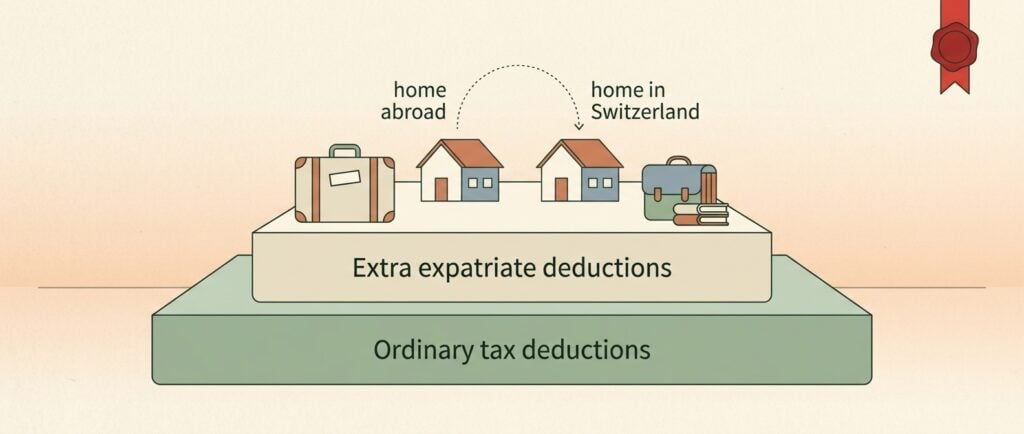
Swiss Expat Tax Benefits 2026: Special Tax Deductions for Posted Employees
In this article, we explain what the special “expat” status is all about, how an expat differs from other employees in Switzerland, and what benefits you can derive from it if you also belong to this group.

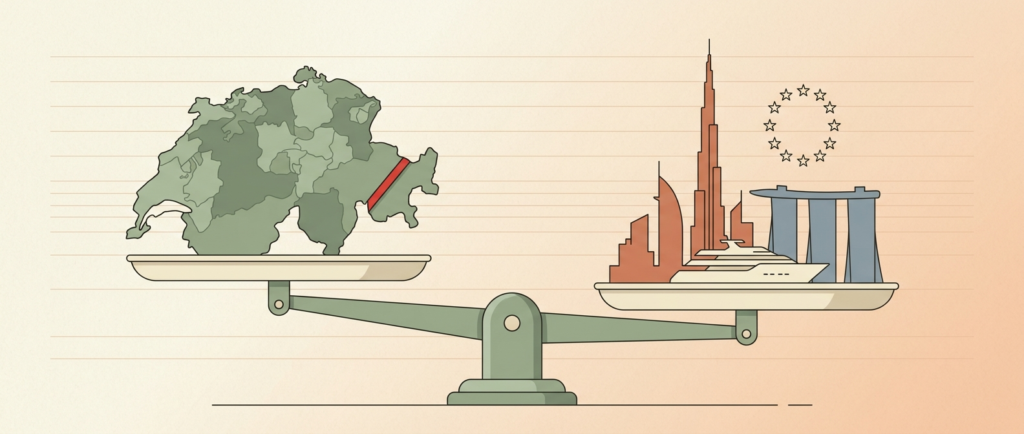
Is Switzerland Still a Tax Haven in 2026? How Much You Actually Pay vs the EU, UK, UAE & Monaco
Switzerland isn’t classically a tax haven, but for high earners the structural mix beats every EU comparator. Take-home and wealth tax compared to UAE, Monaco, UK, Germany, Italy, more.
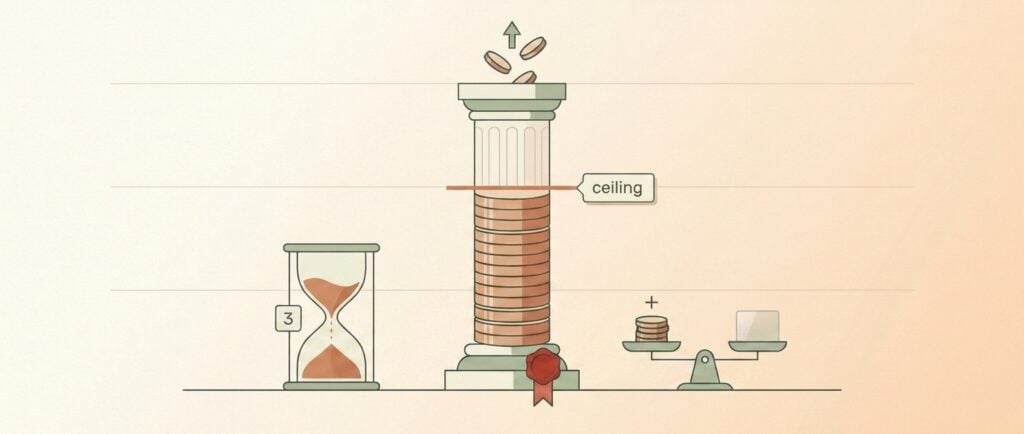
Swiss Pillar 2 Buy-In 2026: Tax Savings, the 3-Year Withdrawal Block, and When It’s Worth It
Many pension funds advertise voluntary purchases and present attractive calculation models to interested parties. What is often not mentioned is that the voluntary purchase into the pension fund is not worthwhile for everyone and does not always help with tax savings.