Swiss Lump-Sum Taxation 2026: Guide for Wealthy Arrivals
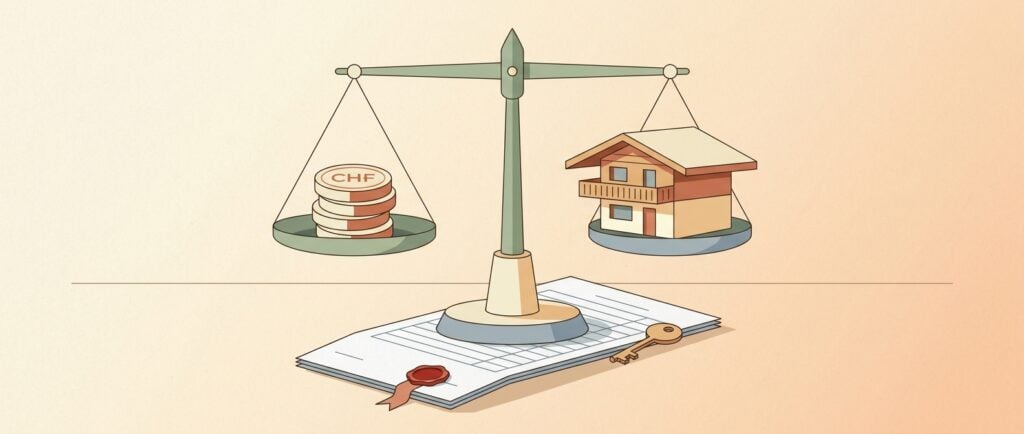
Switzerland still lets qualifying wealthy foreigners pay tax on their Swiss living costs instead of their worldwide income, and the federal floor for this regime in 2026 is CHF 435,000. For a wealthy arrival with CHF 2 million in worldwide income and CHF 15 million in net worth, ordinary Swiss tax in Vaud runs close to CHF 950,000 a year; under lump-sum taxation at the 2026 federal floor, it drops to roughly CHF 240,000 in the same canton. Whether that saving is actually available to you depends on your canton, your home country, your citizenship, and a control calculation most advisors skim past. This guide explains how Swiss lump-sum taxation (Aufwandsbesteuerung, forfait fiscal) actually works in 2026, who qualifies, which cantons still offer it, how the control calculation catches you, and when the regime is the wrong answer even if you qualify.
Key takeaways
- Swiss lump-sum taxation replaces worldwide-income tax with ordinary rates on a deemed expenditure base. That base is the higher of CHF 435,000 (2026 federal floor), 7× annual rent, 3× pension cost, or actual household living expenditure (Verordnung vom 10.9.2025, AS 2025 579; Art. 14 DBG).
- 21 of 26 cantons still offer the regime in 2026. Zurich, Schaffhausen, Appenzell Ausserrhoden, Basel-Landschaft and Basel-Stadt ended it at cantonal level between 2010 and 2014. Four of those abolitions came by popular vote; Basel-Stadt by parliamentary decision.
- Four gates apply at once: no Swiss citizenship, first Swiss tax residency (or 10+ years away), no gainful activity in Switzerland, and both spouses must qualify independently.
- Every year, the control calculation (Kontrollrechnung) forces the higher of the deemed base or a base capturing Swiss-source income, Swiss wealth, and treaty-relief foreign income (Art. 14 Abs. 3 lit. d DBG; ESTV Kreisschreiben Nr. 44, 24.7.2018).
- Seven treaty partners (Germany, Austria, Belgium, Canada, Italy, Norway, USA) require a modified lump-sum. France operates a separate disputed arrangement. Our lump-sum break-even tool models your canton and your numbers directly.
Swiss Lump-Sum Taxation at a Glance (2026)
The four questions every wealthy arrival asks, answered.
An alternative Swiss tax regime. You pay ordinary federal, cantonal and municipal rates on a deemed expenditure base (CHF 435,000 floor for 2026) instead of on your actual worldwide income and wealth.
Wealthy non-Swiss arrivals with no Swiss citizenship, taking up Swiss residence for the first time (or returning after 10+ years away), pursuing no gainful activity in Switzerland. Both spouses must qualify independently.
Above roughly CHF 800,000–1,200,000 of worldwide income, canton-dependent. Below that band, ordinary taxation in a low-tax canton (Zug, Nidwalden, Obwalden) is often cheaper even when you qualify cleanly.
For a CHF 2M income, CHF 15M wealth arrival: ~CHF 365,000 a year saved in Zug, ~CHF 710,000 a year in Vaud, compared to ordinary Swiss tax at the cantonal capital.
What Swiss Lump-Sum Taxation Actually Is
Lump-sum taxation (Aufwandsbesteuerung in German, forfait fiscal in French, tassazione secondo il dispendio in Italian) is an alternative to ordinary Swiss income and wealth tax. Instead of paying tax on your actual worldwide income and declaring your worldwide wealth, you pay ordinary Swiss rates on a deemed expenditure base calibrated to your Swiss living costs, with a federal floor of CHF 435,000 for the 2026 tax year (Source: Verordnung vom 10.9.2025, AS 2025 579, in force since 1.1.2026). It is not a flat tax, and it is not a tax holiday. You still pay federal, cantonal, and municipal tax at the ordinary progressive rates. What changes is the base on which those rates are applied.
The regime exists for one reason: Switzerland wants wealthy foreign arrivals who aren’t working here to pay a predictable Swiss tax bill without having to declare their worldwide income each year. You commit to Swiss residence, you pay ordinary Swiss rates on a base tied to your Swiss expenditure, and the Swiss tax authority stops asking questions about your Singapore bank account or your Delaware LLC. For many HNW arrivals, that certainty is worth as much as the tax saving itself.
What You Do Pay, and What You Don’t
You pay ordinary federal income tax on the deemed base, ordinary cantonal and municipal income tax on the same base (or on a cantonal minimum if higher), and cantonal wealth tax on a deemed wealth figure usually set around 20× the deemed income. You also pay Swiss VAT on your Swiss consumption like anyone else, and you pay Swiss social security contributions on any residual Swiss-source activity if that applies. What you don’t pay is income tax on your worldwide earnings, dividends from your non-Swiss investments, or gains from your foreign portfolio. Those are outside the Swiss base entirely, unless the control calculation pulls them back in.
Why the Regime Still Exists
Lump-sum taxation survived a federal abolition initiative on 30 November 2014. The initiative was rejected by 59.2% of Swiss voters, with only Schaffhausen voting yes at cantonal level (Source: Bundeskanzlei, Abstimmung 30.11.2014; Swissvotes Nr. 587). Since then the regime has been politically stable at federal level, though five cantons abolished it at their own cantonal level between 2010 and 2014. The transitional period for taxpayers who had a lump-sum ruling before the 2012 reform ended on 31.12.2020, so since 1.1.2021 every lump-sum taxpayer is on the revised regime under Art. 14 Abs. 3 DBG and Art. 6 StHG.
Read alongside: Switzerland’s worldwide income and wealth taxation, the ordinary regime that lump-sum replaces, and Switzerland’s cantonal wealth tax, which also becomes a deemed figure under the regime.
How Is the Deemed Tax Base Calculated in 2026?
The deemed base equals the higher of four figures: the CHF 435,000 federal floor for 2026, seven times your annual rent or imputed rental value (Eigenmietwert) if you own your Swiss home, three times your annual board-and-lodging cost if you’re a non-householder (staying in a hotel or with a family), or your actual worldwide annual living expenditure for the household. Whichever of the four is largest becomes your deemed base. This is the greater-of rule in Art. 14 Abs. 3 DBG, and it applies in every canton that offers the regime.
The 7× Rent Multiplier (and the 5× Nidwalden/Obwalden Exception)
Seven times annual rent is the binding input for most wealthy arrivals. Rents in the cantons where lump-sum taxpayers typically live (Vaud, Geneva, Zug, Valais, Ticino) easily push the deemed base above the CHF 435,000 floor. A wealthy family renting a Lake Geneva villa at CHF 20,000 per month produces a deemed base of 7 × 240,000 = CHF 1,680,000 a year. A Zug townhouse at CHF 10,000 per month produces 7 × 120,000 = CHF 840,000. Eigenmietwert for owners uses the same 7× multiplier.
Two outliers matter. Nidwalden and Obwalden apply a lower multiplier at cantonal level, 5× rent and 2× pension, but the federal rule under Art. 14 Abs. 3 DBG still requires 7× / 3× for the federal tax base. So if you live in NW or OW, the cantonal portion of your tax runs on a smaller deemed base than the federal portion. This asymmetry matters enough that your cantonal ruling letter will usually enumerate both bases explicitly.
The CHF 435,000 Federal Floor
The 2026 floor is set by the cold-progression ordinance of 10 September 2025 (Verordnung über die Folgen der kalten Progression, AS 2025 579), in force since 1 January 2026. The prior-year floor was CHF 434,700. The floor moves with cold progression roughly every year or two, so any published figure older than one tax year should be rechecked. Several cantons set their own cantonal minimum above the federal floor. Vaud commonly requires a minimum deemed base of approximately CHF 450,000 in current cantonal practice, and Geneva requires approximately CHF 500,000. Graubünden aligns with the federal floor at CHF 435,000 per the current Graubünden Kantonsblatt (the federal tax administration’s canton-by-canton practice sheet). For Zug, Luzern, St. Gallen, and Schwyz, consult the full set of ESTV Kantonsblätter at estv2.admin.ch/stp/kb for the current cantonal minimum before relying on a specific figure.
Worked Example: Zug vs Vaud
On a deemed base of CHF 1,008,000, 2026 Swiss tax at the cantonal capital runs roughly CHF 216,800 in Zug and roughly CHF 415,000 in Vaud, nearly a 2× swing on the same inputs. Here is how you get there. A single arrival rents a CHF 12,000-per-month apartment. Seven times annual rent is CHF 1,008,000, which is above the CHF 435,000 federal floor and any cantonal minimum, so that becomes the deemed base. On a deemed base of roughly CHF 1 million, the 2026 Swiss tax at the cantonal capital runs approximately CHF 216,800 in Zug and approximately CHF 415,000 in Vaud for the income-tax component alone (Taxolution 2026 tax model, single filer, no church tax). Add deemed wealth of about 20× deemed income (CHF 20 million), and Zug cantonal wealth tax adds roughly CHF 43,000 while Vaud adds roughly CHF 157,000. The canton of residence swings the total almost by a factor of two.
If you own your Swiss home instead of renting it, the same 7× multiplier applies to the imputed rental value (Eigenmietwert). For Lex Koller purchases by non-residents, read our guide to buying Swiss real estate as a foreigner.
Who Qualifies for Lump-Sum Taxation?
Four gates apply at once, and all four must hold every year the regime continues. You are not a Swiss citizen. You are taking up Swiss tax residence for the first time or returning after at least ten years of continuous absence. You pursue no gainful activity in Switzerland. If you are married, both spouses meet the first three gates independently. Miss any one gate and the regime ends for that year. The federal basis is Art. 14 DBG; cantonal practice follows Art. 6 StHG.
Four Eligibility Gates for Swiss Lump-Sum Taxation
All four must hold every year. Miss any one and the regime ends for that year.
Dual nationals holding a Swiss passport do not qualify either. Citizenship by descent counts.
Or returning to Switzerland after at least ten continuous years of tax residence abroad.
Passive worldwide portfolio management is fine. Swiss employment and paid Swiss directorship fees disqualify.
Married couples must both meet gates 1 to 3 independently. Unmarried cohabitants are assessed separately.
Gate 1: No Swiss Citizenship
Swiss citizens cannot use the regime, full stop. Dual nationals who hold a Swiss passport alongside a foreign one are treated as Swiss for this purpose and do not qualify either. This catches many second-generation expats who were born abroad to a Swiss parent and automatically hold citizenship by descent. If one spouse is Swiss and the other is not, the married-together filing option is unavailable, and in most cantonal practice the non-Swiss spouse also cannot elect the regime alone.
Gate 2: First Swiss Residency (or 10+ Years Away)
Either this is your first time as a Swiss tax resident, or you’ve been continuously tax-resident outside Switzerland for at least ten years before your new arrival. A short summer in a Swiss chalet as a foreign owner doesn’t count as tax residence. Registration with a Swiss commune combined with the centre-of-life test matters. If you were Swiss-tax-resident as a child or a student nine years ago, the clock hasn’t expired, and the regime isn’t available to you yet. The ten-year count is strict; cantons do not negotiate it.
Gate 3: No Gainful Activity in Switzerland
You can manage your own worldwide portfolio from Switzerland. You can sit on a foreign company’s board as a non-executive director and be paid for it abroad. What you cannot do is hold Swiss employment, run a Swiss-domiciled operating business, practise a profession in Switzerland, or sit on a Swiss company’s board and take a Swiss-source director fee. Passive investment management of your own assets is fine; anything that looks like a Swiss income stream is not. The line gets blurry in practice, Swiss directorships, part-time consulting for a Swiss client, even a small Swiss-side advisory retainer can all trigger scrutiny.
This matters practically: the non-executive foreign board seat that was fine at arrival can become a problem two years in, if fees start flowing through a Swiss-resident payroll or a Swiss-domiciled holding company restructures itself to book the same fees onshore. A canton reviewing a ruling renewal will look at every CHF that crosses a Swiss account, and a small fee taxed at source can pull the entire year onto the ordinary regime.
Gate 4: The Spousal Rule
If you’re married, both spouses must independently meet gates 1–3. Your partner being Swiss, or having been tax-resident in Switzerland within the last decade, or holding a Swiss employment contract at arrival, any of those disqualifies the household. The rule is strict because Swiss tax residency is assessed per household for married couples. You cannot elect the regime for yourself while your spouse declares worldwide income the ordinary way; it’s an either/or for the couple. Unmarried cohabitants are assessed separately and can individually qualify.
The Control Calculation: What’s Really Taxable Each Year
Every year, the Swiss tax authority runs two calculations in parallel: your ordinary Swiss tax on the deemed base, and your ordinary Swiss tax on a control-calculation base (Kontrollrechnung) that captures any Swiss-source income plus foreign income for which you’re claiming treaty relief. You pay on the higher of the two. This rule, Art. 14 Abs. 3 lit. d DBG, elaborated in ESTV Kreisschreiben Nr. 44 of 24 July 2018, is what stops the regime from being a complete worldwide-income shield for clients who happen to have a lot of Swiss-source income or heavy use of Switzerland’s double-tax-treaty network.
What Enters the Kontrollrechnung
Seven categories enter the Kontrollrechnung, and one of them, treaty-relief foreign income, is what catches most well-advised arrivals off guard. The full list under Art. 14 Abs. 3 lit. d: Swiss real-property income (rent from your Swiss buy-to-let, capital gains from Swiss property sales), Swiss movable capital (Swiss dividends, interest, royalties from Swiss-held assets), Swiss intellectual-property royalties, Swiss pensions and annuities, Swiss-source employment income (which technically disqualifies the regime anyway), Swiss wealth, and any foreign income for which you claim Swiss double-tax-treaty relief.
Why Treaty-Relief Foreign Income Is Caught
Claim Swiss treaty relief on foreign income, and that income enters the Kontrollrechnung at ordinary Swiss rates. You cannot be non-Swiss-taxpayer for lump-sum purposes and Swiss-resident for treaty purposes on the same income stream. Your German rental income, your French real estate, your Italian dividends, any foreign income where you ask the Swiss authority to certify your Swiss residence so you can claim reduced withholding under a Swiss treaty, enters the Kontrollrechnung at ordinary rates. The logic is that you can’t have it both ways: you can’t say “I’m not a Swiss taxpayer on this income” for lump-sum purposes while simultaneously saying “I am a Swiss taxpayer entitled to treaty relief on this income” for the foreign withholding agent. Kreisschreiben Nr. 44 enumerates this trap in Section 4, and every practising Swiss tax advisor has seen the year-one surprise.
Worked Example: The Zug Overshoot
A Dubai-based family moves to Zug. Their ruling sets a deemed base of CHF 1,000,000 based on 7× annual rent. They expect ordinary Zug tax on CHF 1,000,000 (roughly CHF 217,000 in 2026, Single filer). In their first full year, they also have CHF 400,000 of Swiss dividends (Swiss-listed equities in a Swiss bank) and CHF 800,000 of German rental income, on which they’ve asked the Swiss authority to certify residence for German treaty relief. The Kontrollrechnung base becomes CHF 400,000 + CHF 800,000 = CHF 1,200,000, which exceeds the deemed base of CHF 1,000,000. They pay Zug tax on CHF 1,200,000 that year, not on CHF 1,000,000. The CHF 200,000 difference is a material surprise.
In our experience, the most common overshoot pattern is exactly this one: clients restructure foreign rental income through a holding structure before arrival, forget that claiming Swiss treaty relief pulls the income back into the Kontrollrechnung, and face a year-one Swiss tax bill well above the ruling they negotiated. The fix is to decide before arrival which foreign income streams will claim treaty relief and which will accept the foreign withholding gross, and to model both scenarios against the deemed base before the ruling is signed, not after.
Which Cantons Still Offer Lump-Sum Taxation in 2026?
Twenty-one of Switzerland’s 26 cantons retain lump-sum taxation in 2026. Five abolished it at cantonal level between 2010 and 2014. Four did so by Volksinitiative (a cantonal popular vote that binds the legislature): Zurich (vote 8.2.2009, effective 1.1.2010), Schaffhausen (vote 25.9.2011, effective 1.1.2012), Appenzell Ausserrhoden (vote 11.3.2012, effective 1.1.2013), and Basel-Landschaft (vote 24.9.2012, effective 1.1.2013). The fifth, Basel-Stadt, abolished by a Grosser Rat (cantonal parliament) decision of 19.9.2012 with no popular vote, effective 1.1.2014. The federal regime still exists for residents of any of the other 21 cantons. The abolition cascade of 2011–2014 is what prompted the 2014 federal initiative that Swiss voters rejected by 59.2%.
The Five Cantons Without the Regime
Each abolition had a different driver. Zurich’s 2009 initiative came out of the left (AL / SP) and passed with 52.9% yes, reflecting Zurich-city voter density that outweighed the wealthier lakeside communes. Schaffhausen (2011) and Appenzell Ausserrhoden (2012) followed with similar SP-led campaigns. Basel-Landschaft approved its own SP initiative in September 2012 with around 61.5% yes. Basel-Stadt was the only abolition without a popular vote, the Grosser Rat (cantonal parliament) voted to abolish in September 2012, and the referendum window closed without being triggered. Living in any of these five still gives you Swiss federal tax residence, but the federal lump-sum regime is only available if you reside in one of the 21 retaining cantons.
Cantonal Minimum Deemed-Income Figures (2026)
The federal floor is CHF 435,000 for 2026. Cantons can set their own higher cantonal minima. Three figures are confirmed or commonly cited for 2026: Graubünden at CHF 435,000 (matches the federal floor, per the current GR Kantonsblatt); Vaud at approximately CHF 450,000 in current cantonal practice; and Geneva at approximately CHF 500,000 in current cantonal practice. The Vaud and Geneva figures are practitioner-cited rather than published in the federal Kantonsblatt. Verify the current cantonal figure before relying on it for a specific case. For ZG, LU, SG, SZ, and the other retaining cantons, the ESTV Kantonsblätter at estv2.admin.ch/stp/kb hold the current canton-by-canton minimums, canton-specific figures shift with cantonal tax reforms and should be checked each tax year.
Canton Choice: Where Wealthy Arrivals Actually Go
Five cantons concentrate the lump-sum market: Vaud, Valais, Ticino, Geneva, and Zug. The 2018 ESTV statistics, the most recent hard national figures, show 4,557 lump-sum taxpayers nationwide generating CHF 821 million in combined cantonal, communal and federal tax yield (Source: EFD, Besteuerung nach dem Aufwand, 2018 data). Vaud has historically been the largest by volume (around 1,396 taxpayers per the 2013 ESTV count, with practitioner estimates of 1,400+ in more recent years), followed by Valais (around 1,300 as of 2016) and Ticino. Geneva had around 710 as of 2012. Zug is smaller on the lump-sum cohort because its low ordinary-tax rates often eliminate the regime’s advantage for arrivals below roughly CHF 800,000 worldwide income.
Five cantons dominate the lump-sum map in practice. Each trades off differently on minimum, language, and why arrivals pick it. The full cantonal comparison, including a canton-by-canton break-even for your specific income and wealth, lives in the interactive tool below.
| Canton | 2026 cantonal minimum | Language | Why arrivals choose it |
|---|---|---|---|
| Vaud (Lausanne) | ~CHF 450,000 | French | Largest lump-sum canton by volume; Lake Geneva; IMD and international schools; high-CFO density |
| Geneva | ~CHF 500,000 | French | International finance hub; UN / WTO / private banking; French-language comfort |
| Zug | Federal floor | German | Lowest ordinary Swiss tax; commodities / crypto / family-office clusters; narrow lump-sum gap |
| Valais (Sion) | Federal floor | French/German | Resort-commune flexibility; Verbier / Crans-Montana; mountain lifestyle |
| Ticino (Bellinzona) | Federal floor | Italian | Milan-adjacent; Italian-language family; Lugano / Lake Como access |
The Zug Narrow-Gap Reality
Zug’s ordinary income tax is the lowest in Switzerland at most income levels. At CHF 1 million of worldwide income, ordinary tax in Zug city runs approximately CHF 216,800, compared to approximately CHF 415,000 in Vaud (Taxolution 2026 tax model, single filer, no church tax). Lump-sum taxation at the federal floor produces roughly CHF 87,000 of income tax in Zug against the same reader’s ordinary CHF 216,800, a saving of about CHF 130,000. That’s real, but it’s smaller than the Vaud equivalent, where lump-sum saves closer to CHF 240,000 on the same base.
Practical implication: for a reader with worldwide income in the CHF 500,000–800,000 range and ordinary housing costs, ordinary tax in Zug is often cheaper than lump-sum in Zug once the deemed base and cantonal wealth tax on 20× deemed income are factored in. The lump-sum regime in Zug mostly earns its keep for arrivals with worldwide income above roughly CHF 1–1.5 million or with very significant worldwide wealth where the 20× deemed-wealth cap bites materially less than actual wealth. Run the numbers in the break-even tool with your actual income, wealth, and housing cost to see the delta for Zug specifically.
What Changes for Treaty-State Residents?
Seven Swiss double-tax treaties require a “modified” lump-sum if the taxpayer wants the treaty to recognise Swiss residence for withholding-tax purposes. The seven states are Germany, Austria, Belgium, Canada, Italy, Norway, and the United States (Source: ESTV Kreisschreiben Nr. 44, 24.7.2018, Section 4). Under the modified version, all income arising in the treaty-partner state, not just Swiss-source or generic foreign income, enters the Kontrollrechnung at ordinary rates, as a condition of Swiss residence certification. Fail to modify, and the treaty partner refuses treaty benefits; your German rental income pays the full German withholding rate, not the reduced treaty rate.
Why Modification Exists
The seven treaty partners view Swiss lump-sum taxation as tax-privileged residence. Their position is that a taxpayer who isn’t being taxed at Swiss ordinary rates on worldwide income shouldn’t get Swiss treaty benefits on income sourced in their country, it would let the taxpayer strip the treaty partner of withholding tax without taking on full Swiss taxation. Switzerland’s response: you can still live here on the regime and claim the treaty, but your treaty-partner-state income must then be taxed in Switzerland at ordinary rates. The 2018 Kreisschreiben formalised the practice; before 2018 it was handled canton-by-canton.
The France Exception
France is not on the seven-state list, and it does not work like the others. France historically operated a bilateral forfait majoré arrangement with Switzerland, a 30% majoration on the deemed base that gave French-resident-returning lump-sum taxpayers treaty-covered Swiss residence status. On 12 September 2012, the French tax authority unilaterally terminated this administrative tolerance. From 1 January 2013 forward, France treats Swiss lump-sum taxpayers as non-resident of Switzerland for treaty purposes, regardless of any forfait majoration. Switzerland formally disputes the French position. In practice, a lump-sum taxpayer with significant French-source income should assume the France treaty will not cover them and plan accordingly, either through a non-modified forfait with French withholding accepted gross, or through a different residency structure entirely.
Pre-Arrival Planning for Treaty-State Exposure
If your largest foreign income is in Germany, Italy, or one of the other seven modified-treaty states, the planning conversation starts twelve to eighteen months before Swiss arrival. The most frequent pre-arrival move we handle is restructuring German rental property out of direct ownership into a German GmbH before the taxpayer becomes Swiss-resident. That replaces rental income (caught by modified lump-sum) with dividends, which, depending on the treaty article, may be handled differently. The exact structure depends on the specific treaty and the asset type. There is no generic answer, but the decision must be made before the Swiss ruling is signed, because the treaty election is not easily reversed once Swiss residency is established.
| Modified treaty state | Core mechanism | Practical note |
|---|---|---|
| Germany | German-source income enters Kontrollrechnung at ordinary Swiss rates | Largest single treaty-state cohort for Swiss arrivals; pre-arrival rental restructuring common |
| Austria | Same pattern as Germany | Smaller volume; sometimes relevant for Austrian family businesses |
| Belgium | Same pattern | Belgian dividends and pensions most frequent issue |
| Canada | Same pattern | Canadian-source pensions and US-Canada cross-holdings |
| Italy | Same pattern | Relevant for Ticino arrivals with Italian-source income |
| Norway | Same pattern (recognised via 2021 practice) | Norwegian tax authority accepts Swiss lump-sum under modified form |
| USA | Same pattern, but US citizens face US worldwide taxation regardless | Swiss-side planning coordinates with US-side advisor (see Exit Traps below) |
France is NOT on the modified-treaty list
France unilaterally terminated the bilateral forfait-majoré arrangement on 12 September 2012. Since 1 January 2013, French tax authorities treat Swiss lump-sum taxpayers as non-resident of Switzerland for French treaty purposes, regardless of any Swiss certification. Switzerland formally disputes this position. In practice, assume the France treaty will not cover you, and plan foreign income from French sources accordingly.
How Wealthy Arrivals Enter Switzerland: The Permit Track
A lump-sum tax ruling is worth nothing without a Swiss residence permit. The two tracks run in parallel, you negotiate the tax ruling with the cantonal tax authority and the permit with the cantonal migration office (or the Federal Office in Bern for some third-country cases). Third-country nationals (so UAE residents holding British, Indian, South African, or other non-EU passports) typically enter on either a cantonal discretionary B permit under the Foreign Nationals and Integration Act (AIG), Art. 30 Abs. 1 lit. b, read with Art. 32 Abs. 1 lit. c of its ordinance (VZAE), the fiscal-interest route, or on an Art. 28 AIG Rentner permit if they’re 55 or older and not working in Switzerland. EU and EFTA nationals use the EU–Swiss Freedom of Movement Agreement (FZA), Anhang I Art. 6, for non-working residence of independent means, which has no fiscal bar and is the easier path. (Pre-2019 the law was called AuG; since 1.1.2019 it has been AIG.)
Third-Country: The Fiscal-Interest Permit
Art. 30 Abs. 1 lit. b AIG is the standard route for wealthy third-country arrivals who are not yet 55 and are not married to an EU/EFTA national. The canton must agree that granting residence is in its fiscal and public interest, effectively, that the cantonal treasury gains enough from your lump-sum tax to justify the permit. Cantonal practice sets an informal threshold, commonly cited at roughly CHF 750,000 to CHF 1,000,000 in total effective annual Swiss tax in current cantonal practice. Below that, cantons typically decline. Above it, the conversation moves to ruling terms. The threshold is cantonal practice, not statute, and varies somewhat between cantons.
Third-Country: The Art. 28 Rentner Permit
If you’re 55 or older, have sufficient financial means, and are not pursuing gainful activity, Art. 28 AIG offers a different route. There’s a soft Swiss-ties requirement, some existing connection to Switzerland via family, previous residence, or long-standing business presence. The permit is discretionary at cantonal level, and the age threshold is set by the Bundesrat via VZAE. Rentner permits avoid the fiscal-interest haggling but require the age gate.
EU/EFTA: FZA Non-Gainful Residence
EU and EFTA nationals use the Freedom of Movement Agreement. FZA Anhang I Art. 6 grants residence to anyone of independent means and with qualifying health insurance, regardless of fiscal contribution. No cantonal fiscal-interest gate applies. For EU/EFTA citizens, the tax ruling is the harder negotiation; the permit is near-automatic provided financial means are documented. Our guide to Swiss residence permits walks through the full pathway.
How Tax Ruling and Permit Interact
The tax ruling and the permit are two separate processes with two separate cantonal authorities. Neither grants the other, but they look at each other. A canton’s migration office will want to see a tax ruling (or a draft) before granting a discretionary permit. The tax authority will want to know the permit status before finalising the ruling. In practice, the sensible sequence is: identify the canton, have a preliminary conversation with the tax office to confirm the ruling will be offered at roughly the expected terms, then file the permit application with the draft ruling as supporting evidence, then finalise both once residence is registered. Count on six to twelve months from first contact to a registered arrival, longer if the canton requires a hearing or a counterproposal.
How to Lose Lump-Sum Status: Seven Exit Traps
The regime is personal and annual. Seven situations end it or force ordinary taxation for the year: naturalisation, starting Swiss gainful activity, switching canton, a spouse trigger, refusing treaty modification while claiming treaty relief, a Kontrollrechnung overshoot, and death. The first six are largely avoidable with planning. Death is the hardest, the regime does not transfer to surviving heirs, even if they’d independently qualify.
Swiss Naturalisation
The moment you become a Swiss citizen, whether through facilitated naturalisation after marriage, ordinary naturalisation after ten years of C permit, or any other route, the regime ends for you. It ends for your household the same day if you were the only non-Swiss spouse; it continues for the other spouse if they still meet gates 1–3. Practical implication: if your long-term plan is Swiss citizenship, the lump-sum regime has a natural expiry date on the naturalisation year. Families on the C-permit track who naturalise after ten years sometimes discover the tax swing only in the year after, the first ordinary-tax filing after naturalisation can be dramatically higher than the last lump-sum year.
Canton Switch
Rulings are not portable. A ruling negotiated with the Vaud tax office is valid for Vaud only. If you move from Vaud to Geneva, you need a new ruling from the Geneva tax office, and it will reflect Geneva’s cantonal minimum deemed income, not Vaud’s. In most cases cantons cooperate, but not always at the same terms. If you want optionality between cantons, discuss it at the initial ruling stage, some cantons are willing to write a ruling with a conditional move clause; most aren’t.
Kontrollrechnung Overshoot
The Kontrollrechnung runs every year. If your Swiss-source plus treaty-relief-foreign income exceeds your deemed base in any given year, you pay on the higher figure that year. The regime itself doesn’t end, but you lose the expected tax saving for that year. Year-by-year risk management means anticipating large one-off events, a Swiss property sale, a pension lump-sum withdrawal, a substantial German rental year, and modelling the Kontrollrechnung in advance.
Spouse Triggers and Gainful-Activity Drift
Two adjacent traps. Your spouse taking a Swiss employment contract, even part-time, breaks the household-qualification rule. Your own advisory or consulting work, even informal, can be recharacterised as Swiss gainful activity, especially if Swiss clients pay into a Swiss account. Refusing treaty modification while simultaneously claiming treaty relief on foreign income is a third flavour of trigger: the ruling conditions in modified-treaty cases require you to pay the modified calculation; breaching that condition ends the modification and removes the treaty protection retroactively.
Is Lump-Sum Actually the Right Answer for You?
Lump-sum beats ordinary Swiss taxation above a canton-specific worldwide-income threshold. Below it, ordinary taxation in a low-tax canton, Zug, Nidwalden, Obwalden, Schwyz, or Uri, is often cheaper even if you qualify for the regime. Most arrivals below roughly CHF 800,000 of worldwide income don’t need lump-sum at all, and the fiscal-interest permit gate at CHF 750k–1M effective Swiss tax means most of them couldn’t secure the canton’s permit anyway. The regime genuinely pays off for arrivals above approximately CHF 1–2 million of worldwide income, or with very significant worldwide wealth where the 20× deemed-wealth cap substantially undercounts actual wealth.
Run the Comparison for Your Canton
The interactive tool below models both sides of the decision using 2026 Swiss federal, cantonal, and communal rates for each cantonal capital (Taxolution 2026 tax model, single filer, no church tax). Select your canton, your worldwide income, your net worth, and your annual Swiss housing cost. The tool shows your lump-sum tax for that canton, your ordinary Swiss tax on the same income and wealth, and the canton-specific break-even worldwide income above which lump-sum starts winning for your housing and wealth profile.
Swiss Lump-Sum Taxation Break-Even (2026)
See whether lump-sum taxation actually beats ordinary Swiss tax for your income, wealth, and canton.
Need help optimizing your Swiss tax situation?
Schedule a free consultationWhen Lump-Sum Is the Wrong Answer Even If You Qualify
Four reader profiles should consider staying on ordinary taxation despite qualifying. First, low-worldwide-income readers, below roughly CHF 800,000, typically pay less under ordinary taxation in a low-tax canton, once the deemed base and deemed-wealth tax are factored in. Second, readers with significant Swiss-source income (a Swiss rental portfolio, a Swiss pension) see the Kontrollrechnung pull them back onto ordinary anyway, which defeats the purpose. Third, readers who plan to naturalise within five to ten years should consider whether the temporary lump-sum years justify the administrative overhead when naturalisation will terminate the regime. Fourth, readers from modified-DTT states with heavy home-country exposure may find that the modified calculation consumes most of the expected saving.
The most common “right profile, wrong decision” pattern we see is a reader at CHF 500,000–800,000 of worldwide income who qualifies cleanly for the regime, chooses Zug as canton, and pays more under lump-sum than they would under ordinary Zug tax. The lump-sum regime is a wealth-side instrument in Zug; for pure income-side HNW readers below about CHF 1 million, ordinary Zug tax is cheaper. Run the tool above with your actual numbers before making the decision.
Frequently Asked Questions
Who is eligible for Swiss lump-sum taxation?
Four gates apply simultaneously: you are not a Swiss citizen (dual nationals with a Swiss passport don’t qualify), you are taking up Swiss tax residence for the first time or returning after at least ten years away, you pursue no gainful activity in Switzerland (passive investment management is permitted, Swiss employment and Swiss directorship fees are not). If married, both spouses must meet the first three gates independently. Miss any one gate and the regime ends. The basis is Art. 14 DBG at federal level and Art. 6 StHG at cantonal level.
What is the minimum lump-sum tax in Switzerland in 2026?
The federal floor for 2026 is CHF 435,000 of deemed income, set by the cold-progression ordinance of 10 September 2025 (AS 2025 579). Most cantons accept this floor. Vaud applies a higher cantonal minimum of approximately CHF 450,000 in current cantonal practice, and Geneva approximately CHF 500,000. Tax is then calculated at ordinary Swiss federal, cantonal and communal rates on the deemed base, which typically produces a minimum total Swiss tax around CHF 150,000–200,000 per year in the cheapest cantons and closer to CHF 200,000–250,000 in higher-tax cantons like Vaud and Geneva, depending on cantonal wealth tax on the deemed wealth.
Which Swiss cantons still offer lump-sum taxation?
Twenty-one of 26 cantons retain the regime in 2026. The five that abolished it at cantonal level between 2010 and 2014 are Zurich, Schaffhausen, Appenzell Ausserrhoden, Basel-Landschaft, and Basel-Stadt. The federal lump-sum regime is still available through any of the 21 retaining cantons, and the five abolitions only affect the cantonal portion of the deemed-base tax, the federal regime itself remains intact nationwide.
How much can you save with lump-sum taxation versus ordinary Swiss tax?
The saving is canton-specific and depends on your worldwide income, wealth, and housing costs. For a wealthy arrival with CHF 2 million of worldwide income and CHF 15 million of wealth, ordinary Swiss tax at the cantonal capital runs approximately CHF 470,000 in Zug and approximately CHF 950,000 in Vaud for 2026 (Taxolution 2026 tax model). Lump-sum taxation at the federal floor produces approximately CHF 105,000 in Zug and approximately CHF 240,000 in Vaud for the same reader, savings of CHF 365,000 and CHF 710,000 respectively. The break-even income, where lump-sum becomes cheaper than ordinary, sits between roughly CHF 800,000 and CHF 1,200,000 of worldwide income in most cantons, and higher in Zug. Use the tool above to model your specific situation.
How do I apply for Swiss lump-sum taxation?
Two processes run in parallel with two cantonal authorities. First, approach the cantonal tax office with a draft ruling proposal: your deemed base, your housing plans, your expected Kontrollrechnung profile. Second, file a residence-permit application with the cantonal migration office, Art. 30 Abs. 1 lit. b AIG for third-country nationals with fiscal interest, Art. 28 AIG for 55+ Rentner permits, or FZA Anhang I Art. 6 for EU/EFTA non-gainful. Count on six to twelve months from first contact to registered arrival. A Swiss tax advisor familiar with the chosen canton typically leads the ruling negotiation.
Can US citizens use Swiss lump-sum taxation?
Yes. US citizenship does not disqualify anyone from the Swiss regime, the four eligibility gates apply the same way. But US citizens remain subject to US federal income tax on their worldwide income regardless of their Swiss arrangement, so the regime only optimises the Swiss side of the bill. In Taxolution’s work with US-citizen arrivals, the Swiss-side planning (canton choice, lump-sum ruling negotiation, Kontrollrechnung modelling, and permit track) is coordinated with your US-side advisor. We do not advise on US tax outcomes, US trust structures, or US filing obligations, those require a qualified US-side attorney or CPA. The US is also one of the seven modified-treaty states, so the US-Swiss tax treaty requires the modified calculation for treaty recognition.
What to Do Next
Swiss lump-sum taxation rewards planning and punishes assumptions. The decision framework starts with eligibility (four gates, all strict), moves to canton choice (five dominant options, each with different minimums and permit thresholds), accounts for the Kontrollrechnung (especially for clients with Swiss-source income or heavy home-country exposure in the seven modified-treaty states), and ends with the permit track (Art. 30 fiscal-interest for third-country, Art. 28 Rentner for 55+, FZA for EU/EFTA). Most arrivals benefit from the regime above roughly CHF 1–2 million of worldwide income. Below that, ordinary taxation in a low-tax canton is often cheaper, even when you cleanly qualify.
- Federal floor for 2026 is CHF 435,000. Vaud and Geneva apply higher cantonal minimums.
- 21 of 26 cantons still offer the regime. The 5 abolitions happened between 2010 and 2014.
- Four eligibility gates: citizenship, first/10+ year residency, no Swiss gainful activity, spousal parallel-qualification.
- Kontrollrechnung catches Swiss-source income and treaty-relief foreign income every year.
- Seven modified-treaty states (DE, AT, BE, CA, IT, NO, USA). France is a separate disputed case.
- Break-even worldwide income sits around CHF 800k–1.2M in most cantons; higher in Zug.
If you’re weighing Switzerland against the UAE, Singapore, or Monaco, or rethinking residence after the UK non-dom abolition, the numbers depend on your canton, your housing, your home-country tax exposure, and your citizenship. Our moving-to-Switzerland guide covers the broader arrival-planning picture. And the interactive break-even tool above gives you a concrete delta figure before any conversation with an advisor.
Is lump-sum the right move for you?
We model the Swiss side for wealthy arrivals, canton choice, lump-sum ruling negotiation, Kontrollrechnung exposure, and permit track, so you know the real number before you commit to a move. For US citizens, we coordinate with your US-side advisor.
Table of Contents
Latest blog posts
Swiss Expat Tax Benefits 2026: Special Tax Deductions for Posted Employees
In this article, we explain what the special “expat” status is all about, how an expat differs from other employees in Switzerland, and what benefits you can derive from it if you also belong to this group.

Is Switzerland Still a Tax Haven in 2026? How Much You Actually Pay vs the EU, UK, UAE & Monaco
Switzerland isn’t classically a tax haven, but for high earners the structural mix beats every EU comparator. Take-home and wealth tax compared to UAE, Monaco, UK, Germany, Italy, more.
Swiss Pillar 2 Buy-In 2026: Tax Savings, the 3-Year Withdrawal Block, and When It’s Worth It
Many pension funds advertise voluntary purchases and present attractive calculation models to interested parties. What is often not mentioned is that the voluntary purchase into the pension fund is not worthwhile for everyone and does not always help with tax savings.