Tax Deadlines in Switzerland 2026: Key Dates & Extension Options by Canton

Switzerland’s federal system means that tax return filing deadlines vary significantly across cantons. While some offer automatic extensions, others require formal requests and may charge administrative fees. In this guide, we break down the key deadlines, extension options, and potential costs for the 2025 tax year (filed in 2026) across Switzerland’s largest and most popular cantons. Whether you need extra time to file or want to avoid late penalties, this guide will help you navigate the process smoothly.
How Swiss Tax Deadlines and Extensions Actually Work
Before diving into canton-specific rules, it helps to understand the general mechanics that apply across Switzerland.
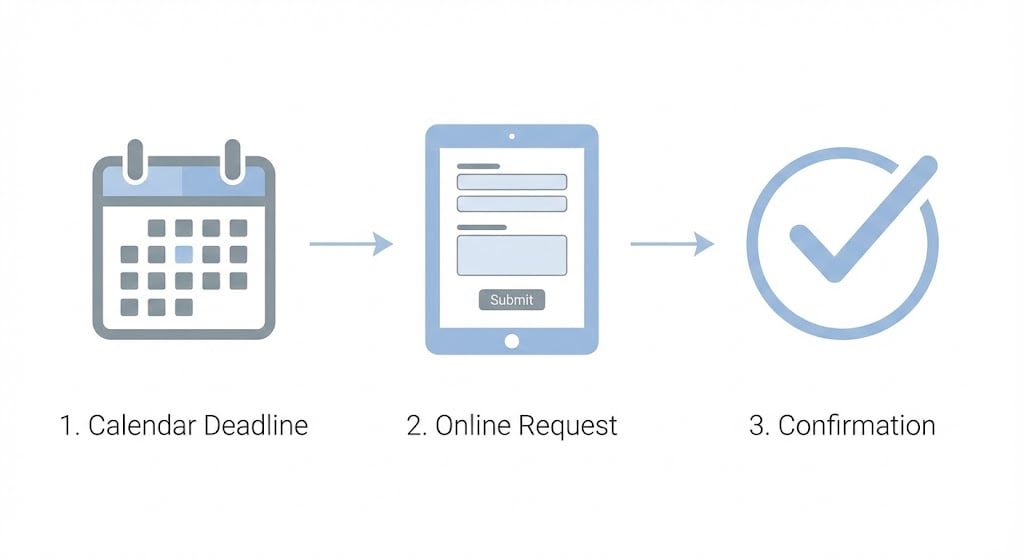
The Swiss tax year runs from January 1 to December 31. When we talk about “filing in 2026,” we mean submitting the return for income and wealth earned during 2025. You’ll often hear that “March 31” is the standard Swiss tax deadline, but this is only a rough approximation. Several cantons set earlier dates (Vaud and Bern use March 15), while others give you until April 30 (Zug and Ticino).
Most cantons distinguish between three stages: the ordinary deadline, any automatic grace period or first extension, and formal extensions requiring a request. Some cantons, like Vaud, build in a tolerance period where you can file after the official deadline without asking permission. Others require you to submit an extension request (Fristerstreckung, prolongation de délai, or proroga) before the original deadline passes. Missing this window usually means reminders, fines, or the tax office estimating your taxes on their behalf — rarely in your favour.
Extension requests today are mostly handled online through cantonal portals. Some cantons link extensions to QR payment slips: paying a fixed fee automatically counts as your extension request. After a certain point — often around September or October — most cantons require written justification for any further delay.
Extension fees vary widely. Zurich, Vaud, Ticino, Lucerne, and Schaffhausen typically grant initial extensions free of charge. Geneva charges CHF 20–60 depending on duration. Bern has a tiered fee ladder. Fribourg charges CHF 20 per extension period. If you manage your extensions correctly, many cantons will let you file as late as November or December 2026.
Quick Overview: 2026 Cantonal Deadlines at a Glance

| Canton | Ordinary Deadline | Max Extension | Fees |
|---|---|---|---|
| Zurich | 31 March 2026 | 30 November 2026 | Free |
| Geneva | 31 March 2026 | ~30 October 2026 | CHF 20–60 |
| Vaud | 15 March 2026 | 30 September 2026 | Free |
| Basel-Stadt | 31 March 2026 | 31 December 2026 | CHF 40 after September |
| Bern | 15 March 2026 | 15 November 2026 | CHF 20–40 |
| Zug | 30 April 2026 | 31 December 2026 | Free (CHF 35 beyond Dec) |
| Ticino | 30 April 2026 | 31 December 2026 | Free |
| Lucerne | 31 March 2026 | 31 August / 30 November 2026 | Free |
| Fribourg | 31 March 2026 | 15 December 2026 | CHF 20 per extension |
| Schaffhausen | 31 March 2026 | 30 November 2026 | Free |
| Schwyz | 31 March 2026 | 31 December 2026 | Free |
| Solothurn | 31 March 2026 | 30 November 2026 | CHF 30 after July |
| St. Gallen | 31 March 2026 | Case-by-case | Free |
| Valais | 31 March 2026 | 31 December 2026 | CHF 20+ |
Canton Zurich
In the canton of Zurich, the standard deadline for filing individual tax returns for the 2025 tax year is March 31, 2026.
If taxpayers cannot meet this date, they may request a filing extension (Fristerstreckung) by March 31. An extension requested by that deadline is generally granted until September 30, 2026. Should more time be required, a second extension can be requested from early August before the first extension expires; this allows filing up to November 30, 2026.
Extensions are typically granted without charge in Zurich, provided the requests are made on time. Any late extension requests (after November 30) or those exceeding these dates are denied unless exceptional reasons are proven. Zurich is flexible if you act early, but offers very little mercy if you wait until after November.
Canton Geneva
In Geneva, the standard deadline for individuals to submit the tax return is March 31, 2026.
If you miss this date without an extension, the tax office will send a reminder notice and charge a fee for late filing. To avoid this, Geneva allows taxpayers to request an extension of time (prolongation de délai) well in advance. Extension requests can be made between January 1 and roughly October 30, 2026 through various methods: online via the e-démarches portal, by phone (automated system), or by mail.
Extensions in Geneva come with an administrative fee based on the length of the prolongation: an extension of up to 3 months costs CHF 20, up to 5 months CHF 40, and more than 5 months CHF 60. After November 1, Geneva will only consider further extension requests in exceptional cases, and these must be submitted in writing with a justification (such as waiting for documents, illness, etc.).
It’s worth noting that if you live outside Geneva but are taxable in the canton (for example, working in Geneva), you can ask Geneva’s tax office to match the deadline of your home canton by writing “Accord canton domicile” with proof of your home canton’s extension.
Canton Vaud
The canton of Vaud sets an earlier ordinary deadline: individual taxpayers must normally file their tax returns by March 15, 2026.
However, Vaud provides a generous automatic grace period until June 30, 2026 for residents with full tax liability in the canton. This means that, in practice, if you file by June 30, it is considered on time and you do not need to request an extension by March — the tax authorities tolerate filings up to end of June without a formal extension request.
If you still require more time beyond June, you must submit an extension request via e-Délai or in writing by June 30. Such a request is free of charge if made before the grace period ends. Under the cantonal guidelines, a further extension can be granted up to September 30, 2026 for individual taxpayers in Vaud. Tax professionals handling multiple Vaud clients may obtain group extensions to October 31, but this applies to fiduciaries, not individual filers.
Vaud is particularly taxpayer-friendly thanks to the long grace period, but June 30 is the hard cut-off to request anything beyond September.
Canton Basel-Stadt
Basel-Stadt requires individual taxpayers to submit their 2025 tax returns by March 31, 2026.
If you cannot file by that date, you may apply for a deadline extension (Fristverlängerung) with the cantonal tax office. A free extension is typically granted up to September 30, 2026 upon request, either online via the Basel eSteuern portal or in writing.
Extensions between October 1 and December 31, 2026 can be granted via online request, but each such extension costs CHF 40. Extensions into 2027 are only approved with compelling reasons (severe illness, major cross-border issues) and generally require an appropriate advance payment of estimated taxes.
Basel-Stadt is clear and systematised: a long free window to September, then a paid but predictable path to year-end.
Canton Bern
In the canton of Bern, the ordinary due date is March 15, 2026 for most employees and non-self-employed individuals. Self-employed taxpayers have until May 15, 2026.
Bern offers a staged extension system. An initial extension can be obtained free of charge up to July 15, 2026 via the online portal. If taxpayers need even more time, further extensions are possible but come with fees: an extension to September 15, 2026 requires a CHF 20 fee (online), and extending further to November 15, 2026 incurs a CHF 40 fee. Paper or phone requests cost an additional CHF 20 per step.
It’s important to request each extension before the current deadline expires. No routine extensions beyond November 15 are granted in Bern — if a taxpayer still hasn’t filed by then, they may face a late filing penalty (Mahngebühr of around CHF 60) or taxation at discretion.
Canton Zug
The canton of Zug sets a later filing date than many other regions. Individual tax returns for 2025 are due by April 30, 2026.
If this standard deadline cannot be met, taxpayers can request an extension from the cantonal tax authorities. Zug is relatively lenient with extensions: upon request, the filing deadline can be extended up to December 31, 2026. This gives Zug residents a potential extra eight months beyond April to complete and submit their tax declaration.
There is no fee for a normal extension in Zug; the process is typically free if done on time. Extensions beyond December 31 (which is uncommon) require a written, justified request and attract a processing fee of CHF 35. The extension is not automatic — you must submit an extension request before the original April 30 deadline.
Canton Ticino
In Ticino, the individual tax return deadline is April 30, 2026.
An extension (proroga) can be requested if you cannot file by that date. The Ticino tax authorities generally allow extensions up to December 31, 2026 on request. Traditionally, Ticino sent a paper form for extension requests, but starting with recent tax years, this has moved online — taxpayers are now expected to request any extension via the designated online portal (by scanning a QR code on the tax form or visiting the website).
There is no fee for a standard extension in Ticino; taxpayers simply need to apply before the April 30 deadline. Once an extension is granted, the new deadline is usually confirmed as the end of the year. No further extensions into the next year are normally permitted.
Canton Lucerne
In Canton Lucerne, individual income tax returns are generally due by March 31, 2026.
If taxpayers cannot submit their return by this date, they can request an extension via the canton’s e-Fristerstreckung portal. For most employees and non-working residents, online extension is possible up to August 31, 2026. For self-employed individuals, people with professional representation, and certain limited-tax cases, online extension can reach November 30, 2026.
These standard online extensions are free. Extensions beyond August 31 or November 30 are only granted with written, well-justified requests and are approved very restrictively. Lucerne is straightforward: March 31 deadline, self-service until late August (or November for self-employed), with a clear, well-documented online process.
Canton Fribourg
Canton Fribourg requires individual tax returns to be filed by March 31, 2026.
If this deadline cannot be met, Fribourg allows taxpayers to obtain up to four extensions (each extension typically for a couple of months) with a final cutoff of December 15, 2026. No extension is granted beyond this date.
Each extension in Fribourg comes with an administrative fee of CHF 20. To get an extension, taxpayers have two options. Option 1: Pay the CHF 20 fee using the QR-payment slip attached to the tax return form — this payment alone serves as the extension request, with no further explanation needed. Option 2: Submit a written request with a valid reason for needing more time; the cantonal tax office will review the justification, and a CHF 20 fee will be billed for processing.
In total, up to four extensions (each incurring CHF 20) can be granted sequentially. However, December 15, 2026 is the absolute final deadline in Fribourg — no filings are accepted after this date.
Canton Schaffhausen
In Canton Schaffhausen, the regular deadline for filing individual tax returns is March 31, 2026.
Taxpayers who need more time can request an extension of the filing deadline up to November 30, 2026 via the cantonal eFristerstreckung system or municipal portals. There is no charge for obtaining an extension in Schaffhausen — it’s a free service as long as the request is made on time.
Extensions beyond November 30 are generally not granted, except in very exceptional cases. In rare situations (e.g. severe hardship or delays outside the taxpayer’s control), the tax office may consider an additional extension upon special request, but this is an exception rather than the rule.
Canton Schwyz
Canton Schwyz sets an ordinary tax filing deadline of March 31, 2026 for individuals, but it offers one of the longest potential extensions.
Taxpayers can apply to extend the deadline all the way to December 31, 2026 for filing their 2025 income tax return. There is no fee charged for an extension request in Schwyz — the service is free. However, the extension request must typically be submitted by July 31, 2026 if you intend to take advantage of the full extension until year-end.
In practice, Schwyz often grants an initial extension (for example, many taxpayers are first given an extension to September 30). If more time is still required, a further request can extend the deadline to December 31, 2026. You must proactively request the extension before each existing deadline — don’t assume it’s automatic.
Canton Solothurn
In Canton Solothurn, the standard filing due date for individual tax returns is March 31, 2026.
If you cannot file by that date, you may request an extension until July 31, 2026 as an initial prolongation. This first extension is free of charge — taxpayers can simply submit a deadline extension form or apply online to get the due date moved to end of July. The canton readily grants this July 31 extension as long as the request is made on time.
If the tax return still cannot be completed by July, Solothurn allows a further extension to November 30, 2026, but with additional requirements. To obtain this extension, you must send a written request to the Cantonal Tax Administration explaining the reasons for the delay, and a processing fee of CHF 30 is charged. Extensions beyond November 30 are only granted in extraordinary cases (serious illness, accident, etc.) and also cost CHF 30 per step.
Canton St. Gallen
Canton St. Gallen requires individual tax returns to be filed by March 31, 2026 as the regular deadline.
Unlike many other cantons, St. Gallen does not have a fixed final extension date that applies universally to all taxpayers. Instead, extensions are handled on a case-by-case basis by the tax authorities. In practice, this means taxpayers may request an extension for a specific date and the tax office will decide whether to grant it and how long of an extension to allow. There is no fee for requesting an extension — the process is free in St. Gallen.
Typically, an initial extension in St. Gallen might prolong the deadline by a few months (for example, to September or October). If more time is needed, one can request further extensions, which the canton will evaluate individually. It’s not uncommon for St. Gallen to grant extensions into late autumn or even December of the filing year, depending on the situation, but each step requires a formal request and approval. Don’t assume a fixed “last date” like in Solothurn or Fribourg — St. Gallen is flexible but less rule-bound.
Canton Valais
In Canton Valais, the normal deadline for submitting the annual tax return is March 31, 2026.
If you aren’t able to file by then, the Valais tax administration offers a staged system of extensions. All taxpayers are effectively allowed a first extension until July 31, 2026, but this is obtained by paying a CHF 20 fee. There is no need to write a formal request for this first extension — simply paying the CHF 20 délai fee (using the payment slip enclosed with your tax declaration) will automatically extend your deadline from March 31 to July 31.
If the return still cannot be completed by the end of July, additional extensions are possible, but only through authorized fiduciaries (tax advisors/accountants). Tax professionals can apply for up to two more extensions on behalf of their clients in Valais. These further extensions typically extend the deadline first to October 31, 2026, and finally to December 31, 2026 at the latest. The Valais tax authority will not accept any individual tax returns after December 31, 2026.
It’s important to note that only licensed fiduciaries can obtain the October or December extensions — an individual taxpayer acting on their own cannot directly get an extension beyond July 31 through the normal system. If you anticipate needing time beyond July, consider working with a tax advisor who can handle the extension requests for you. Filing late in Valais without having paid for an extension or obtained one through a fiduciary can lead to hefty fines for late submission.
Practical Tips: Choosing Your Extension Strategy
When it makes sense to extend early: If you know your pillar 3a statements, investment documents, or foreign income records will arrive late, request an extension immediately. This is especially relevant for expats with cross-border income or assets in multiple countries. An early extension costs nothing in most cantons and buys you peace of mind.
When to avoid pushing everything to December: Extending to the maximum deadline can delay your tax assessment by months, which may affect mortgage applications, residence permit renewals, or other situations requiring proof of your tax status. If you need an official tax assessment (Veranlagung) for any reason, consider filing earlier even if you could technically extend further.
If you’re filing in multiple cantons (for example, you have property in one canton while living in another), coordinating deadlines becomes more complex. Each canton has its own rules, and missing one deadline while focusing on another can trigger penalties.
Information valid as of January 2026. Cantonal rules can change during the year — always verify current deadlines on the official canton website or with your tax advisor.
Table of Contents
Latest blog posts
Swiss Expat Tax Benefits 2026: Special Tax Deductions for Posted Employees
In this article, we explain what the special “expat” status is all about, how an expat differs from other employees in Switzerland, and what benefits you can derive from it if you also belong to this group.


Is Switzerland Still a Tax Haven in 2026? How Much You Actually Pay vs the EU, UK, UAE & Monaco
Switzerland isn’t classically a tax haven, but for high earners the structural mix beats every EU comparator. Take-home and wealth tax compared to UAE, Monaco, UK, Germany, Italy, more.
Swiss Pillar 2 Buy-In 2026: Tax Savings, the 3-Year Withdrawal Block, and When It’s Worth It
Many pension funds advertise voluntary purchases and present attractive calculation models to interested parties. What is often not mentioned is that the voluntary purchase into the pension fund is not worthwhile for everyone and does not always help with tax savings.