Swiss Wealth Tax 2026: What Expats Need to Know

If you moved to Switzerland from the US, UK, or most other countries, there’s a tax here that probably didn’t exist back home: the wealth tax. Every year, the canton and municipality where you live tax everything you own, minus everything you owe. Your bank accounts, your investment portfolio, your car, even your cryptocurrency. It’s not a huge amount for most people, but it catches newcomers off guard, and the differences between cantons are staggering.
A married couple with CHF 1 million in net assets pays CHF 1,253 per year in Stans (Nidwalden), but CHF 6,804 in Neuchatel. Same wealth, same family situation, five times the tax. And 2026 brought fresh changes: Zurich cut its cantonal multiplier to 95% (the biggest reduction in 20 years), Lucerne dropped to 1.45 units, and Schwyz trimmed to 110%.
This guide covers how Swiss wealth tax works, who actually pays it, how much it costs by canton, what changed this year, and what you can do to reduce it.
Who Pays Wealth Tax?
Anyone who is a Swiss tax resident pays wealth tax on their worldwide net assets. It doesn’t matter what passport you hold or how long you’ve been here. If you’re registered in a Swiss municipality and it’s December 31, you owe wealth tax for that year.
If you moved to Switzerland partway through the year, wealth tax is pro-rated from your arrival date. This matters because about 15% of expat tax cases involve a mid-year move. We’ll cover the details further down.
The Quellensteuer (withholding tax) question. If you’re source-taxed, you might assume wealth tax doesn’t apply to you. Here’s how it actually works. Quellensteuer covers your employment income tax only. It does not include wealth tax. Whether you owe wealth tax separately depends on whether you’re subject to ordinary assessment, and there are several triggers that can pull you into it.
The most commonly cited trigger is the CHF 120,000 gross income threshold. Since the 2021 reform, this is a uniform federal rule, not a cantonal one. If either spouse earns above CHF 120,000 gross, ordinary assessment is mandatory. Your Quellensteuer becomes an advance payment that’s credited against the full tax bill, which now includes wealth tax.
But income isn’t the only trigger. If you have additional non-withheld income of CHF 3,000 or more per year (investment income, rental income, self-employment income, alimony), you’re also required to file. And here’s the one most expats miss: many cantons impose mandatory ordinary assessment based on asset thresholds alone. In Zurich, the threshold is CHF 80,000 in taxable assets for individuals or CHF 160,000 for jointly taxed couples. In Bern, it’s CHF 150,000. Owning Swiss real estate is another common trigger.
If none of those apply, you can still voluntarily request ordinary assessment (nachträgliche ordentliche Veranlagung, or NOV) by March 31 of the following year. This opens up deductions that Quellensteuer doesn’t allow, like Pillar 3a contributions, actual commuting costs, and childcare. But there’s a catch that’s easy to overlook: since 2021, the NOV request is irrevocable. Once you opt in, you must file a full return every year going forward. You cannot switch back to pure withholding tax if the numbers don’t work out.
The practical takeaway: if you’re a B or L permit holder earning under CHF 120,000 and you haven’t filed a full return, check whether your assets or other income already require you to. Many expats are technically obligated and don’t realize it, especially once savings and investments accumulate after a few years in Switzerland. And if you’re considering a voluntary switch, run the numbers on deductions versus wealth tax before committing to something you can’t undo.
How It Works
Switzerland has no federal wealth tax. Each of the 26 cantons sets its own rates, exemption thresholds, and structure. Your municipality then applies a multiplier on top of the cantonal rate. The tax is assessed on your net wealth as of December 31: total worldwide assets minus total debts.
For married couples and registered partnerships, both spouses’ assets are combined and taxed jointly. (A March 8, 2026 referendum on individual taxation could eventually change this, but implementation would take years.)
Three features create the huge variation between cantons:
Progressive vs. flat rates. Most cantons apply progressive rates where the percentage climbs with total wealth. Eight cantons use flat rates instead. Nidwalden charges a flat 0.25 per mille regardless of amount, while Geneva’s rates rise from 0.149% to over 0.38% at the top bracket. This means the “cheapest canton” depends on how much wealth you actually have.
Exemption thresholds. Before any tax is due, you get a tax-free allowance. Zurich exempts the first CHF 161,000 for married couples. Schwyz exempts CHF 250,000. Nidwalden has no exemption at all. For a typical expat with CHF 200,000-400,000 in net assets, the exemption can wipe out most or all of the base.
Municipal multipliers. Within any canton, municipalities set their own multiplier. In Zurich, Zumikon (71%) charges roughly 40% less than the city of Zurich (119%) on the same cantonal base. This is where precise location really moves the needle.
What’s Taxable, What’s Not
Taxable: Bank accounts (Swiss and foreign), investment accounts (stocks, bonds, ETFs, funds) at December 31 market prices, real estate at cantonal tax value (usually well below market), vehicles, cryptocurrency (at the FTA’s published year-end rate for Bitcoin, major exchange prices for others), surrenderable life insurance policies, precious metals and collectibles, and business interests.
Not taxable: Pension assets inside Pillar 2 (your occupational pension fund) and Pillar 3a (tied retirement savings), household furniture and personal belongings, non-surrenderable life insurance, and expected future inheritances.
Deductible debts: Mortgages, personal loans, outstanding tax liabilities, and documented private debts. Your net wealth is total assets minus total debts.
For most expats, the largest components are a mix of bank accounts, an investment portfolio, and possibly foreign accounts still held in your home country. If you own a home in Switzerland, the property enters at its cantonal tax value, which is typically 60-80% of the market price depending on the canton.
How Much Will You Pay?
The table below shows the annual wealth tax bill for a married couple with no church tax, living in the cantonal capital, at four wealth levels. All figures are for tax year 2026.
| City (Canton) | CHF 500,000 | CHF 1,000,000 | CHF 2,000,000 | CHF 5,000,000 |
|---|---|---|---|---|
| Zug (ZG) | 412 | 1,368 | 3,578 | 10,208 |
| Stans (NW) | 626 | 1,253 | 2,505 | 6,263 |
| Sarnen (OW) | 711 | 1,422 | 2,844 | 7,110 |
| Schwyz (SZ) | 855 | 1,710 | 3,420 | 8,550 |
| Luzern (LU) | 1,125 | 2,250 | 4,500 | 11,250 |
| Zurich (ZH) | 467 | 1,744 | 5,543 | 22,866 |
| Bern (BE) | 1,596 | 4,027 | 9,734 | 27,630 |
| Basel (BS) | 2,450 | 5,700 | 13,320 | 37,020 |
| Geneva (GE) | 2,106 | 5,115 | 12,680 | 38,114 |
| Lausanne (VD) | 2,553 | 6,394 | 14,310 | 38,057 |
| Neuchatel (NE) | 2,508 | 6,804 | 13,608 | 34,020 |
A few patterns jump out. Zurich looks cheap at CHF 500,000 (just CHF 467, thanks to its high exemption threshold) but becomes expensive at CHF 5 million (CHF 22,866) because of its steep progression. Flat-rate cantons like Schwyz and Nidwalden scale linearly, so their advantage grows with wealth. At CHF 5 million, the gap between the cheapest (Stans at CHF 6,263) and most expensive (Geneva at CHF 38,114) is over CHF 31,000 per year.
For most expats, the CHF 500,000 and CHF 1,000,000 columns are the relevant ones. At CHF 500,000 in Zurich, you’re paying CHF 467 per year. It’s noticeable on the tax bill but not life-changing. The numbers start to matter more as wealth grows, which is why this becomes an important planning topic over time.
Compare Wealth Tax by Canton (2026)
See how much you'd pay in annual wealth tax at each cantonal capital. Select your profile and wealth level.
Need help optimizing your Swiss tax situation?
Schedule a free consultationWhat Changed for 2025-2026
Several cantons made significant moves over the past two years. Here’s what matters.
Zurich: Multiplier Cut Meets Property Revaluation
Zurich reduced its cantonal multiplier from 98% to 95% for 2026-2027, the biggest cut in over 20 years. But for property owners, the benefit is partially offset by a major revaluation: taxable real estate values jumped by roughly 48% on average due to updated land values. Higher depreciation allowances (up to 40% for older properties, from 30%) and a new hardship provision cushion the impact. At the municipal level, 33 municipalities lowered their multipliers for 2026 while 10 raised them. Zumikon overtook Kilchberg as the canton’s lowest at 71%.
Geneva: 15% Wealth Tax Reduction
Geneva’s LEFI reform took effect January 1, 2025, delivering a 15% across-the-board reduction in wealth tax rates. This was paired with property revaluations (up 12% for pre-2015 purchases) and income tax reductions of 5.3-11.4% depending on bracket. Geneva’s bouclier fiscal (tax shield) capping combined income and wealth tax relative to net income remains in place.
Lucerne: Aggressive Multiplier Cuts
Lucerne reduced its cantonal tax units from 1.60 to 1.55 for 2025, then to 1.45 for 2026, with 1.40 planned for 2027. These cuts are partly financed by anticipated OECD minimum tax revenues. Within the canton, 15 municipalities also lowered their multipliers for 2026.
Schwyz: Multiplier Trimmed to 110%
The cantonal multiplier for natural persons dropped from 115% to 110% for 2026. The flat wealth tax rate of 0.6 per mille and exemptions (CHF 250,000 for married couples) remain unchanged.
Other Notable Changes
Bern lowered its cantonal Steueranlage from 3.025 to 2.975 for 2025 (approximately 1.7% reduction). Valais increased wealth tax exemptions by 50% (to CHF 90,000 for married couples). Obwalden reduced its state tax from 3.25 to 3.15. Nidwalden is working on a 2026 tax law revision abolishing minimum taxes on real estate.
How to Reduce Your Wealth Tax
Wealth tax is based on net wealth, so every legal strategy either reduces what you own on paper, increases what you owe, or shifts assets into tax-exempt structures. Here are the approaches that matter most for expats.
Maximize Pension Contributions (the Biggest Lever for Most Expats)
Assets inside Pillar 2 and Pillar 3a are completely exempt from wealth tax. Every franc you move from your bank account into the pension system disappears from your taxable wealth.
Pillar 3a contributions (CHF 7,258 for employees with a pension fund in 2026) give you a double benefit: an income tax deduction this year, and a wealth tax reduction for as long as the money stays in the account. New for 2026: retroactive buy-in contributions are now possible to close gaps from previous years (starting with 2025). If you moved to Switzerland a few years ago and didn’t max out your Pillar 3a in earlier years, you may be able to make catch-up contributions.
Voluntary Pillar 2 purchases deliver even larger effects. If your pension certificate shows a contribution gap, you can make a lump-sum payment that reduces both your taxable income and your taxable wealth in one move. Spreading purchases over multiple years maximizes the income tax benefit. One critical constraint: a three-year blocking period applies after the last voluntary purchase, during which no lump-sum capital withdrawal is permitted. Plan accordingly.
Consider Your Mortgage Strategy
This trips up many expats from countries where paying off your home is the default financial goal. In Switzerland, the calculus is different, and it starts with how property is valued. Most cantons assess real estate at a Steuerwert (tax value) well below market value — often around 70%, sometimes lower. But the mortgage against that property is deducted at full face value. That mismatch creates a built-in wealth tax advantage that you don’t get with liquid assets, which are assessed at 100%.
Example: a property worth CHF 1,000,000 on the market might have a tax value of CHF 700,000. With a CHF 500,000 mortgage, the net taxable wealth from that property is just CHF 200,000. If you sold the property and held the CHF 500,000 equity in cash instead, all of it would count toward your taxable wealth. Owning property with a mortgage can structurally reduce your wealth tax bill compared to holding equivalent value in a bank account.
On the income tax side, there’s a separate consideration. You must declare the Eigenmietwert (imputed rental value) as income whether or not you have a mortgage, but mortgage interest is deductible against it. Pay off the mortgage and you lose that deduction while the Eigenmietwert remains.
That said, none of this means keeping a mortgage is automatically the right move. If excess cash just sits in a savings account, you’re paying interest for no real benefit and it may make more sense to pay down the debt. Where the mortgage strategy pays off is when you invest the freed-up capital and earn returns above the mortgage rate after tax. The combination of below-market property assessment, the interest deduction, and investment returns can make keeping the mortgage worthwhile — but it depends on your actual numbers, not a rule of thumb.
Time Your Pension Withdrawals Carefully
When you withdraw pension capital as a lump sum, the entire amount enters your taxable wealth from that year onward. Staggering withdrawals across multiple tax years reduces both the one-time capital withdrawal tax (through lower progression) and delays when the full amount becomes subject to annual wealth tax.
If you’re leaving Switzerland, the withholding tax on pension withdrawals is based on the canton where the pension foundation is domiciled, not your former canton of residence. Transferring vested benefits to an institution in a low-tax canton (Schwyz is typically cheapest) before departure can save meaningful amounts on a large withdrawal.
Think About Your Municipality
You don’t have to change cantons to save on wealth tax. Even within Zurich, moving from the city to a lower-multiplier municipality can reduce your total tax bill. The wealth tax portion is just one component, but combined with income tax savings, it adds up. For expats with flexibility in where they live (common for those working remotely or at companies with multiple Swiss offices), this is worth investigating.
Moving To or From Switzerland Mid-Year
About 15% of the expat tax cases we handle involve a move during the tax year, and the wealth tax implications are often misunderstood.
Arriving mid-year: Tax residency begins on the day you register in your Swiss municipality. Wealth tax is pro-rated from that date to December 31. Your income for the partial year is annualized for rate-setting purposes, which can push even a few months’ salary into a higher bracket. Wealth is assessed at its December 31 value, and the tax is then applied proportionally for the number of days you were resident.
Leaving mid-year: The same logic applies in reverse. You’re taxed until your departure date. After leaving, unlimited Swiss tax liability ends, but limited liability continues for Swiss-source income and Swiss real estate.
Why the timing matters: If you’re arriving late in the year, your wealth tax bill for that first year will be small (pro-rated). But if you’re departing and have a significant wealth event planned (a large bonus, a business sale), coordinating the departure date with the calendar year can produce meaningful savings.
Want to know exactly what you owe in wealth tax?
Every Taxolution tax return includes a personal strategy call where we review your cantonal situation, check your foreign asset declarations, and identify savings. Get an instant quote with no obligation.
See pricing →Declaring Foreign Assets
This is where many expats make mistakes, often without realizing it. Swiss tax residents must declare all worldwide assets, including bank accounts in your home country, foreign brokerage accounts, foreign real estate, and pension funds held abroad.
Foreign bank accounts and investment accounts are declared at their December 31 balance, converted to CHF at the year-end exchange rate. Since Switzerland joined the Automatic Exchange of Information (AEOI) in 2017, financial data on accounts held in 110 partner countries is now shared automatically with Swiss tax authorities. If you have accounts abroad and haven’t been declaring them, the authorities likely already know about them.
Foreign real estate is exempt from Swiss tax but must still be declared. Switzerland uses “exemption with progression,” meaning foreign property pushes your Swiss tax rate higher even though the property itself isn’t taxed here. The rental value (actual or imputed) must also be reported. When you have mortgages on both Swiss and foreign property, debts must be allocated proportionally, and only the Swiss-allocated portion is deductible.
What if you haven’t been declaring everything? The Swiss permanent tax amnesty allows a one-time, penalty-free voluntary disclosure. You’ll owe back-taxes for up to 10 years, but no fines and no criminal prosecution. After the first disclosure, any subsequent omission can result in penalties of up to three times the evaded tax. Given the AEOI data exchange, getting ahead of this is important.
Special Situations
Cryptocurrency
Crypto holdings are declared as movable assets at their year-end market value. The FTA publishes an official rate for Bitcoin; other tokens use major exchange prices. DeFi positions, staked assets, and NFTs with identifiable value also need declaring.
The good news: capital gains from buying and selling crypto are tax-free for private (non-professional) investors. The not-so-good news: the total value of your holdings counts toward taxable wealth every December 31. And with CARF reporting starting in 2026, exchanges will begin sharing data internationally from 2027.
Foreign Pension Funds
If you still have a pension fund from a previous employer in another country (a UK workplace pension, a US 401(k), a Dutch pensioenregeling), the wealth tax treatment depends on whether you can access the funds. Locked, inaccessible pensions are generally not taxable as wealth in most cantons, though you should still declare them. Accessible funds or those with a surrender value may be included. This varies by canton and by the nature of the pension, so it’s one of those areas where getting specific advice pays for itself.
Frequently Asked Questions
Is there a federal wealth tax in Switzerland? No. Wealth tax is levied only by cantons and municipalities. There is no federal wealth tax, and the November 2025 rejection of a federal inheritance tax initiative (78% against) confirms this is unlikely to change.
Do expats pay wealth tax? Yes. Anyone with tax residence in Switzerland pays wealth tax on worldwide net assets, regardless of nationality. If you’re on Quellensteuer and haven’t filed a full return, wealth tax may not appear on your bill yet. But many expats are already required to file because of asset thresholds (CHF 80,000/160,000 in Zurich, CHF 150,000 in Bern), additional non-withheld income over CHF 3,000, or gross income above CHF 120,000. Check whether you’re already obligated before assuming you’re exempt.
Which canton has the lowest wealth tax? For most wealth levels, Nidwalden, Obwalden, and Schwyz offer the lowest rates thanks to their flat-rate systems. Zug is also very competitive at moderate wealth levels. At CHF 5 million, Nidwalden (Stans) is cheapest at CHF 6,263, followed by Obwalden (Sarnen) at CHF 7,110.
Is Pillar 3a subject to wealth tax? No. Assets inside Pillar 3a are fully exempt from wealth tax during the entire savings period. The same applies to Pillar 2 (occupational pension) and vested benefits accounts. Wealth tax applies only after withdrawal, when the capital becomes personal assets.
Do I need to declare my bank accounts from back home? Yes. All worldwide assets must be declared, including foreign bank accounts, brokerage accounts, and other financial accounts. Since 2017, Switzerland receives financial data from 110 partner countries through the AEOI. Undeclared foreign accounts are increasingly likely to be flagged.
How is crypto declared for wealth tax? At year-end market value. The FTA publishes a Bitcoin rate; other tokens use major exchange prices. Capital gains from private trading are tax-free, but your holdings count toward taxable wealth each December 31.
Can I reduce wealth tax by keeping my mortgage? It can, but not for the reason most people think. Paying off a mortgage doesn’t change your net wealth (cash and debt both disappear). The real advantage is that most cantons assess property at a tax value well below market — often around 70%. The mortgage is deducted at full face value. That gap means owning property with a mortgage can result in lower taxable wealth than holding the same equity in cash. You also lose the mortgage interest deduction from income tax if you pay it off, while Eigenmietwert stays. Whether it’s worth keeping the mortgage depends on what you do with the freed-up capital.
What happens if I haven’t declared all my assets? Failure to declare assets is tax evasion under Swiss law. The first voluntary disclosure is penalty-free (you pay back-taxes for up to 10 years but no fines). After that, penalties can reach three times the evaded tax. With AEOI data exchange now covering 110 countries, getting ahead of any gaps is important.
Want to know exactly what you owe in wealth tax?
Every Taxolution tax return includes a personal strategy call where we review your cantonal situation, check your foreign asset declarations, and identify savings. Get an instant quote with no obligation.
See pricing →Table of Contents
Latest blog posts
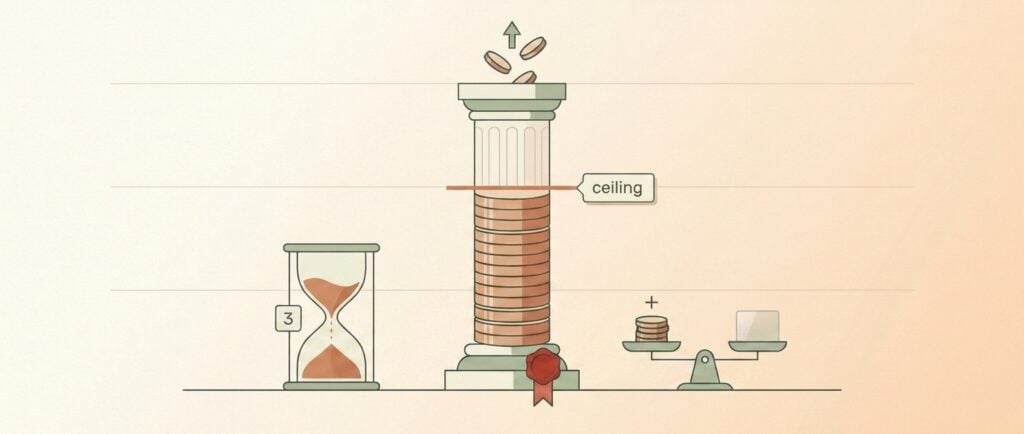
Swiss Pillar 2 Buy-In 2026: Tax Savings, the 3-Year Withdrawal Block, and When It’s Worth It
Many pension funds advertise voluntary purchases and present attractive calculation models to interested parties. What is often not mentioned is that the voluntary purchase into the pension fund is not worthwhile for everyone and does not always help with tax savings.

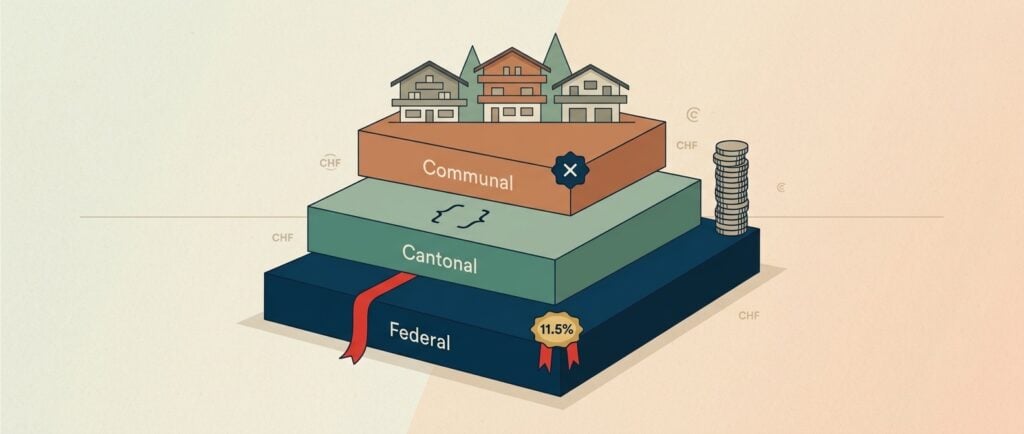
Swiss Income Tax Rates 2026: Federal, Cantonal & Communal Stack Explained
Swiss income tax in 2026: federal brackets, the 26-canton effective-rate table at CHF 250k single and CHF 350k married, and the canton-choice CHF lever.
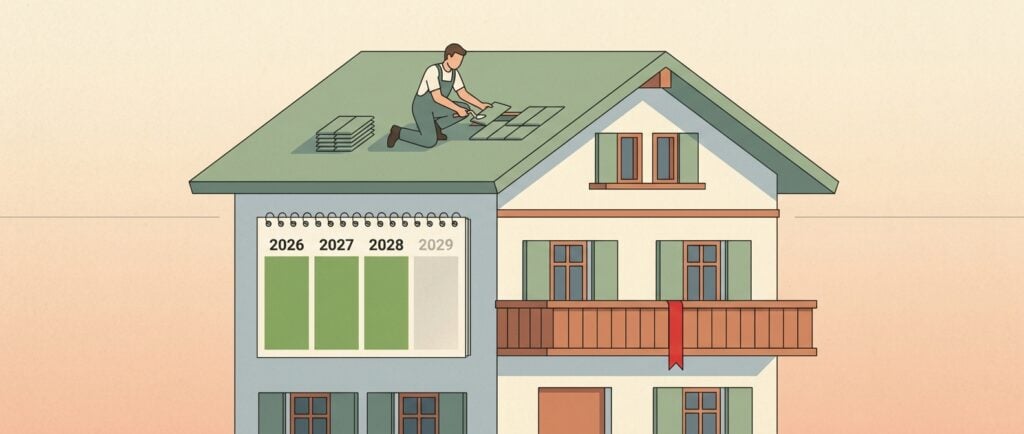
Swiss Property Maintenance Tax Deductions 2026: Last Window Before the 2029 Eigenmietwert Switch
Flat-rate vs actual costs, the 26-canton matrix, and the 2026-2028 last window before the Eigenmietwert switch ends federal maintenance deductions in 2029.