Swiss Residence Permits 2026: L, B, C and Path to Citizenship

Switzerland issues roughly 15,500 work-related residence permits to foreigners each year across three separate quota buckets: 8,500 for third-country nationals, 3,500 ring-fenced for UK citizens, and 3,500 for EU/EFTA service providers on longer assignments (Federal Council, 19 November 2025). Most expats never learn which bucket they’re drawing from. That’s a problem, because the bucket decides almost everything: how long approval takes, what your employer has to prove, when you reach a C permit, and when your Swiss tax bill flips from tax-at-source to an ordinary return.
This guide walks through the permit system as it actually works in 2026. Which permit fits your situation, how fast you’ll get it, what changes at year 5 versus year 10, and where your tax implications of each permit type quietly shift underneath.
Key takeaways
- 2026 quotas: 8,500 permits for non-EU/EFTA nationals (4,500 B + 4,000 L, unchanged from 2025), plus 3,500 ring-fenced for UK citizens and 3,500 for EU/EFTA service providers on assignments longer than 120 days per year (Federal Council, 19 Nov 2025).
- 5-year C is not universal. Only 11 countries hold a binding Niederlassungsvereinbarung giving a legal right to the C permit at year 5: Belgium, Denmark, France, Germany, Greece, Italy, Liechtenstein, Netherlands, Austria, Portugal, Spain. The US (1995 MOU), Canada (2003 MOU) and UK (cantonal continuity) may apply at year 5 but grant is discretionary, not an entitlement. All other nationalities wait 10 years unless they qualify for early C under Art. 34 Abs. 4 AIG.
- Federal SEM language thresholds: ordinary C oral A2 / written A1; early C under Art. 34 Abs. 4 oral B1 / written A1; ordinary naturalization oral B1 / written A2.
- Six months abroad ends a B or C permit unless you file an Aufrechterhaltungs-request before leaving (Art. 61 AIG, extends up to 4 years).
- Permit type decides your tax regime. L, B, Ci and G holders sit in Quellensteuer (tax-at-source); C holders file an ordinary return. A gross salary above CHF 120,000 on a B triggers mandatory NOV. See the tax implications of each permit type for the mechanics.
Which Swiss Residence Permit Do You Need?
The right permit depends on three variables: your nationality (EU/EFTA vs third-country), the purpose of your stay (work, family, study, protection, non-gainful), and the intended duration (under or over 12 months). Switzerland operates under the Ausländer- und Integrationsgesetz (AIG, SR 142.20), and almost every permit type maps to one specific article in that law.
The six permits most readers care about
- L permit (short stay, Art. 32 AIG): employment or study of 3 to 12 months. Tied to the contract; generally not renewable past 24 months without an upgrade.
- B permit (residence, Art. 33 AIG): longer-term employment, family reunification, or non-gainful residence. Five-year validity for EU/EFTA nationals; one-year renewable for third-country.
- C permit (settlement, Art. 34 AIG): unlimited stay. Card reissued every five years, but the status itself is permanent. Issued after 5 or 10 years depending on nationality.
- Ci permit (Art. 45 VZAE): dependents of diplomats and international-organisation staff. Allows employment anywhere in Switzerland.
- G permit (cross-border commuter, Art. 35 AIG): live abroad, work in Switzerland, return home weekly.
- S permit: temporary protection, currently active for Ukrainians.
F and N sit alongside these for the asylum track. They’re not the focus for most expat readers, but we cover them briefly below so this guide stays complete.
A short rule of thumb. If you’re EU/EFTA with an indefinite contract, you’ll get a B. If you’re third-country with an approved job, you’ll compete for one of the 4,500 B slots. If you’re a short-assignment service provider under 90 days, you don’t need a permit at all, just an online notification. Everything else is nuance that the next sections unpack.
EU/EFTA vs. Third-Country Nationals in 2026
EU/EFTA nationals enter Switzerland under the Agreement on Free Movement of Persons (FMPA/FZA), with no quota and no labour-market test for their own residence. Third-country nationals, including every UK citizen since 1 January 2021 and every US citizen, face quotas, labour-market priority (Inländervorrang), and employer-led applications. That’s the dividing line that shapes the whole 2026 system.
The 2026 quota picture
The Federal Council confirmed 2026 quotas on 19 November 2025, unchanged from 2025. Three separate buckets: 8,500 permits for third-country workers (4,500 B + 4,000 L), 3,500 ring-fenced for UK citizens (2,100 B + 1,400 L), and 3,500 for EU/EFTA service providers on assignments of more than 120 days per calendar year (500 B + 3,000 L). Short EU/EFTA assignments of 90 days or less use the online Meldeverfahren and sit outside the quota entirely.
Utilisation tells you where the pressure actually is. By the end of September 2025, the third-country bucket was running at around 52%, EU/EFTA service providers at 38%, and the UK quota at just 17% (Federal Council, 2025). The Federal Council has signalled it may eventually fold the under-used UK quota into the general third-country pool. No timetable is published.
Safeguard clause: status in April 2026
You may see headlines suggesting Switzerland could cap EU/EFTA immigration. The reality in April 2026: the Federal Council transmitted its Botschaft on the Bilaterale III package to Parliament on 13 March 2026. A popular vote is expected no earlier than 2027. The safeguard clause is not active. FMPA applies normally, and there’s still no quota for EU/EFTA workers taking up residence.
For non-EU applicants, Art. 21 AIG still requires employers to show that no Swiss or EU/EFTA worker could fill the position. That’s the Inländervorrang test, and it’s the single most common reason third-country files stall at the cantonal labour-market office.
L Permit – Short-Stay Authorization
The L permit (Kurzaufenthaltsbewilligung) covers stays from 3 to 12 months under Art. 32 AIG. In 2026, 4,000 L permits are available for third-country workers and 3,000 for EU/EFTA service providers on assignments longer than 120 days. Validity matches the employment contract. An L is generally not renewable past 24 months unless upgraded to a B.
Who typically holds an L
- Short-term employees on 3 to 11-month contracts
- Seconded specialists and project-based consultants
- Trainees and interns on defined programs
- Students on exchange programs beyond a standard tourist stay
- Artists and performers on multi-month engagements
Notification vs permit: the 90-day line
EU/EFTA nationals and UK professionals covered by the Services Mobility Agreement don’t always need a permit. For assignments up to 90 days per calendar year, the employer uses the online Meldeverfahren at sem.admin.ch, notifying at least one day before start. No L permit is issued. Cross the 90-day line, and the work moves inside the quota.
[PERSONAL EXPERIENCE] A pattern that shows up often: an EU consultancy plans a six-month project, forgets the 90-day limit is calendar-year, and finds the client renewing the engagement in December. Two days of January work flips the assignment into quota territory. Check the dates before the client signs.
B Permit – Residence Permit
The B permit (Aufenthaltsbewilligung) is the workhorse of long-term Swiss residence under Art. 33 AIG. EU/EFTA nationals with an indefinite or 12-month-plus contract receive a B valid for 5 years; third-country nationals with approved employment receive a B valid for 1 year, renewable. In 2026, 4,500 B slots are available for third-country workers, 2,100 ring-fenced for UK nationals (Federal Council, 2025).
Document checklist by category
- EU/EFTA with employment: valid passport or national ID, signed employment contract (indefinite or 12+ months), proof of housing (rental contract), passport photo, cantonal application form.
- Third-country with employment: all of the above, plus employer application with labour-market justification (job ads, interview notes, salary benchmark), CV, diplomas, evidence the salary meets the üblicher Lohn, and quota allocation.
- Non-gainful EU/EFTA, working age: health insurance, housing, and sufficient financial means. The SEM factsheet sets the benchmark using SKOS welfare guidelines, not a fixed CHF figure. You need means above the level at which a Swiss citizen would qualify for social assistance.
- Non-gainful EU/EFTA, retirees: health insurance, housing, plus means above the Ergänzungsleistungen (EL) Lebensbedarf threshold. For 2026, EL is set at CHF 20,670 per year for a single person and CHF 31,005 for a couple, unchanged since 1 January 2025 (EL Ansätze 2026).
- Non-gainful third-country (Art. 28 AIG): minimum age 55, special personal ties to Switzerland, substantially higher means, cantonal discretion.
Wealthy third-country arrivals who are under 55 or lack qualifying Swiss ties typically enter via Art. 30 Abs. 1 lit. b AIG, the fiscal-interest permit, paired with a cantonal lump-sum tax ruling. See our Swiss lump-sum taxation guide for the four eligibility gates, canton-by-canton minimums, and the typical CHF 750,000 to 1 million effective-tax threshold cantons apply in practice.
Renewal, integration, and the quiet downgrade
File renewal 3 months before expiry. You’ll need the expiring permit, updated employment or financial proof, a Betreibungsregister extract (no significant debts), and evidence you’re not on social assistance. If you’re claiming an integration-based benefit, add language proof.
[UNIQUE INSIGHT] The integration criteria in Art. 58a AIG have sharper teeth than most expat guides admit. Cantons like Zurich, Bern and Luzern increasingly use the B-to-L downgrade (Rückstufung under Art. 63 Abs. 2 AIG + Art. 62a VZAE) as a soft sanction when renewal files show thin integration, repeated debts, or sporadic social-assistance use. It’s a quieter consequence than revocation, but it resets your clock to the C permit and, in ordinary-assessment cantons, can revert your tax treatment.
B holders in ordinary assessment are rare (it happens via NOV or marriage to a C/Swiss spouse). Everyone else pays Quellensteuer. See the deductions available in ordinary assessment for what actually changes when your permit status shifts.
C Permit – Settlement Permit
Only 11 countries have a binding Niederlassungsvereinbarung with Switzerland under which their citizens acquire a legal right to the C settlement permit after 5 years of continuous residence (SEM, 2026). Every other nationality either waits the 10-year statutory baseline (Art. 34 Abs. 2 AIG) or applies early under Art. 34 Abs. 4 with a B1 spoken-language requirement.
This is the section where most SERP competitors get the law wrong. They list “around 20 countries” for the 5-year C track, conflating three different legal categories. The SEM page separates them cleanly; we do the same here.
Track 1: 10-year baseline (Art. 34 Abs. 2 AIG)
The default. After 10 years of continuous residence under a B permit, with the last 5 uninterrupted, you can apply for a C permit. You need no revocation grounds and integration under Art. 58a AIG (language, respect for public security, participation in economic life, participation in education). Federal SEM language minimum: oral A2 / written A1.
Track 2: 5 years with a legal right (Niederlassungsvereinbarung)
Only the citizens of these 11 countries have an Anspruch (legal entitlement) to C after 5 years: Belgium, Denmark, France, Germany, Greece, Italy, Liechtenstein, Netherlands, Austria, Portugal, Spain. Liechtenstein has a 2008 Rahmenvertrag in addition. That’s the canonical SEM list, nothing more.
Important to call out: other EU/EFTA nationals do not get this 5-year right. Finnish, Swedish, Norwegian, Icelandic, Irish and Luxembourg citizens fall to the 10-year baseline unless they qualify for early C under Art. 34 Abs. 4. This catches a lot of expats off-guard because expat-guide articles routinely lump all EU/EFTA nationals into one “5-year” bucket.
Track 3: 5 years by MOU (Gegenrecht, no Anspruch)
SEM separately classifies Memoranda of Understanding / reciprocity arrangements. Here, citizens may apply after 5 years, but grant is discretionary. SEM’s own wording, verbatim: “Staatsangehörige dieser Länder können bereits nach 5 Jahren ein Niederlassungsgesuch stellen, es besteht jedoch kein Anspruch.”
- USA: Memorandum of Understanding signed 1995. Historical scaffolding in the 1850 Swiss-US Convention of Friendship, Commerce and Extradition (Fedlex SR 0.142.113.361; Avalon Project). Operative modern instrument is the 1995 MOU.
- Canada: Memorandum of Understanding of 1 May 2003.
- UK: not on SEM’s Niederlassungsvereinbarungen page at all. UK nationals access the 5-year track by cantonal administrative continuity post-Brexit, not through a SEM-published instrument. This makes it the most fragile of the three MOU-style pathways.
Track 4: Early C under Art. 34 Abs. 4 AIG (any nationality)
The statute in full German, because paraphrases mislead: “Ausländerinnen und Ausländern kann die Niederlassungsbewilligung bereits nach einem ununterbrochenen Aufenthalt mit Aufenthaltsbewilligung während der letzten fünf Jahre erteilt werden, wenn sie die Voraussetzungen nach Absatz 2 Buchstaben b und c erfüllen und sich gut in der am Wohnort gesprochenen Landessprache verständigen können.”
In plain English: foreigners may receive the settlement permit after 5 continuous years on a B permit if they meet the requirements of Art. 34 Abs. 2 letters b (no revocation grounds) and c (integration under Art. 58a AIG) and can communicate well in the national language spoken at their place of residence. That last clause is operationalised by SEM as oral B1 / written A1, per the SEM Merkblatt Sprachkompetenzen, and that threshold is federal, not cantonal.
Do not paraphrase Abs. 4 as “successful integration.” The phrase “erfolgreiche Integration” appears in Abs. 6 (re-grant after revocation), not Abs. 4. The statutory standard for early C is the cross-reference plus the local-language communication test, and nothing more.
Language thresholds at a glance
- Ordinary C (10 years, or 5 via binding Niederlassungsvereinbarung): oral A2 / written A1, on the fide scale or an accepted equivalent (Goethe, telc, DELF, CELI).
- Early C under Art. 34 Abs. 4 AIG: oral B1 / written A1. Federal SEM minimum, not cantonal discretion.
- Swiss citizenship (ordinary naturalization, BüV Art. 6): oral B1 / written A2.
One cantonal signal worth tracking. Zug raised its naturalization language thresholds to oral B2 / written B1 effective 1 January 2025 under a revised Bürgerrechtsgesetz. That’s naturalization-only and does not touch the C-permit integration test. Still, it’s a trend indicator for where cantons are moving on integration generally.
What the C permit actually unlocks
Unlimited stay. Freedom of movement across cantons without reapplying. Near-citizen rights except federal voting and federal office. And, the angle most guides miss, a shift from Quellensteuer to ordinary assessment. The week your C arrives, your payroll stops withholding source tax and you owe a full ordinary Swiss return for the year.
Special Permits – Ci, G, S, F, N
Beyond L, B and C, five specialised permits cover specific circumstances: diplomatic households (Ci), cross-border commuters (G), temporary protection (S), provisional admission (F), and asylum seekers (N). The S permit saw a significant policy tightening on 1 November 2025, when Switzerland restricted new grants to Ukrainians from seven named western oblasts (SEM, 2025).
Ci permit: diplomatic dependents with the right to work
Issued under Art. 45 VZAE and Art. 22 Gaststaatgesetz to spouses and children up to age 25 of legitimation-card holders (UN, WHO, WTO, permanent missions). Ci holders have the explicit right to work anywhere in Switzerland, in any sector, regardless of nationality. Income is fully subject to Swiss tax and social insurance. The permit runs with the principal’s function and expires when the mission ends or the household dissolves.
G permit: cross-border commuter
Basis: Art. 35 AIG and Art. 7 Anhang I FMPA. You live in an EU/EFTA state, work in Switzerland, and return home at least once a week. Since 2007, EU/EFTA G holders can work anywhere in Switzerland, not just the border zones. UK nationals with pre-31 December 2020 G status are preserved under the Citizens’ Rights Agreement; new UK G applicants go through third-country rules and the UK quota, with a labour-market test.
Tax treatment is where G permits get interesting. Germany, France, Italy, Austria and Liechtenstein each have specific DTA rules for frontier workers. Most G holders pay Swiss Quellensteuer, with final taxation settled via the DTA in the country of residence. The weekly commuter tax treatment deep-dive covers the mechanics by corridor.
S permit: temporary protection (Ukraine)
Activated 12 March 2022, the S permit is the first-ever use of Art. 66ff. AsylG. The Federal Council has extended protection through 4 March 2027. Implementing the accepted Motion Friedli 24.3378, the Federal Council decided on 8 October 2025 (effective 1 November 2025) to restrict new S grants. Applicants whose last residence was in one of the seven western oblasts now deemed safe for return are generally refused unless individual risk is shown: Volyn, Rivne, Lviv, Ternopil, Zakarpattia, Ivano-Frankivsk, Chernivtsi.
S holders can work after notification, access labour-market measures (AMM), and return to Ukraine for up to 15 days per half-year (tightened from 15 per quarter). Exceeding the return window can trigger revocation unless compelling reasons are documented.
F and N: asylum track
Briefly, for completeness. F (vorläufig aufgenommen / provisionally admitted) covers people whose asylum claim was rejected but who cannot be deported safely. F holders can work with authorisation. N (asylum seeker) is the interim status during claim processing. Neither is the core audience for this guide, but F and N can convert into B after 5 to 10 years of residence if integration criteria are met.
How to Apply – Step by Step
Swiss law gives you 14 days from arrival to register with your commune under Art. 12 AIG and Art. 10 to 15 VZAE. The statutory fine ceiling for missing the deadline is CHF 10,000 (Art. 120 AIG); in practice cantons charge CHF 100 to 500. Most Einwohnerkontrollen tolerate a few days of voluntary delay, but 30+ days late, or discovery via a police check, routinely draws a fine.
Step 1: Register with your commune
Anmeldung at the Einwohnerkontrolle (communal residents’ office). You bring passport, rental contract, health insurance proof, employment contract if applicable, and any marriage or birth certificates. You receive an Anmeldebestätigung on the spot. Banks, landlords and employers accept this document in the interim while your permit card is being produced.
Step 2: Permit application reaches the canton
The commune forwards your file to the cantonal Migrationsamt. For EU/EFTA with clean documents, this is largely automatic. For third-country applicants, the file goes first to the cantonal labour-market office for the Inländervorrang check under Art. 21 AIG, then to SEM for quota allocation, and finally back to the canton for the permit decision.
Step 3: Biometric appointment
Standard since 2021 across all permit types. Two fingerprints, a facial image, and your digital signature are captured at the cantonal migration office or a designated enrolment centre. The data is retained for 5 years, for reissue purposes only; the chip does not enable geolocation. You receive a credit-card-format biometric permit by post 2 to 4 weeks later.
Step 4: Realistic processing times
Few cantons publish formal SLAs. Geneva does, which is why we lean on it. Geneva’s OCPM page (ge.ch, last updated 16 April 2026) gives the following ranges as of April 2026:
- First B permit, EU/EEA with employment: 6 to 8 weeks
- B permit renewal: about 3 months
- Family reunification: 6 to 8 months
- Anticipated (early) C permit: about 12 months
Luzern runs 1 to 3 months for a first B, 2 to 3 months for a C on the ordinary track. Zurich does not publish formal SLAs; anecdotal ranges are 4 to 8 weeks for EU files and 2 to 4 months for third-country files. Bern, Basel-Stadt and Zug have no published SLA. Treat specific ranges as canton-indicative, not guarantees.
Step 5: Renewal and upgrade lead time
File 3 months before expiry for B renewal. For L-to-B upgrade, re-file as soon as you have an indefinite or 12-month-plus contract; the B slot is quota-relevant for third-country. For B-to-C, apply in month 57 if you’re on the 5-year track, month 117 if you’re on the 10-year track. Cantonal fees typically run CHF 65 to 162.
Path from B to C to Swiss Citizenship
The full arc from arrival to a Swiss passport takes 10 years at minimum, sometimes 12 or 15 depending on cantonal and communal residency rules. Only about 11 countries have a legal entitlement to C at year 5 (SEM, 2026). Everyone else follows either the 10-year baseline or the Art. 34 Abs. 4 AIG early route with a B1 oral requirement.
The sequential timeline
- Year 0: arrive, get L or B depending on contract length and nationality.
- Year 1: L-to-B upgrade if contract extends past 12 months (quota-dependent for third-country).
- Year 5: C under Art. 34 Abs. 2 for binding-treaty EU/EFTA (11 countries); discretionary C application for US, Canada, UK; or early C under Art. 34 Abs. 4 (any nationality, B1 oral).
- Year 10: C for everyone else meeting integration criteria.
- Year 10: eligible for ordinary naturalization under BüG (SR 141.0).
Ordinary naturalization (Art. 9 BüG)
Ten years of residence required, three of which must be in the last five before application. Years between ages 8 and 18 count double, with a minimum of 6 actual years. Federal language: oral B1 / written A2 on a national language (BüV Art. 6). Plus cantonal residency (typically 2 to 5 years) and communal residency (often 2 to 3 years in the current commune). Zurich requires 2 years in canton, Zug requires 3 in commune; cantons vary.
Facilitated naturalization for spouses of Swiss citizens (Art. 21 BüG)
Five years of Swiss residence plus 3 years of union, or 6 years of marriage for spouses living abroad. Same language standard (oral B1 / written A2). Integration assessment is lighter than ordinary naturalization but still substantive: tax compliance, no welfare, no criminal record, and demonstrated ties to Swiss society.
Losing Your Permit – Lapse, Revocation, Downgrade
Under Art. 61 AIG, both B and C permits lapse automatically after 6 continuous months abroad, unless you file an Aufrechterhaltungs-request before departure (extends up to 4 years). Revocation follows a separate track under Art. 62 and 63 AIG. The Zurich Migrationsamt Weisung of 1 September 2024 sets the welfare-dependency Faustregel at CHF 80,000 of social assistance over 2 to 3 years for C holders, anchored in Federal Supreme Court jurisprudence (ZH Weisung, 2024).
Automatic lapse: the 6-month rule (Art. 61 AIG)
Six continuous months abroad, and your B or C is gone. The rule is automatic; there’s no warning letter. Federal Tribunal case law makes clear that short return visits do not reset the 6-month clock if your centre of life has genuinely moved abroad. Before you leave, file an Aufrechterhaltungs-request (maintenance of permit) with your canton. This extends the window up to 4 years for sabbaticals, assignments, or family care abroad.
Revocation grounds (Art. 62 for B/L, Art. 63 for C)
Four main triggers show up in practice:
- Social assistance dependency (long-term, substantial)
- Criminal convictions, including the mandatory expulsion catalogue under Art. 66a StGB
- False statements in the permit application
- Breach of an integration agreement under Art. 58a or 58b AIG
Welfare thresholds: two numbers people confuse
Distinguish the two:
- Reporting thresholds (one-time notification from the social-services office to the migration office): CHF 25,000 accumulated aid for B holders, CHF 60,000 for C holders. These trigger a file review, not automatic revocation.
- Revocation Faustregel (rule of thumb, ZH Weisung Massnahmenpraxis 1 September 2024, anchored in Bundesgericht jurisprudence including BGer 2C_761/2009): CHF 80,000 of social assistance over 2 to 3 years. This Faustregel applies specifically to C permit holders. For B holders, the Weisung states the threshold is “entsprechend tiefer” (correspondingly lower) without naming a fixed CHF figure.
Downgrade: the C-to-B Rückstufung
Under Art. 63 Abs. 2 AIG and Art. 62a VZAE, cantons can downgrade a C back to a B when integration criteria fail (persistent welfare use, unpaid tax debts, integration-agreement breach). It’s the soft sanction cantons increasingly prefer to outright revocation. The downgrade reactivates Quellensteuer. If your salary is above CHF 120,000, you re-enter mandatory subsequent ordinary assessment (NOV) territory, which our NOV checker tests below in the tax section.
Losing a C is rare in absolute terms but real. When it happens, the tax side rarely gets planned for. A month of payroll confusion, a missed Quellensteuer adjustment, and a surprise bill from the cantonal tax office is the common pattern. Coordinate early.
Your Permit and Your Tax Bill
Your permit type decides your Swiss tax regime. L, B, Ci and G holders sit in Quellensteuer (tax-at-source), where the employer withholds tax monthly on gross salary. C holders file an ordinary return. The switch matters: a gross salary above CHF 120,000 on a B triggers mandatory subsequent ordinary assessment (NOV), which effectively treats you like a C holder for tax purposes even while your permit stays B.
The mapping, explicitly
- L: Quellensteuer. Short-term, tax-at-source on every payslip.
- B: Quellensteuer. If gross salary exceeds CHF 120,000 or if you have significant non-wage income, NOV applies and you file an ordinary return.
- Ci: Quellensteuer on the Ci holder’s own income.
- G: Quellensteuer, with final taxation settled through the DTA with the country of residence. Corridor-specific (DE, FR, IT, AT, LI).
- C: ordinary assessment. Full Swiss tax return. No employer withholding on salary.
- Marriage rule: if you marry a Swiss citizen or a C holder, ordinary assessment applies to both spouses, regardless of the other spouse’s permit.
On the Quellensteuer side, Quellensteuer applies to L, B, G and Ci holders and the rate depends on civil status, number of children, and the tariff code your canton assigns. Our tariff wizard runs the classification for you.
Tariff Code Wizard
Answer a few questions to find your exact Swiss withholding tariff code — A, B, C, H or L, plus the right children digit and church suffix.
Find your Swiss withholding tax tariff code
Need help optimizing your Swiss tax situation?
Schedule a free consultationOn the NOV side, the CHF 120,000 gross-salary threshold is the trigger most B holders meet eventually. The NOV checker runs the eligibility test:
NOV Threshold Checker
Check whether your income, assets, or other circumstances trigger a retrospective ordinary tax assessment (NOV) on top of Swiss withholding tax.
NOV Threshold Checker
Need help optimizing your Swiss tax situation?
Schedule a free consultationTax residency: the broader picture
Permit type also interacts with tax residency. Once you hold a Swiss permit and your centre of life is in Switzerland, you’re taxable on your worldwide income once you become a Swiss tax resident, with DTAs carving out foreign real estate and source-taxed foreign employment income. The permit triggers the tax residency, not the other way around.
[UNIQUE INSIGHT] The week your C permit arrives is a quiet tax-planning moment almost nobody flags. Your payroll stops withholding Quellensteuer on that paycheck. For the year, you’re now on ordinary assessment, which means you owe a full Swiss return for the entire calendar year, not just the post-C months. Pillar 3a, childcare, professional-training deductions and commuting expenses all become claimable. Going the other way, a C-to-B Rückstufung reverses all of that mid-year.
Country-Specific Notes – US, UK, EU
Three nationality groups deserve their own section because their pathways differ materially: US citizens under the 1850 Convention and 1995 MOU, UK nationals under three separate post-Brexit instruments, and EU/EFTA nationals under the Agreement on Free Movement of Persons. The UK SMA alone covered approximately 3,500 UK professionals in 2024 and was extended through 31 December 2029 (UK Gov, 2025).
US citizens: discretionary 5-year C, 1850 scaffolding
The legal scaffolding is the 1850 Convention of Friendship, Commerce and Extradition (Fedlex SR 0.142.113.361; Avalon Project). Articles I and II establish the reciprocal right to “come, go, sojourn temporarily, domiciliate or establish themselves permanently” in the other country, plus equal treatment and a military-service carve-out. The operative modern instrument is the 1995 Memorandum of Understanding, classified by SEM under Gegenrecht. After 5 years on B, a US citizen may apply for C. SEM is unambiguous: “Staatsangehörige dieser Länder können bereits nach 5 Jahren ein Niederlassungsgesuch stellen, es besteht jedoch kein Anspruch.”
What US citizens do not get: no quota exemption (they count against the 4,500 B / 4,000 L third-country cap), no labour-market priority, no simplified family reunification, and no equivalent to the UK SMA for short assignments.
US-citizen caveat on Swiss tax planning. Pillar 3a and voluntary Pillar 2 buy-ins are Swiss-side efficient, but they can backfire on your US return. Pillar 3a fund units can trigger PFIC (Passive Foreign Investment Company) treatment and Form 8621 reporting. Voluntary Pillar 2 buy-ins (Einkauf) raise potential foreign-trust questions on the US side. We plan the Swiss side so it doesn’t complicate your US return; coordinate with your US-side advisor before contributing. There are tax benefits specific to expats, but the US-citizen subset needs the coordination layer.
UK nationals: three instruments, three moving pieces
Third-country status since 1 January 2021. UK access to Switzerland runs on three parallel rails:
- Citizens’ Rights Agreement. Protects roughly 40,000 UK nationals resident in Switzerland and 2,600 UK frontier workers who had AFMP-based rights before 31 December 2020. Acquired rights preserve residency, social-security coordination, pensions, healthcare, and professional-qualification mutual recognition. Family-reunification rules for future spouses of acquired-rights holders shift to standard FNIA rules from 31 December 2025.
- Services Mobility Agreement (SMA). Extended by the Federal Council on 15 October 2025 through 31 December 2029, effective 1 December 2025. Allows up to 90 days per calendar year of visa-free service provision from UK to Switzerland, with simplified online notification and no labour-market test. Approximately 3,500 UK professionals used the track in 2024.
- Ring-fenced UK quota. 2026: 2,100 B + 1,400 L. Utilisation as of end-September 2025: roughly 17%. The Federal Council has signalled that the UK quota may eventually fold into the general third-country pool, but no timetable.
And importantly, UK is not on SEM’s Niederlassungsvereinbarungen page, either under binding treaties or under the Gegenrecht/MOU category. The 5-year C path for UK nationals operates through cantonal administrative continuity post-Brexit. That continuity is not a published SEM instrument and is therefore more fragile than the US/Canada MOU route. Integration evidence (FIDE certificate, tax compliance, community ties) carries extra weight in UK 5-year C files.
EU/EFTA nationals: full free movement
No quota for own-residence. No labour-market test. Five-year B validity. Binding C after 5 years for the 11 listed nationalities; early C under Art. 34 Abs. 4 for the others. Facilitated family reunification. And, as of April 2026, the safeguard clause is not active. FMPA applies in full, and the Bundesrat’s Botschaft sits with Parliament until at least 2027.
Frequently Asked Questions
How long does it take to get a Swiss residence permit?
EU/EFTA clean files typically clear in 2 to 8 weeks. Third-country applications with labour-market tests run 2 to 4 months. Family reunification in Geneva takes 6 to 8 months per the OCPM published ranges (last updated 16 April 2026). Anticipated C permits in Geneva: about 12 months. Other cantons vary; only Geneva and Luzern publish formal SLAs.
Can Americans get a Swiss residence permit?
Yes. US citizens access Switzerland under third-country rules, drawing on the 2026 quota of 4,500 B and 4,000 L (unchanged since 2025). There’s no labour-market priority or quota exemption for Americans. After 5 years on a B, US citizens may apply for a C under the 1995 MOU, but SEM classifies this as Gegenrecht with no entitlement. Grant is discretionary.
What’s the difference between a B and C permit in Switzerland?
A B is renewable and tied to your stay purpose (employment, family, non-gainful). A C is unlimited, with freedom of movement across cantons and near-citizen rights except federal voting. The C also shifts your tax regime from Quellensteuer to ordinary assessment, and it unlocks the path to ordinary naturalization after 10 residence years under Art. 9 BüG.
Can I lose my Swiss C permit if I leave Switzerland?
Yes. Under Art. 61 AIG, a C permit automatically lapses after 6 continuous months abroad. Federal Tribunal case law makes clear that short return visits do not reset the clock once your centre of life has moved abroad. To protect the permit, file an Aufrechterhaltungs-request with your canton before you leave. It extends the window up to 4 years.
What language level do I need for a Swiss C permit?
Ordinary C (after 10 years, or 5 under a binding Niederlassungsvereinbarung): oral A2 / written A1. Early C under Art. 34 Abs. 4 AIG: oral B1 / written A1. Both thresholds are federal SEM minima under the Merkblatt Sprachkompetenzen, not cantonal. Ordinary naturalization sits higher at oral B1 / written A2 (BüV Art. 6).
Do UK citizens need a visa for Switzerland in 2026?
Not for stays under 90 days within any 180-day Schengen period. For longer stays, UK nationals go through third-country rules on the ring-fenced UK quota (2,100 B + 1,400 L in 2026). Service assignments up to 90 days per calendar year use the SMA (extended through 31 December 2029). The 5-year C pathway operates by cantonal continuity, with integration evidence decisive.
Planning Your Swiss Side
The Swiss permit system rewards patience and punishes surprises. A few takeaways worth holding on to:
- Only 11 countries have a legal right to C at year 5. Everyone else is on the 10-year baseline or the early-C track with a B1 oral requirement.
- Your permit type decides your tax regime. L, B, Ci, G pay Quellensteuer; C files ordinary. A gross salary above CHF 120,000 on a B triggers NOV.
- Six months abroad without an Aufrechterhaltungs-request ends your B or C. File before you leave.
- Welfare thresholds are two different concepts. Reporting thresholds (CHF 25k B / CHF 60k C) trigger file review. The CHF 80k/2-3y revocation Faustregel is C-only.
- UK nationals run on three instruments, not one. Know which track you’re on.
If your permit is about to change, or you’re approaching the 5- or 10-year C window, the Swiss side of your tax bill changes with it. Book a consultation to map permit, tax and planning in one conversation.
Unsure which permit track fits your 2026 move?
We model the Swiss side of your permit decision: canton choice, NOV threshold, and the 5- vs 10-year C path for your nationality. For US citizens, we coordinate with your US-side advisor.
Table of Contents
Latest blog posts
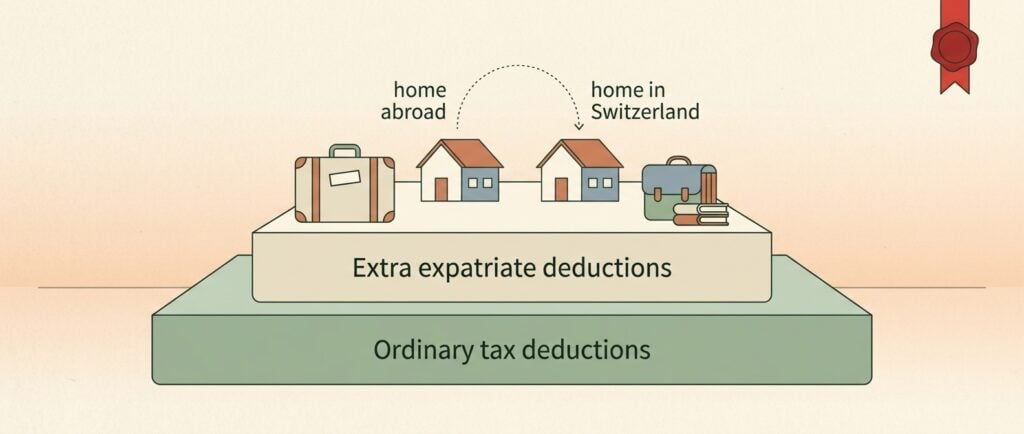
Swiss Expat Tax Benefits 2026: Special Tax Deductions for Posted Employees
In this article, we explain what the special “expat” status is all about, how an expat differs from other employees in Switzerland, and what benefits you can derive from it if you also belong to this group.


Is Switzerland Still a Tax Haven in 2026? How Much You Actually Pay vs the EU, UK, UAE & Monaco
Switzerland isn’t classically a tax haven, but for high earners the structural mix beats every EU comparator. Take-home and wealth tax compared to UAE, Monaco, UK, Germany, Italy, more.
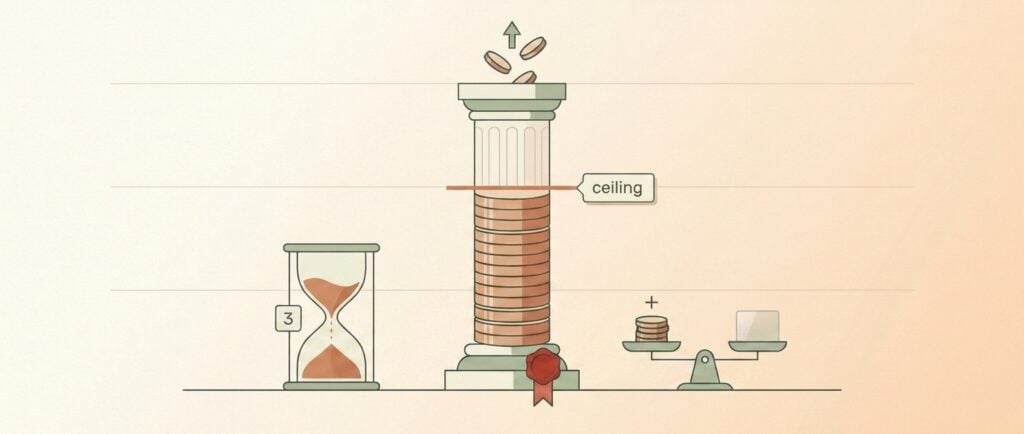
Swiss Pillar 2 Buy-In 2026: Tax Savings, the 3-Year Withdrawal Block, and When It’s Worth It
Many pension funds advertise voluntary purchases and present attractive calculation models to interested parties. What is often not mentioned is that the voluntary purchase into the pension fund is not worthwhile for everyone and does not always help with tax savings.