Imputed Rental Value in Switzerland: What Property Owners Need to Know in 2026

On 28 September 2025, Swiss voters approved the abolition of the imputed rental value (Eigenmietwert) with 57.7% in favour. After more than 90 years, one of the most controversial elements of Swiss taxation is coming to an end.
But not yet. The reform is expected to take effect no earlier than 1 January 2029, and until then, every homeowner in Switzerland must continue to declare the imputed rental value in their tax return. If you own property abroad, you are equally affected: foreign real estate must be declared and influences your Swiss tax rate.
This guide explains how the imputed rental value works today, what deductions you can claim, how foreign property is treated, and what the abolition will change. If you’re still deciding whether to buy Swiss property as a foreigner, start with our 2026 Lex Koller guide before reading this. Whether you have just bought your first apartment in Zurich or own a holiday home on the Spanish coast, understanding these rules is essential for your next tax return.
What Is the Imputed Rental Value?
If you own a property in Switzerland and live in it yourself, the tax authorities treat you as though you were renting it to yourself. The rent you would theoretically receive is added to your taxable income. This fictitious income is the imputed rental value.
The legal basis is Art. 21 para. 1 lit. b of the Federal Act on Direct Federal Tax (DBG) and Art. 7 para. 1 of the Tax Harmonisation Act (StHG). Together, these provisions require all cantons to tax the self-use of real estate as income.
The concept dates back to 1934, when the Federal Council introduced it as an emergency measure during the Great Depression to stabilise the federal budget. It was formalised into permanent law by popular vote in 1958 and has survived three referendum attempts to abolish it (in 1999, 2004, and 2012) before finally being voted out in 2025.
The rationale is one of fairness between homeowners and tenants. A tenant pays rent from after-tax income and cannot deduct it. A homeowner, by contrast, enjoys a housing benefit (living in their own property) without reporting any income for it. The imputed rental value is meant to correct this imbalance by treating the economic benefit of owner-occupation as taxable income.
In exchange, homeowners can deduct mortgage interest and property maintenance costs from their income. This interplay between the imputed rental value and its associated deductions is what makes the system complex and, for many people, frustrating.
How the Imputed Rental Value Is Calculated in Switzerland
There is no single formula for calculating the imputed rental value. Each canton uses its own method, and values can differ substantially for the same property depending on where you are tax resident.
Eigenmietwert Estimator
Estimate your imputed rental value based on cantonal formulas. Results are indicative — your actual assessment may differ.
Need help optimizing your Swiss tax situation?
Schedule a free consultationThe Federal Minimum
The Federal Supreme Court established in a 1998 ruling (BGE 124 I 145) that the imputed rental value may not fall below 60% of the current market rent for a comparable property. This sets the constitutional floor.
At the federal level, the Federal Tax Administration (ESTV) goes further: it requires that the cantonal average reaches at least 70% of market rent for the direct federal tax. Where a canton’s values fall below this threshold, the ESTV applies a percentage surcharge for federal tax purposes. More than half the cantons are subject to such surcharges.
In practice, most cantons set the imputed rental value in a range of 70 to 90 percent of market rent.
Cantonal Calculation Methods
The 26 cantons fall into three broad categories.
Comparative rent method (11 cantons: AI, AR, GL, GR, LU, SG, SH, SZ, TI, UR, VS): These cantons determine the imputed rental value by comparing the property to similar rental properties in the area. They look at actual rents being paid for comparable homes and use those as the benchmark.
Individual valuation / hedonic model (7 cantons: AG, BE, FR, JU, NW, OW, TG): These cantons use a computerised model that derives property values from actual sale prices and rental data, factoring in location, size, age, condition, and amenities.
Canton-specific methods (8 cantons): These cantons have developed their own approaches:
Basel-Landschaft uses the building insurance value multiplied by a municipality-specific correction factor. Basel-Stadt starts from the building insurance value, subtracts age depreciation, and adds land value. Geneva uses a questionnaire covering living space, age, and furnishings, then applies an occupancy discount of up to 40% for long-term residents (cantonal tax only). Neuchâtel bases the value on a percentage of capitalised earnings and net asset value. Solothurn combines construction value, market value, and capitalised earnings. Vaud starts from living space, adjusted by coefficients for age, location, and comfort. Zug uses the purchase price or market value, with a 40% homeownership promotion discount. Zurich calculates from land value and depreciated building value, applying a rate of 3.5% for single-family homes or 4.25% for condominiums on the tax value (which itself is set at 70% of market value).
Federal Tax vs. Cantonal Tax
An important detail that catches many people off guard: the imputed rental value for federal tax and for cantonal tax can differ. In cantons where the average falls below the ESTV’s 70% threshold, a surcharge applies for federal tax purposes. For example, in Aargau, the cantonal value receives a 20% surcharge for federal tax. In Thurgau, the cantonal 40% primary residence deduction is reduced to 20% for the federal return. In Vaud, the cantonal rate is only 65% of the indexed rental value, while the federal rate is 90%.
Cantons where no surcharge is required include Zurich, Lucerne, Fribourg, Geneva, St. Gallen, Ticino, Valais, and Zug, among others.
A Zurich Calculation Example
To make this concrete, consider a condominium in Winterthur worth CHF 1,250,000:
The canton sets the tax value at 70% of market value: CHF 875,000. The imputed rental value for a condominium is 4.25% of the tax value: CHF 37,188 per year. This amount is added to the owner’s taxable income. No surcharge is needed for the federal return, as Zurich’s values meet the ESTV threshold.
For a single-family home, the rate would be 3.5% instead of 4.25%, resulting in a lower imputed rental value on the same property value.
Imputed Rental Value for Foreign Property
If you are tax resident in Switzerland and own property abroad, Swiss tax law treats that property almost the same as domestic real estate when it comes to the imputed rental value. This applies regardless of whether the foreign property is a second home, a holiday apartment, or a residence you keep available for family use. The type of property does not matter. If you or your family can use it, the imputed rental value applies.
Why You Must Declare Foreign Real Estate
Switzerland taxes its residents on worldwide income and assets. You are required to report all foreign property in your Swiss tax return, including both its asset value and the associated income (whether actual rent or the imputed rental value). Failing to do so can constitute tax evasion, because the omission results in a Swiss tax rate that is too low.
The Rate-Determining Effect
Here is the critical mechanism. Switzerland does not directly tax the imputed rental value of your foreign property. Instead, it uses the “exemption with progression” method (Freistellungsmethode mit Progressionsvorbehalt). The foreign property income is exempt from Swiss tax, but it is added to your total income to determine the tax rate that applies to your Swiss-source income.
Because Swiss income tax is progressive, a higher rate-determining income pushes you into a higher bracket. The same applies to wealth tax: the foreign property value is not taxed, but it increases the rate applied to your Swiss-taxable wealth.
Worked Example
Consider an expat couple tax resident in the Canton of Zurich. They earn CHF 120,000 in Switzerland, have CHF 500,000 in Swiss taxable wealth, and own a holiday apartment in Spain purchased for EUR 300,000.
Step 1: Determine the tax value. Converting at the official FTA exchange rate (say, 0.94) gives CHF 282,000. Zurich sets the tax value at 70% of the purchase price: CHF 197,400.
Step 2: Calculate the imputed rental value. Using Zurich’s condominium rate of 4.25%, the gross imputed rental value is CHF 8,390. After the flat-rate maintenance deduction of 20% (CHF 1,678), the net imputed rental value is CHF 6,712.
Step 3: Determine the rate-determining income and wealth. The couple’s Swiss taxable income is CHF 120,000. The foreign net imputed rental value of CHF 6,712 is added for rate-determination purposes, making the rate-determining income CHF 126,712. Similarly, the foreign property’s tax value of CHF 197,400 is added to their Swiss wealth of CHF 500,000, giving a rate-determining wealth of CHF 697,400.
Step 4: Calculate the tax impact. Using 2025 Zurich municipal tax rates, the income tax on CHF 120,000 rises from CHF 16,831 to CHF 17,483 when taxed at the rate applicable to CHF 126,712 — an additional CHF 652 per year. For wealth tax, the same mechanism applies: the tax on CHF 500,000 rises from CHF 480 to CHF 650 at the rate applicable to CHF 697,400 — an additional CHF 170. The total annual cost of the progression reservation is CHF 822. The foreign income and wealth are never directly taxed in Switzerland. Only the applicable rate changes.
Foreign Property: Rate-Determining Tax Impact
See how owning property abroad affects your Swiss income and wealth tax through the progression reservation (Progressionsvorbehalt).
Need help optimizing your Swiss tax situation?
Schedule a free consultationHow Cantons Value Foreign Property
The practical challenge is that normal cantonal valuation methods (building insurance values, municipal inspections, cadastral systems) cannot be applied to properties outside Switzerland. Cantons have developed workarounds:
The most common approach is to use the purchase price of the foreign property, then apply a cantonal reduction factor to arrive at the tax value. Some cantons will accept a foreign tax certificate or cadastral value as the starting point, which can be advantageous if the official foreign value is lower than the purchase price.
The variation is substantial. Zurich and Bern both use 70% of the purchase price as the tax value, but Zurich applies a 3.5-4.25% rate while Bern applies 6%. Schwyz uses 100% of the purchase price but only a 3% rate. Solothurn sets the tax value at just one-third of the purchase price but applies a rate of 8.8-10.63%. Geneva uses 4.5% but does not allow maintenance deductions on the resulting value. Valais has a unique formula for properties with a foreign cadastral value: cadastral value × 1.5 × 1.9.
Where you are tax resident in Switzerland can significantly affect how much your foreign property influences your tax bill.
Double Taxation Agreements
Switzerland has signed DTAs with over 100 countries. Most follow the OECD Model Tax Convention, which grants the primary taxing right on real estate to the country where the property is located.
For real estate income and wealth, Switzerland applies the exemption with progression method, not the credit method. This means Switzerland does not grant a tax credit for property taxes paid in the other country. Instead, the foreign income and wealth are simply exempt from direct Swiss taxation but remain relevant for rate determination.
Even without a DTA, Switzerland exempts foreign real estate from direct taxation under domestic law. So the rate-determining approach applies regardless of whether a treaty exists with the country where your property is located.
A practical point: keep your foreign tax assessments and attach them to your Swiss tax return as proof of taxation abroad.
What You Can Deduct
The imputed rental value is not simply added to your income without relief. Several deductions are available, and using them correctly can significantly reduce the tax impact of property ownership.
Mortgage Interest
Under current law, mortgage interest is fully deductible from your total taxable income. This applies to all forms of debt interest, including mortgage interest, bank loans, and even credit card interest. The deduction is made against your overall income, not just property income. This is a key feature of the Swiss system: because the imputed rental value is added to total income, the corresponding interest is subtracted from that same total.
At the federal level, there is a cap: total deductible debt interest may not exceed your gross investment income plus CHF 50,000. For most homeowners, this cap is far above their actual interest payments and is only relevant in cases of very high leverage.
Many Swiss homeowners deliberately maintain interest-only mortgages (no direct amortisation) to preserve the ongoing interest deduction. A common strategy is indirect amortisation via Pillar 3a: the mortgage stays unchanged and interest remains deductible, while the Pillar 3a contributions provide an additional tax deduction.
Maintenance Costs
For each property, you can choose each year between deducting a flat-rate lump sum or your actual documented maintenance costs. This choice can be made independently for cantonal and federal tax, and you can switch every year.
The standard federal lump-sum rates, followed by most cantons, are 10% of the gross imputed rental value for buildings up to 10 years old and 20% for buildings over 10 years old. Several cantons offer more generous rates. Zurich, Appenzell Innerrhoden, and St. Gallen apply a flat 20% regardless of the building’s age. Schaffhausen goes up to 25% for older buildings. Vaud offers the highest rates: up to 30% for self-occupied properties over 20 years old. When you opt for the lump sum, no receipts are required.
In years with significant renovation work, you should switch to actual costs. Only value-preserving expenses qualify. This includes repairs, like-for-like replacements (a new boiler replacing an old one of comparable quality), painting, garden maintenance, building insurance premiums, and management fees. Value-enhancing investments such as extensions, conversions, or luxury upgrades are not deductible against income tax, though they can be claimed against capital gains tax when you eventually sell.
The wertvermehrend / werterhaltend boundary, the 26-canton matrix of flat-rate variations, and the multi-year strategy of bunching renovations versus spreading them across tax periods are covered in our Swiss property maintenance tax deductions guide, with the maintenance-deduction calculator modelling flat-rate vs. spread vs. bunched outcomes for ZH/ZG/GE.
Energy-Saving Investments
Energy-efficiency measures receive special treatment. They are deductible even when they are partly value-enhancing. Qualifying measures include thermal insulation, solar systems, heat pumps, replacement of fossil heating with sustainable alternatives, and improved-insulation window replacements.
Since 2020, if the energy-saving costs exceed your taxable income in the year of investment, the excess can be carried forward to the next two tax periods. This carry-forward is unique to energy-saving measures and does not apply to ordinary maintenance.
One important detail: if you receive cantonal energy subsidies, you must subtract them from the deductible amount. If the subsidy arrives in a later year, declare it as income in that year.
Debt Interest Allocation for Foreign Property
If you have a mortgage on your foreign property, the interest is deductible, but it must be allocated internationally. The allocation is proportional to where your assets are located. If 30% of your total worldwide assets are in France, then 30% of your total worldwide debt interest is allocated to France (and only affects the rate determination), while 70% is deductible against your Swiss taxable income.
Reducing the Imputed Rental Value: The Underutilisation Deduction
In certain cases, you can reduce the imputed rental value below the standard cantonal figure if your living circumstances have changed. This is the underutilisation deduction (Unternutzungsabzug). It applies when rooms in your property stand genuinely empty because your housing needs have decreased, typically when children move out, after a divorce, or following the death of a household member.
Requirements
The bar is high. Rooms must be truly and permanently unused. A guest room, hobby room, or home office that is used even occasionally does not qualify. The underutilisation must result from a change in circumstances, not from having purchased a property that was too large from the start. No deduction is available for second homes or vacation properties, even if they stand empty most of the year. Only the primary residence qualifies.
At the federal level, the underutilisation deduction is always available. At the cantonal level, the rules vary. Cantons including Zurich, Thurgau, St. Gallen, Schwyz, and several others grant the deduction under specific conditions. Some cantons in the Romandie may not allow it for cantonal tax.
How It Is Calculated
The typical method is a proportional reduction. In Zurich, for example, the reduced imputed rental value is calculated as: full imputed rental value × number of used rooms ÷ total number of rooms (with specific counting rules for kitchens, bathrooms, and oversized rooms).
For a 9-room house with an imputed rental value of CHF 36,000, where a couple’s three adult children have moved out and three rooms stand empty, the calculation would be: total rooms including ancillary spaces = 11, used rooms = 8, reduced imputed rental value = CHF 36,000 × 8 ÷ 11 = CHF 26,182.
You must actively claim this deduction in your tax return with a brief justification. It is not granted automatically.
The Abolition: What Was Decided
On 28 September 2025, 57.7% of Swiss voters approved a constitutional amendment and a linked federal law that together abolish the imputed rental value system. The turnout was 49.5%, and the proposal passed with a clear cantonal majority (16.5 to 6.5 cantons in favour). A visible Röstigraben appeared: German-speaking Switzerland and Ticino voted clearly in favour, while the Romandie opposed the measure.
The reform is a package deal. Parliament linked the abolition of the imputed rental value to a new constitutional provision (Art. 127 para. 2bis BV) allowing cantons to in
troduce a property tax on second homes. The two measures could only enter into force together.
What Changes
The imputed rental value is abolished for all owner-occupied properties, both primary and secondary residences. This applies at the federal, cantonal, and municipal level. Rented-out properties are unaffected and continue to be taxed on actual rental income.
Maintenance cost deductions are eliminated for owner-occupied property. You will no longer be able to deduct renovation costs, insurance premiums, or general upkeep. At the federal level, energy-saving investment deductions also disappear. Cantons may optionally continue allowing energy-saving and environmental protection deductions until 2050 at the latest. Deductions for heritage conservation work are preserved at both levels.
Mortgage interest deductions are restricted. For anyone whose property portfolio consists only of self-occupied housing, mortgage interest will no longer be deductible at all. The deduction survives only for interest attributable to rented or leased properties, using a proportional-restrictive method (quotal-restriktive Methode). If you own only your home, a bank account, and some securities, no debt interest deduction remains after the reform.
A first-time buyer exception is introduced. Persons purchasing their first owner-occupied property in Switzerland can deduct limited mortgage interest: CHF 10,000 per year for married couples (CHF 5,000 for singles) in the first year, declining by CHF 1,000 (or CHF 500) each subsequent year until it reaches zero after ten years. Note that these amounts apply under the current joint taxation system; the upcoming switch to individual taxation, if implemented on the expected timeline, could affect how these thresholds work in practice. A transitional rule covers people who already purchased their first home before the reform takes effect.
Cantons may introduce a property tax on second homes. The new constitutional provision authorises cantons to levy a special property tax (Objektsteuer) on predominantly owner-occupied second homes within their territory. This is designed primarily to compensate tourism cantons such as Graubünden, Valais, and Ticino for lost revenue. Each canton decides independently whether and how to implement this tax.
Timeline
The reform will not take effect immediately. Parliament passed the law on 20 December 2024. The earliest possible implementation date was initially described as 1 January 2028 by Finance Minister Karin Keller-Sutter on the evening of the vote.
Since then, the timeline has become a point of contention. The National Council’s Committee for Economic Affairs and Taxation (WAK-N) is pushing for 1 January 2028. The Conference of Cantonal Finance Directors (FDK) has proposed 1 January 2029 as a more realistic date. The Conference of Mountain Cantons is requesting at least until 1 January 2030, arguing that cantons need time to introduce the Objektsteuer through their own legislative and potentially referendum processes.
The Federal Council is expected to decide the implementation date in March or April 2026. The most likely outcome is a compromise at 1 January 2029.
Until the reform takes effect, the current system remains fully in force. You must continue to declare the imputed rental value and can continue to use all existing deductions.
Zurich’s Freeze
In a direct response to the vote, the Canton of Zurich cancelled a planned increase in imputed rental values that was set to take effect on 1 January 2026. Properties built up to and including 2025 will continue to be assessed based on the old 2009 directive, with no increase. New buildings from 2026 onward will be assessed under the new directive but with a flat 10% deduction as compensation.
What the Abolition Means for Foreign Property Owners
This is one of the most important questions for expats in Switzerland, and one that most coverage of the reform overlooks.
The Imputed Rental Value for Foreign Property Is Also Abolished
The abolition applies universally to all self-used residential property, whether located in Switzerland or abroad. The Canton of Bern’s official tax guidance (TaxInfo), published in January 2026, confirms this explicitly: “For foreign properties, the imputed rental value will also no longer be taken into account on a rate-determining basis” (Bei ausländischen Liegenschaften wird der Eigenmietwert auch nicht mehr satzbestimmend berücksichtigt).
This means the imputed rental value disappears both as a taxable income item (for Swiss properties) and as a rate-determining element (for foreign properties). For expats who own a holiday home in France, Italy, Spain, or elsewhere, this is meaningful: the foreign property will no longer push up the Swiss tax rate through the rate-determining income mechanism.
What Remains Unchanged
The abolition of the imputed rental value does not mean foreign property disappears from your tax return. Several obligations and effects remain:
You must still declare all foreign real estate under Switzerland’s worldwide tax liability principle. The wealth value of foreign property continues to be rate-determining for wealth tax purposes. If you rent out a foreign property, the actual rental income remains rate-determining for income tax. Double taxation agreements and the exemption with progression method continue to apply.
Maintenance Deductions for Foreign Property Also Disappear
Under the current system, maintenance costs for a self-used foreign property are deductible against the rate-determining income from that property. After the reform, since there is no more imputed rental value for self-used foreign properties, there is no income against which to make the deduction. The maintenance deduction for self-used foreign property effectively has no basis and falls away.
For rented foreign property, the situation is different. Actual rental income continues to be rate-determining, and maintenance deductions for rented property remain available.
The Objektsteuer Does Not Apply to Foreign Property
The new cantonal property tax on second homes applies only to properties physically located within the respective canton’s territory. Swiss cantons have no tax sovereignty over properties abroad. If you own a holiday home in Portugal, no Swiss Objektsteuer will apply to it.
Debt Interest: A Restrictive Change
Under the new rules, mortgage interest is only deductible against income from rented or leased property, using a proportional-restrictive method. Crucially, only rented properties located in Switzerland count in the numerator of this calculation. Foreign rented properties fall into the denominator (total assets) but do not generate Swiss-deductible interest. This means that if all your rental properties are abroad and your only Swiss property is owner-occupied, you may receive no debt interest deduction at all after the reform.
Winners, Losers, and What the Numbers Say
The Federal Tax Administration estimates that at the current mortgage rate of approximately 1.5%, 82% of homeowners will benefit from the abolition. This figure is based on analysis across four cantons (AG, BE, LU, TG) and focuses on the direct federal tax. It holds true under specific conditions: mortgage rates below about 2%, and for primary residence owners. At a rate of 2%, the share of winners drops to 77%. At approximately 3.5%, winners and losers are evenly split.
Who Wins
Mortgage-free or low-mortgage homeowners are the clearest winners. If your mortgage is fully or largely paid off, you currently pay tax on most of the imputed rental value with minimal offsetting deductions. After the reform, that taxable amount simply disappears. For a mortgage-free retiree with a property generating an imputed rental value of CHF 25,200, the net taxable reduction (after the flat-rate deduction) is about CHF 20,160 per year. At a marginal rate of 25%, that translates to roughly CHF 5,000 in annual tax savings. The ESTV data shows that 88% of homeowners aged 64 and above benefit at current rates.
Expats with self-used foreign property also benefit clearly. The elimination of the rate-determining imputed rental value for foreign properties means a lower Swiss tax rate, with no replacement tax on the foreign property from the Swiss side.
Who Loses
Owners of older, renovation-heavy properties are among the most affected. Currently, they can deduct substantial maintenance costs (new windows, heating systems, roof repairs) from their taxable income. After the reform, those deductions vanish entirely for owner-occupied property. For major one-off renovations costing CHF 50,000 to CHF 100,000, the loss of deductibility effectively increases the net cost by 20-30% when accounting for the foregone tax benefit.
Highly leveraged owners in a rising rate environment face a structural disadvantage. At a mortgage rate of 1.5%, a couple with a CHF 850,000 mortgage can deduct CHF 12,750 in interest, which is less than their imputed rental value. But at 3.5%, the same mortgage generates CHF 29,750 in deductible interest, far exceeding the imputed rental value. Under the current system, this net deduction reduces taxable income. After the reform, neither the imputed rental value nor the interest deduction exists.
Second-home owners in tourism cantons face uncertainty. They lose the imputed rental value but may be subject to a new cantonal property tax whose rates have not yet been set. Mountain cantons have strong incentives to set rates that fully compensate for lost revenue, which could mean second-home owners end up paying as much or more than before.
Before & After: Imputed Rental Value Abolition
See how the reform affects your tax situation under the current system vs. after abolition.
Need help optimizing your Swiss tax situation?
Schedule a free consultationA Note on Distribution
A study by BSS Basel highlights an important distributional caveat: the winners tend to be wealthier (particularly retirees with paid-off mortgages and high property values), while the losers are more likely to be younger owners with lower wealth and higher debt. The reform, in aggregate, transfers tax burden from property owners to the general public through reduced government revenue.
What You Should Do Before the Reform Takes Effect
The transition period between now and the reform (expected 2029) offers a window for strategic planning.
Accelerate renovations. This is the most widely recommended action. Any value-preserving maintenance work completed before the reform takes effect remains fully deductible. If you have been putting off roof repairs, a heating system replacement, or energy-efficiency upgrades, the next two to three years are the time to act. Tax advisors are warning of a potential bottleneck as contractors become overloaded, so planning early is wise. Where possible, split large projects across two tax years to optimise the deduction benefit in each period.
Prioritise energy-efficiency investments. These are doubly valuable during the transition: they qualify for the current deduction, and cantons may optionally continue allowing them after the reform (until 2050). Completing them now gives you certainty rather than relying on future cantonal decisions.
Reassess your mortgage strategy. After the reform, the tax incentive to maintain a high mortgage disappears for owner-occupiers. This does not necessarily mean you should rush to pay down your mortgage. Financial advisors caution against over-amortising: real estate already ties up significant capital, and maintaining a moderate loan-to-value ratio preserves diversification. The decision depends on your risk tolerance, investment alternatives, and proximity to retirement. But the indirect amortisation strategy via Pillar 3a becomes less compelling once the interest deduction is gone.
Document everything. Even though maintenance costs will no longer be income-tax-deductible after the reform, comprehensive documentation of all property expenditures remains important. Value-enhancing costs can still be claimed against capital gains tax (Grundstückgewinnsteuer) when you eventually sell.
Monitor your canton. Cantons have discretion on several key elements: whether to allow energy-efficiency deductions after the reform, whether to introduce the Objektsteuer on second homes, and at what rate. Developments in your specific canton can materially affect your tax position.
Common Mistakes When Filing
Even experienced property owners make errors when declaring the imputed rental value. The most frequent mistakes include confusing value-preserving and value-enhancing costs (this is the single most corrected item by cantonal tax offices), forgetting to compare the lump sum against actual costs every year, failing to claim the underutilisation deduction when eligible, and declaring mortgage repayment amounts instead of just the interest portion.
For newcomers to the Swiss tax system: the imputed rental value is not optional. If you own and occupy property, you must declare it. Use your canton’s online tax software, which typically includes calculation aids. And remember that even foreign properties must be reported and affect your tax rate. If you are new to Switzerland, our guide on moving to Switzerland covers the broader tax obligations you should be aware of, including withholding tax and how to transition to ordinary tax assessment.
Looking Ahead
The abolition of the imputed rental value is the most significant change to Swiss property taxation in decades. For most homeowners, it is good news: a simpler system with a lower tax bill. For expats with foreign property, the elimination of the rate-determining imputed rental value is a clear benefit.
But the transition period matters. The current system remains fully in force until the reform takes effect, and the strategic window for maximising deductions is closing. If you are unsure how the reform affects your specific situation, particularly if you own property abroad, have a complex mortgage structure, or are considering renovations, professional advice can help you make the most of the remaining transition period and prepare for the new rules.
Latest blog posts
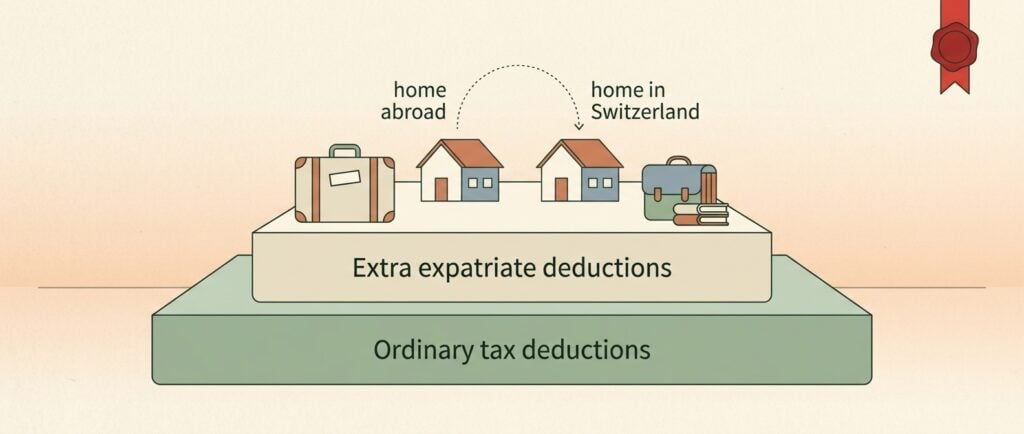
Swiss Expat Tax Benefits 2026: Special Tax Deductions for Posted Employees
In this article, we explain what the special “expat” status is all about, how an expat differs from other employees in Switzerland, and what benefits you can derive from it if you also belong to this group.


Is Switzerland Still a Tax Haven in 2026? How Much You Actually Pay vs the EU, UK, UAE & Monaco
Switzerland isn’t classically a tax haven, but for high earners the structural mix beats every EU comparator. Take-home and wealth tax compared to UAE, Monaco, UK, Germany, Italy, more.
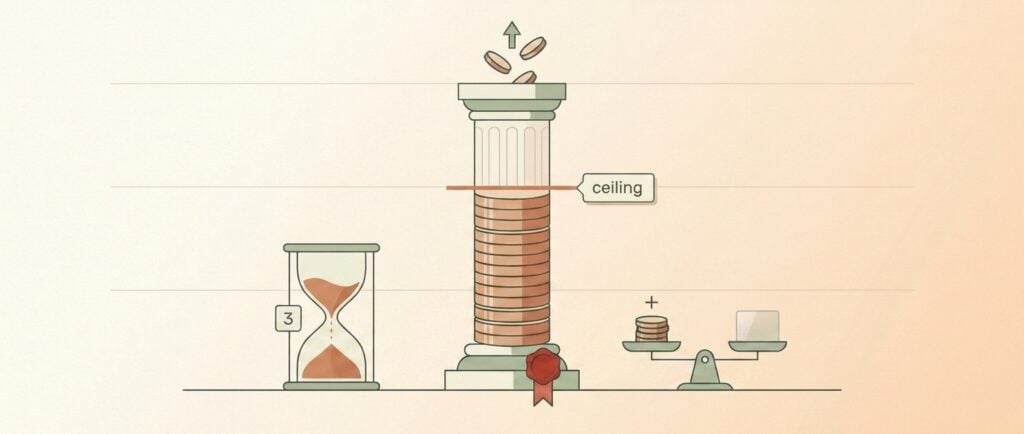
Swiss Pillar 2 Buy-In 2026: Tax Savings, the 3-Year Withdrawal Block, and When It’s Worth It
Many pension funds advertise voluntary purchases and present attractive calculation models to interested parties. What is often not mentioned is that the voluntary purchase into the pension fund is not worthwhile for everyone and does not always help with tax savings.